
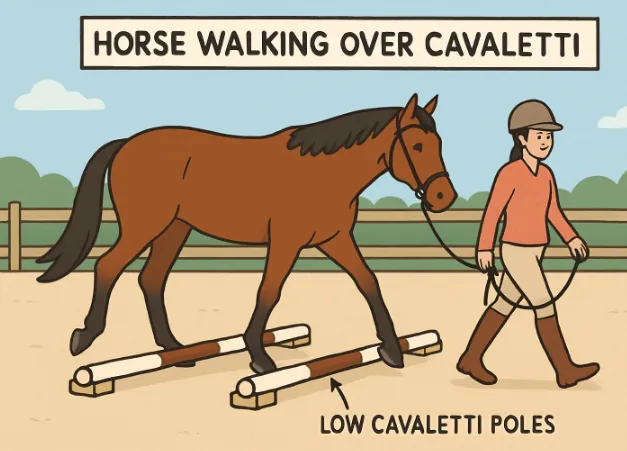
Enhancing Your Horse’s Performance with Cavaletti Training
Cavaletti training is a dynamic approach to equine development, offering valuable benefits for horses of all backgrounds and disciplines. By working with horse jump cavaletti, owners and trainers can unlock improved coordination, strength, and mental sharpness in their horses. Whether you aim to boost show ring performance or improve the health and well-being of your horse, this training is accessible and practical. Cavaletti training is adaptable, helping horses build confidence and agility, and is suitable for young horses, athletes, or those undergoing rehabilitation. Its exercises are vital for many fitness programs, promoting precise footwork, better movement, and strengthening bonds. Progress from ground poles as skills improve, leading to better posture, engagement, and performance.
Also Read: Everything You Need to Know About Australia’s Family Law
Understanding Cavaletti
Cavaletti are training tools with low rails, made from materials such as wood or plastic, and are supported on adjustable stands. Their X-shaped standards allow for easy height adjustments, ranging from a few inches to several inches higher. Unlike jumps, they focus on improving gait, rhythm, and coordination, not jumping ability. Created by Federico Caprilli, they’re popular in dressage, show jumping, and western riding. Used on the lunge or under saddle, they teach horses’ foot placement, balance, and spatial awareness, bridging the gap between basic groundwork and advanced training. They can also help riders develop better timing and feel, making communication with the horse more precise. With consistent use, cavaletti work can enhance both the strength and flexibility of horse and rider.
Physical Benefits of Cavaletti Training
Cavaletti exercises offer significant physical advantages for horses, enhancing their athletic capabilities and overall soundness. These exercises promote muscle development by targeting the topline and hindquarters, crucial for strength and flexibility. They also improve coordination, as consistent cavaletti work enhances proprioception, motor skills, and balance. Additionally, this practice promotes better joint flexibility in the shoulders, hips, and knees, which enhances mobility and reduces the risk of stiffness and injury. Such effects are particularly beneficial for show horses that require athleticism and older horses that need gentle conditioning.
Mental Engagement and Focus
In addition to the noticeable physical gains, cavaletti training is exceptional for fostering a horse’s mental engagement. The task of accurately negotiating each pole requires focus and attention, cultivating sharper responsiveness to rider cues. Horses quickly learn to approach the exercise thoughtfully, making it an excellent way to break up routine schooling and keep horses interested in their work. The cognitive challenge of cavaletti work encourages quicker thinking and greater composure—skills that translate directly to success in high-pressure competition environments.
Implementing Cavaletti Exercises
To introduce your horse to cavaletti, start by placing poles flat on the ground, allowing the horse to walk over them to build confidence and familiarity with the new visual input. This approach minimizes risk while enhancing comfort. You can gradually increase the number of poles or create patterns that promote flexibility and attentiveness. Proper spacing is critical: for walking, set poles about three feet apart; for trotting, approximately four and a half feet; and for cantering, around nine feet apart. Adjust the spacing according to your horse’s unique stride for a smooth movement. Once the horse is comfortable with flat poles, begin to elevate them to increase the difficulty slightly. This progression encourages engagement of the core, stifle, and hock, and aids in shoulder lifting. Monitor the horse’s progress closely to avoid overwhelming them, focusing on consistent, incremental challenges for optimal development.
Safety Considerations
Inspecting equipment is crucial; it is essential to ensure that poles and supports are stable before each session and to check for the absence of any sharp edges or splinters that could cause injury. Furthermore, constant monitoring of the horse is essential; handlers should be vigilant for any signs of fatigue or resistance, and be prepared to stop the activity immediately if the horse shows any signs of soreness or reluctance to participate. Additionally, the use of protective gear, such as leg boots or wraps, is advisable, as these can help prevent injuries that may occur due to accidental contact with poles, thereby enhancing safety for both the horse and the handler.
Conclusion
Well-executed cavaletti training transforms both horse and rider, blending physical conditioning with mental stimulation. By steadily increasing challenge and complexity, and prioritizing safety and positive reinforcement, you foster a more coordinated, capable, and enthusiastic partner. Integrating cavaletti into your training regimen ensures that your horse is equipped to take on greater athletic challenges, enjoy a richer experience, and deliver their best in every arena.