How Does Bermuda Grass Compare to Other Warm-Season Lawn Grasses?
Warm-season grasses dominate Australian lawns for good reason. They are generally better adapted to heat, cope more effectively with water stress, and recover faster from wear than cool-season varieties. Among them, Bermuda grass is often praised for its toughness and fine texture, but it is rarely the only option worth considering. Buffalo and Kikuyu are equally common competitors, each with strengths that suit different conditions.
Understanding how Bermuda compares to other warm-season grasses helps ensure you choose a lawn that performs well not just in summer, but year-round in your specific environment.
What is Bermuda grass?
Bermuda grass (commonly referred to as couch in Australia) belongs to the Cynodon family. It spreads via stolons and rhizomes, creating a dense, low-growing turf when managed correctly. It is widely used on sports fields, golf courses, and high-traffic lawns because of its resilience and ability to recover quickly during warm conditions.
When establishing or overseeding, homeowners often explore bermuda grass seed because it allows for controlled establishment and variety selection suited to local conditions.
Sun and shade tolerance: a key difference
Sun exposure is one of the most important factors when comparing warm-season grasses.
- Bermuda: Thrives in full sun and performs best with at least 6–8 hours of direct sunlight daily. In shaded areas, it can thin out quickly.
- Buffalo: Offers superior shade tolerance, making it more suitable for suburban blocks with trees, fences, or buildings casting shade.
- Kikuyu: Performs well in sun and light shade but struggles under dense canopy cover.
If your lawn receives consistent sunlight, Bermuda can deliver an exceptionally dense and uniform finish. In shaded gardens, however, it may require more effort to maintain coverage.
Wear tolerance and recovery
All three grasses handle foot traffic reasonably well, but their recovery styles differ.
Bermuda
Bermuda is highly wear-tolerant and recovers quickly during warm weather due to its aggressive lateral growth. This makes it ideal for active lawns, sports use, and areas that experience repeated stress.
Buffalo
Buffalo handles moderate traffic well but recovers more slowly from severe damage. It is better suited to general backyard use rather than constant high-impact activity.
Kikuyu
Kikuyu is arguably the fastest to recover from damage, often outpacing Bermuda in sheer speed of regrowth. However, that same vigour can require more boundary control.
Water use and drought behaviour
Warm-season grasses are often chosen for their ability to cope with Australian summers, but their water needs still vary.
Bermuda grass is relatively water-efficient once established, particularly when grown in healthy, well-structured soil. It responds well to deep, infrequent watering that encourages strong root systems.
Buffalo also tolerates dry conditions but may show stress during prolonged heatwaves, especially in sandy soils. Kikuyu is known for resilience during dry periods, though it can lose colour under extended drought before rebounding when moisture returns.
Maintenance requirements compared
Mowing frequency
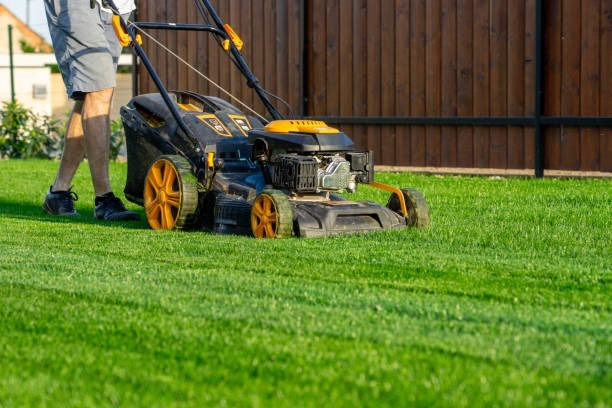
Bermuda requires frequent mowing during the growing season to maintain a tidy appearance. It performs best when cut regularly at a consistent height. Allowing it to grow too long and then cutting it back hard can lead to scalping.
Buffalo generally needs less frequent mowing and is more forgiving if a cut is delayed. Kikuyu grows rapidly in warm weather and often demands frequent mowing and edging.
Fertilising and thatch management
Bermuda responds strongly to fertiliser, particularly nitrogen. While this promotes dense growth, excessive feeding can increase thatch build-up if not managed carefully.
Kikuyu has a similar tendency toward thatch due to its rapid growth. Buffalo typically produces less thatch but still benefits from balanced nutrition rather than heavy feeding.
Weed resistance and lawn density
A dense lawn is the best defence against weeds. Bermuda can form an extremely tight turf under optimal conditions, limiting weed establishment. However, in shaded or stressed areas where coverage thins, weeds can quickly take hold.
Buffalo’s broader leaf structure shades soil effectively, helping suppress weeds in mixed light environments. Kikuyu’s aggressive growth also competes strongly with weeds but may invade surrounding garden areas if not controlled.
Seasonal appearance and winter behaviour
As a warm-season grass, Bermuda slows significantly in cooler months. In southern regions, it may lose colour or enter partial dormancy during winter. Buffalo and Kikuyu behave similarly, though buffalo often retain colour slightly better in mild coastal climates.
If winter greenness is a priority, homeowners sometimes consider overseeding or alternative grass types depending on location.
When Bermuda is the best choice
Bermuda is often the ideal option when:
- The lawn receives full sun for most of the day
- High wear tolerance is required
- Regular mowing is acceptable
- A fine-textured, dense turf is desired
Final thoughts
Bermuda grass is a strong performer for sunny Australian lawns that demand durability and fast recovery. While it is not as shade-tolerant as buffalo or as aggressively spreading as Kikuyu, its balance of toughness and refined appearance makes it a popular choice for high-use areas.
By matching Bermuda to the right environment and maintenance expectations, homeowners can achieve a resilient, attractive lawn that stands up well to Australian conditions.