Basement Finishing Design Guide: Smart Layout Ideas
Finishing a basement is one of the most effective ways to expand your living space without building an addition. A well-designed basement can become a family room, home office, guest suite, gym, or even a rental unit. However, the success of any basement project depends heavily on one thing: layout planning. Without a clear design and purpose, even a newly finished basement can feel cramped, awkward, or underused.
Also Read: Climate Controlled Storage in Sarasota FL: When You Need It
This design guide will walk you through how to create a functional basement layout that fits your lifestyle, improves comfort, and maximizes usable space.
Start with a Clear Purpose
Before drawing floor plans or choosing finishes, decide how you want to use the space. A basement can serve many roles, but trying to do everything at once often leads to clutter and confusion—something experienced Montreal renovation contractors often help homeowners avoid through proper planning.
Ask yourself:
- Will this be a family or entertainment room?
- Do you need a bedroom or guest suite?
- Are you creating a home office or gym?
- Will the basement be used as a rental unit?
Once the main purpose is defined, the layout becomes much easier to plan. Every wall, doorway, and electrical outlet should support that goal.
Evaluate the Existing Space
Every basement comes with physical limitations that affect layout choices. Measure ceiling height, check for support beams, and locate windows, plumbing lines, and electrical panels. These fixed elements will guide where rooms can realistically be placed.
Important things to assess:
- Ceiling clearance and bulkheads
- Natural light sources
- Location of stairs
- Structural posts or load-bearing walls
- Furnace, water heater, and storage areas
Instead of fighting these features, incorporate them into your layout. For example, mechanical rooms can be enclosed with soundproof walls, while low-ceiling areas can be used for storage or seating zones.
Create Zones Instead of Small Rooms
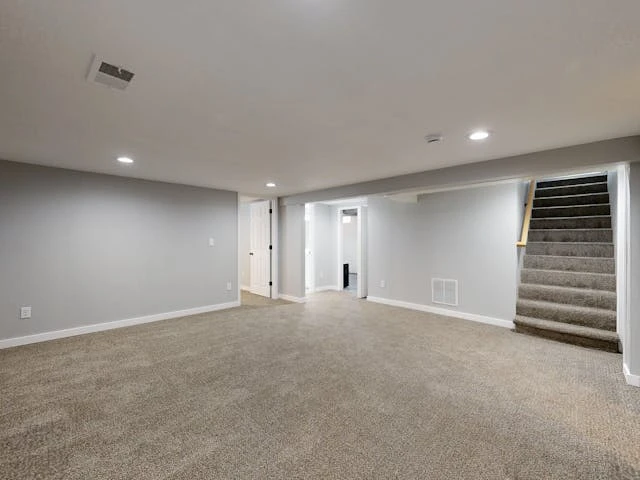
Modern basement design favors open layouts with defined zones rather than many small rooms. This helps the basement feel larger and allows better light flow.
Common basement zones include:
- Entertainment or TV area
- Workspace or study corner
- Fitness or hobby area
- Bathroom and storage
Use furniture placement, area rugs, and lighting to visually separate these zones. Half walls or glass partitions can provide separation without blocking light.
Plan for Natural and Artificial Lighting
Basements usually have limited natural light, so lighting design is critical. Poor lighting can make even a large basement feel dark and uninviting.
Layout lighting in layers:
- Recessed ceiling lights for general brightness
- Task lighting for desks or work areas
- Accent lighting for entertainment or feature walls
If possible, position main living areas near windows or window wells. Mirrors and light wall colors can also help reflect available light and make the space feel more open.
Design Traffic Flow Carefully
A functional basement layout should allow easy movement between areas. Avoid placing furniture or walls where they block walkways or create dead ends.
Good layout planning includes:
- Clear paths from the stairs to main zones
- Wide doorways for accessibility
- Open sightlines for safety and comfort
- Logical placement of rooms (bathroom near bedroom, storage near stairs)
Smooth traffic flow makes the basement feel like a natural extension of the home instead of a separate or isolated level.
Think About Comfort and Climate Control
Basements tend to be cooler and more humid than upper floors. Your layout should support proper heating, ventilation, and insulation.
Key comfort considerations:
- Space for ductwork and vents
- Dehumidifier placement
- Proper insulation behind walls
- Soundproofing between rooms
Rooms like bedrooms or offices should be placed where temperature control is easiest. Entertainment rooms can tolerate cooler temperatures, making them ideal for deeper areas of the basement.
Include Storage Without Losing Space
A basement is often expected to provide extra storage, but poor planning can make storage areas dominate the layout. Instead, design smart storage into the plan.
Good storage ideas:
- Under-stair closets
- Built-in shelving
- Wall-mounted cabinets
- Hidden storage benches
Storage should support the layout, not interrupt it. Keeping storage areas organized prevents clutter from reducing usable space.
Safety and Building Code Awareness
Any basement finishing project must meet building codes related to ceiling height, fire safety, and emergency exits. Bedrooms typically require proper egress windows, and electrical systems must be safely installed.
Planning your layout with these rules in mind avoids expensive changes later. This is especially important if the basement will be used for sleeping or rental purposes.
Working with experienced professionals such as montreal renovation contractors can help ensure your layout meets safety standards while staying practical and visually appealing.
Matching Layout to Lifestyle
A basement should reflect how your household lives today and in the future. A family with children may prefer open play space, while remote workers may prioritize quiet offices. Empty nesters might design a guest suite or entertainment lounge.
Design questions to consider:
- Will this space change purpose later?
- Should walls be removable or flexible?
- Will future resale benefit from certain layouts?
Designing with flexibility in mind helps your basement remain useful for years to come.
Planning for Long-Term Value
A purposeful layout improves both daily comfort and property value. A finished basement with a logical layout can increase resale appeal, especially if it includes a bathroom, bedroom, or multi-use area.
Buyers look for:
- Open, usable space
- Natural light where possible
- Clear room functions
- Clean, modern layout
Poor layout decisions, such as awkward hallways or poorly placed rooms, can reduce value even if finishes are new.
Why Professional Planning Matters
While many homeowners focus on flooring and paint, layout design is the foundation of a successful basement project. Mistakes at the layout stage can lead to wasted space, poor lighting, and uncomfortable flow.
Professional planning helps balance:
- Structural limitations
- Code requirements
- Functional design
- Aesthetic appeal
For homeowners researching Basement finishing in Montreal & Laval, layout design is often the step that determines whether the space becomes truly livable or just visually upgraded.
Final Thoughts
A finished basement should feel intentional, not improvised. Creating a layout with purpose means designing around your needs, your home’s structure, and long-term comfort. From zoning and lighting to traffic flow and storage, every choice should support how the space will be used.
By carefully planning your basement layout before construction begins, you can avoid common mistakes and create a space that feels open, functional, and welcoming. Whether it becomes a quiet retreat, an entertainment hub, or a practical extension of your living space, a well-designed layout ensures your basement adds real value to your home.
For those exploring Basement finishing montreal & Laval, thoughtful layout planning remains the key to transforming an unfinished basement into a space that truly works.