Real-time monitoring & debugging for test infra?
The presence of a stable and observable test infrastructure has become essential to modern software delivery, especially as applications grow more distributed and release cycles become faster. Teams can no longer afford blind spots or delayed feedback when tests begin failing unexpectedly. As a result, real-time monitoring and debugging tools have become critical. They help teams identify issues as they occur, reducing time and maintaining confidence in the accuracy and reliability of test results.
Beyond automation and CI/CD integration, test case management has also become a key pillar of effective test execution. It ensures that test coverage is organized, traceable, and aligned with evolving application requirements, helping teams execute tests in a structured and scalable way.
In this article, we will discuss providers of real-time monitoring and debugging capabilities and how these solutions can help QA and DevOps teams gain end-to-end visibility in test environments. This will help organizations in making informed decisions to enhance test reliability, reduce the debugging process, and enable continuous delivery.
Real-Time Monitoring and Debugging in Testing
Real-time monitoring and debugging in testing is the process of observing the execution of tests as they are being performed. Real-time monitoring and debugging enable teams to see what is happening in real time, as opposed to waiting for a report to be generated after the test has been completed. Real-time monitoring and debugging give teams the ability to see what is happening in real time.
Connecting test failures with infrastructure, application logs, and resource usage, real-time debugging helps in rapid root cause analysis. Real-time monitoring and debugging help to reduce runtime, inconsistent tests, and feedback loops. Real-time debugging enables one to fix problems as they occur, therefore improving test stability, confidence in releases, and software quality in fast development environments.
Key Capabilities of Real-Time Monitoring and Debugging Testing Tools
Here are the key capabilities of real-time monitoring and debugging testing tools, expressed clearly:
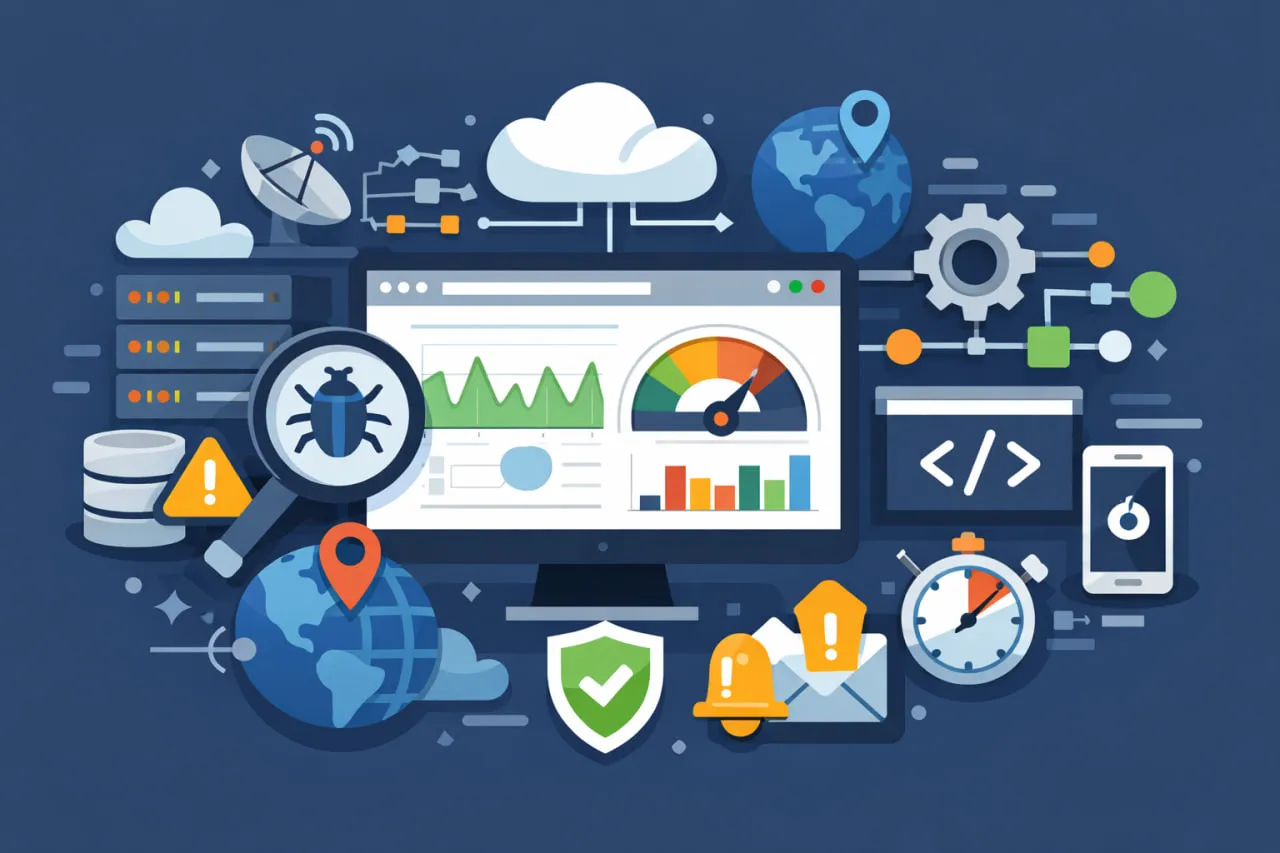
- Real-time monitoring and debugging tools guarantee constant visibility on the test execution. The teams can monitor test progress, status, and system behavior in real time without having to wait for the completion of the test execution.
- The tools ensure that there are real-time logs of the application and infrastructure, which help to spot failures in the test at the location with errors, exceptions, and warnings.
- The tools enable real-time monitoring of performance data such as CPU, memory, response time, and throughput.
- Real-time feedback during build and deployment made possible by the integration of the tools with CI/CD helps in faster decision-making and early detection of problems.
- From a single location, the tools’ scalability and centralized dashboard let teams track several test contexts, platforms, and executions.
Who Offers Real-Time Monitoring and Debugging Test Infrastructure
Today’s test infrastructure requires more than just test automation. They require observation, analysis, and the ability to fix problems as they occur. Real-time monitoring and debugging capabilities reduce the gap between problem identification and problem resolution. Some of the solutions are as follows:
- TestMu AI
TestMu AI (Formerly LambdaTest) is a full-stack agentic AI Quality Engineering platform that empowers teams to test intelligently and ship faster. Engineered for scale, it offers end-to-end AI agents to plan, author, execute, and analyze software quality. AI-native by design, the platform enables testing of web, mobile, and enterprise applications at any scale across real devices, real browsers, and custom real-world environments.
For developers and testers, the interactive dashboards and alerts provided by TestMu AI are beneficial for debugging, understanding the impact of test flows, and improving system stability. The artificial intelligence platforms use machine learning to analyze anomalies, correlate test failures to system dynamics, and notify teams when the issue occurs, thus reducing the feedback loop. Based on AI insights, the tools are used to improve the release process and tackle difficult test infrastructure challenges.
- Functionize
Functionize is an AI-powered test automation and monitoring platform that tracks test activity and system performance in real-time. It clusters test failure data for fast insights using machine learning to find system behavior anomalies. With visual test insights and contextual logs, users can identify infrastructure or application bottlenecks instantly. Functionize’s emphasis on adaptive test behavior enables teams to quickly detect flaky tests and environment-related problems, thereby shortening the cycle time from detection.
- Keploy
Keploy is a developer-friendly tool that enables real-time test observability through the capture of system interactions and runtime dynamics during test execution. It intercepts API calls, database interactions, and environment conditions to provide a holistic understanding of test interactions with the underlying infrastructure. When tests break, Keploy offers in-depth traces and informative snapshots to point out where and why the problem occurred.
- Virtuoso
Virtuoso is an integrated testing solution that focuses on real-time analytics of test flows and infrastructure health. It tracks the steps involved in test execution, logs the relevant information, and relates application and infrastructure metrics as the tests are being executed. With the ability to analyze execution flows and differences in expected results, Virtuoso enables testers to pinpoint issues rapidly. The reporting features of the solution, coupled with real-time debugging, help testers realize the correlation between test failures and infrastructure.
- PractiTest
PractiTest provides end-to-end test management solutions with real-time monitoring and debugging facilities. The solution combines test execution and system results, offering real-time dashboards to monitor the status of execution, logs, and environment. In case a test has failed, it becomes easier to relate the failure to infrastructure metrics, application responses, and other tests using PractiTest. This solution’s ability to track and filter lets teams analyze trends and improve tests or infrastructural configurations to increase their dependability.
Conclusion
In conclusion, real-time monitoring and debugging tools have grown to be a must-have element in ensuring the reliability and scalability of the test infrastructure in software development. The organizations behind the tools providing observability-based solutions and AI-driven capabilities let developers immediately find issues.
Choosing the right tool will finally result in better quality assurance and seamless continuous delivery. Using live insights, smart analytics, and smooth integration with development pipelines, these solutions help organizations to improve test stability, speed release cycles, and make wise choices.