The Homeowner’s Septic Care Checklist for Orlando, Florida: Warning Signs, Water Habits, and Pumping Timing
Table of Contents
- Why Routine Care Matters
- Warning Signs to Watch For
- How to Plan Pumping
- Water Habits That Reduce Strain
- What Not to Flush or Pour Down Drains
- How to Protect the Drainfield
- What to Do When Problems Appear
- A Simple Yearly Checklist
For many Orlando, Florida, homeowners, a septic system works quietly underground until a slow drain, an unpleasant odor, or a wet patch in the yard signals trouble. Planning for septic pumping before a backup occurs is a practical step in protecting the home, plumbing fixtures, and surrounding property.
A septic system generally separates solids from wastewater in a tank, then sends partially treated liquid to a drainfield for additional treatment in the soil. Because much of the system is underground, it is easy to overlook until a problem becomes visible indoors or outside.
Central Florida weather can make careful water and drainage management especially important. Heavy rainfall, irrigation, roof runoff, and high household water use can all increase moisture in the area around a drainfield, reducing the capacity for wastewater to move through the soil as intended.
Consistent habits matter more than reacting to a single calendar date. Keeping records, conserving water, protecting the drainfield, and responding promptly to warning signs can help homeowners make informed decisions about their systems.
A regular approach to septic maintenance should account for the home’s tank size, number of occupants, water use, garbage disposal habits, and the condition observed during inspections.
Why Routine Care Matters
Septic care is about more than removing accumulated solids from a tank. Inspections can identify leaks, damaged components, clogged filters, or drainfield concerns before they become harder to manage. The U.S. Environmental Protection Agency notes that household septic systems are commonly inspected every 1 to 3 years, and tanks are often pumped every 3 to 5 years. However, the appropriate timing varies by household and system.
Florida has extensive reliance on onsite wastewater systems. The Florida Department of Health reports that septic systems serve about 30 percent of Florida’s population, making responsible household use relevant to both private properties and local water resources.
Warning Signs to Watch For
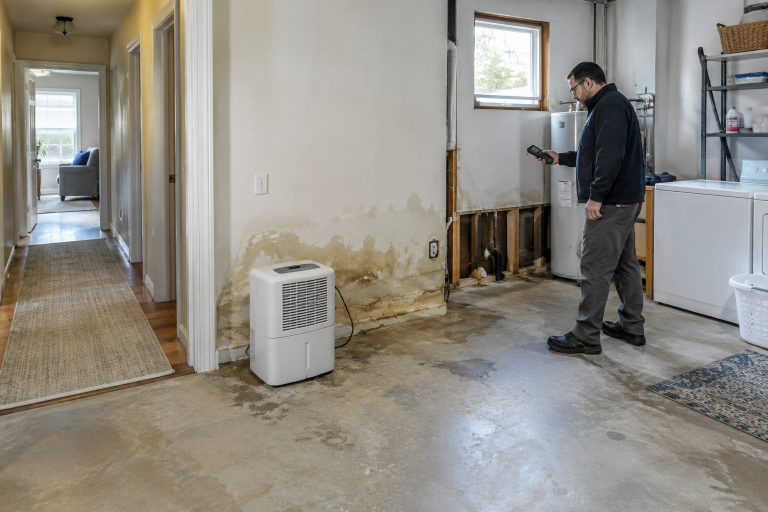
One slow sink may be a simple plumbing issue, but multiple symptoms at once warrant prompt attention. Watch for changes inside the home as well as conditions around the tank and drainfield.
Inside-the-Home Signs
- Several sinks, tubs, or showers drain more slowly than usual.
- Toilets gurgle, drain poorly, or cause water to rise in nearby fixtures.
- Wastewater backs up into a tub, shower, floor drain, sink, or toilet.
- Persistent sewage odors occur indoors.
- Problems become more noticeable after laundry, showers, or houseguests increase water use.
Outdoor Signs
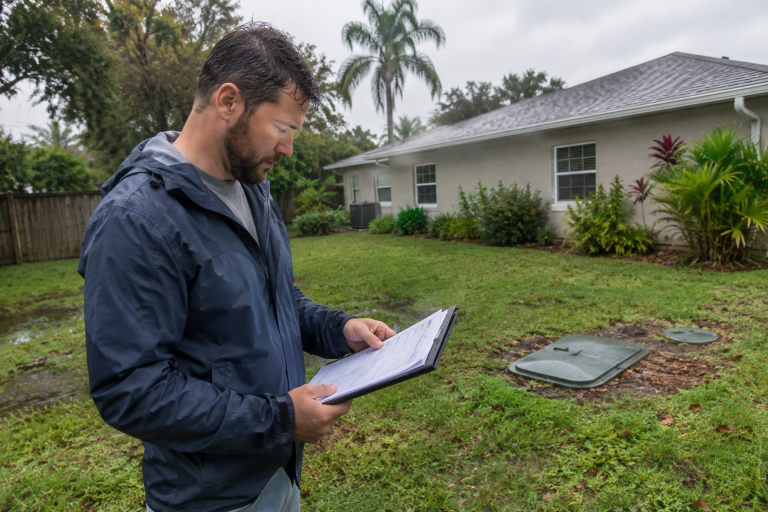
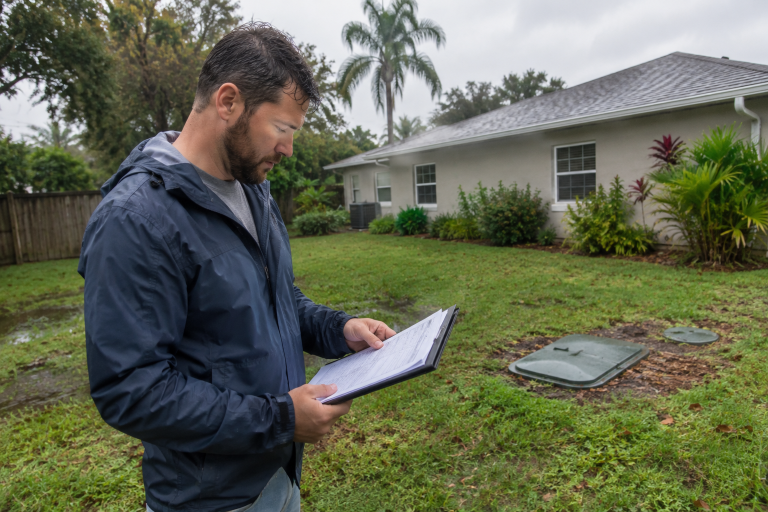
- Ground near the tank or drainfield is unusually wet, soft, or spongy.
- Wastewater or gray water appears on the surface.
- Grass over one area grows much greener or thicker than surrounding turf.
- Unusual sewage odors linger outdoors.
How to Plan Pumping
The three-to-five-year range is a useful starting point, not a universal rule. A smaller tank, larger household, frequent use of a garbage disposal, or unusually high water use may mean solids accumulate more quickly. A system with pumps, alarms, or other mechanical components may also require a different inspection schedule.
Before arranging service, review records and ask, “When was the tank last pumped?” How many people use the home? Has water use changed? Are there any slow drains, odors, or wet spots? If service history is missing, an inspection can provide a better basis for future planning than waiting for a backup.
Water Habits That Reduce Strain
Large volumes of water entering a septic system in a short time can move wastewater through the tank too quickly and place added demand on the drainfield. Small daily choices can help avoid those surges.
- Spread laundry loads across the week rather than running many loads in one day.
- Repair running toilets and dripping faucets as soon as possible.
- Use water-efficient fixtures when replacing older equipment.
- Take reasonable steps to avoid unusually long showers and unnecessary water use.
- Keep roof runoff, landscape drainage, and irrigation directed away from the drainfield.
What Not to Flush or Pour Down Drains
Toilets and drains are not household trash cans. Only human waste and toilet paper should be flushed. Wipes, paper towels, dental floss, diapers, feminine hygiene products, cat litter, coffee grounds, grease, paint, solvents, pesticides, and unused medications can create clogs, add solids, or introduce materials that do not belong in the system.
Kitchen grease deserves special attention. Allow it to cool in a disposable container, then place it in the trash rather than rinsing it down the sink. Limiting food waste sent through a garbage disposal can also reduce the solids entering the tank.
How to Protect the Drainfield
The drainfield needs open, uncompacted soil to do its work. Keep cars, boats, construction equipment, sheds, pools, and storage materials away from the treatment area. Avoid planting deep-rooted trees near septic components, and maintain grass or other shallow-rooted cover where appropriate.
Make a simple property sketch showing the tank, drainfield, access lids, and known utility lines. This record can help prevent accidental damage during landscaping, fencing, or irrigation work, as well as future home projects.
What to Do When Problems Appear
- Reduce water use while the cause is being assessed.
- Stop using toilets, showers, dishwashers, and washing machines if wastewater is backing up.
- Keep children and pets away from standing wastewater.
- Do not enter a septic tank or attempt to inspect it without proper training and safety equipment.
- Write down the symptoms, recent water use, rainfall conditions, and when the issue began.
- Contact a qualified professional or the appropriate local health authority for guidance.
A Simple Yearly Septic Checklist
Spring and Summer
- Walk the yard after heavy rain and look for odors, pooling water, or soft ground.
- Check that downspouts and surface drainage direct water away from the septic area.
- Monitor water use during holidays, gatherings, and extended guest stays.
Fall and Winter
- Review pumping and inspection records.
- Confirm that landscaping has not hidden or blocked access points.
- Watch for slow drains, toilet gurgling, and unusual indoor odors.
- Keep emergency contact details and system records in an easy-to-find location.
Conclusion
Septic systems often provide early clues before a major failure. Paying attention to slow drains, odors, wet ground, changing grass growth, and water-use patterns gives Orlando homeowners an opportunity to act early. A routine checklist, sensible daily habits, and timely inspections can help protect the home, yard, and nearby water resources.