Are Tight Fascia Bands the Real Architect of Your Dimpled Skin?
For decades, the standard narrative around cellulite was simplistic: it’s just fat. If you have dimpled skin on your thighs or buttocks, the solution must be to eat less and exercise more.
Yet, countless individuals—including marathon runners, models, and athletes with single-digit body fat percentages—can attest that this approach often fails to eliminate the characteristic “orange peel” texture. The persistence of the condition across all body types points to a fundamental misunderstanding of the issue.
Cellulite is not merely a fat problem; it is a structural problem dictated by the architecture of the tissue beneath the skin. The true culprit, the silent architect of the dimples, is the fascia, or more specifically, the rigid bands of connective tissue known as the fibrous septae.
The Trap Door Mechanism
To visualize cellulite, we must look at the hypodermis, the deep layer of skin where fat cells (adipocytes) reside.
In the female anatomical structure, these connective tissue bands (septa) run vertically, like pillars holding up the surface skin. Fat cells are clustered into chambers between these vertical bands.
The structural problem arises when the fat cells swell (due to diet, inactivity, or hormonal fluctuations) and the septae—often stiffened by poor circulation, chronic inflammation, or age—remain rigid. The fat pushes upward, but the stiff septae pull downward, creating tension at the anchor points. This unequal tension creates the characteristic peaks and valleys, or dimpling, that we recognize as cellulite.
In men, the septae are structured differently; they form a crisscross pattern (a honeycomb), which allows fat to expand horizontally and evenly, making visible dimpling extremely rare.
The breakthrough in modern treatment is the recognition that the aesthetic issue can only be solved by addressing the stiff structural bands and the thinness of the overlying dermis.
The Double-Sided Strategy: Remodeling and Relaxation
The solution requires a two-pronged attack: one dedicated to softening the restrictive septae, and another focused on thickening the skin above the dimples.
1. Targeting the Overlying Dermis (The Hide the Holes Strategy)
If the overlying skin layer is thin, the dimpling effect is much more pronounced. The goal of topical application is to boost collagen and elastin production in the dermis, creating a thicker, firmer “mattress” that resists the pressure from the fat below.
- Retinoids (Vitamin A derivatives): These are proven collagen stimulators. Applied topically, they encourage cell turnover and increase dermal density, effectively strengthening the skin layer covering the cellulite.
- Antioxidants (Vitamin C): Essential for collagen synthesis and protecting existing collagen from degradation by free radicals, which are often rampant in areas of poor circulation.
2. Enhancing Circulation and Fluid Management
Stagnant blood flow and poor lymphatic drainage worsen the problem by increasing the fluid (edema) surrounding the fat cells, making them swell further and press harder against the septae.
- Caffeine: A powerful vasoconstrictor and diuretic when applied topically. It temporarily reduces the size of the fluid surrounding the fat cells, smoothing the appearance. It also stimulates circulation, which helps flush away toxins that contribute to septae stiffness.
- Botanicals: Ingredients like butcher’s broom, horse chestnut, and centella asiatica (Gotu Kola) are used to fortify capillary walls and enhance microcirculation.
The Role of Mechanical Intervention
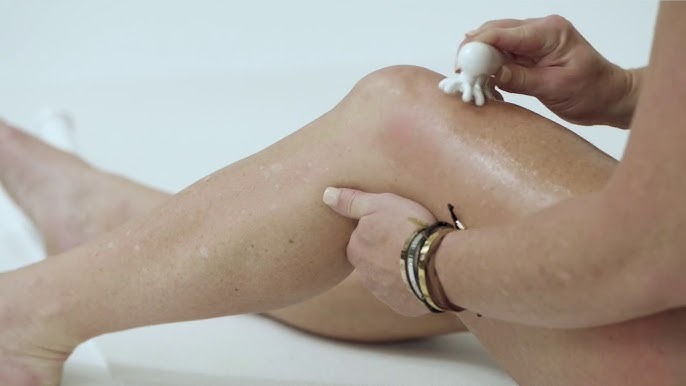
Because the fascia is a dense, physical structure, it requires physical manipulation to encourage flexibility. This is why tools and mechanical aids are crucial complements to topical products.
Techniques like dry brushing, foam rolling, and vigorous massage using dedicated devices help break up adhesions in the septae and increase blood flow to the deeper layers. By softening the restrictive bands, the skin tension is relieved, and the dimples become less acute.
This synergistic approach—addressing fat swelling, structural stiffness, and skin thickness—is key to achieving meaningful results. While no single miracle cure exists, the combination of mechanical manipulation and advanced topical compounds is the most scientifically sound strategy.
Effective management requires a holistic approach that ensures the skin’s surface is thick and resilient, and that the underlying architecture is flexible and well-circulated. The right cellulite smoothing cream acts as the crucial chemical support system, delivering collagen stimulators and circulation boosters directly to the site of the structural problem, allowing the skin to finally relax its long-held architectural tension.