
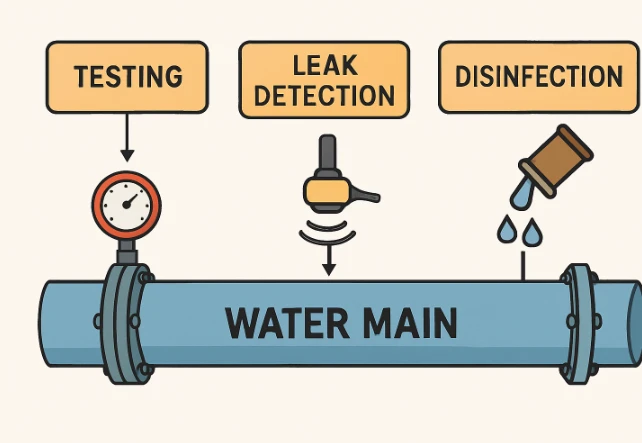
Best Practices for Water Main Testing
Maintaining the reliability and safety of water main infrastructure is essential for modern communities. Regular, practical testing is fundamental for preventing unexpected failures, reducing costly repairs, and safeguarding public health. Building a proactive testing strategy enables utilities to identify weaknesses in distribution systems before they become significant issues. For specialized equipment needs, a hydrostatic test pump can help ensure pressure testing is performed with precision and consistency, resulting in accurate results.
Also Read: Pop Up Food Businesses: Infrastructure Essentials You Miss
Timely detection of leaks and early identification of potential contamination risks protect both water quality and consumer confidence. Clarity in process, compliance with safety standards, and solid communication practices further reduce risks. Water utilities, contractors, and municipalities that prioritize best practices in water main testing deliver reliable service and protect public resources.
Importance of Regular Testing
Water main testing is the foundation of any sound water distribution program. Frequent testing reveals hidden leaks or weaknesses in the mains, helping address them before they become emergencies. Without regular inspection and testing, small issues can go unnoticed and escalate into significant failures. The result may be widespread service disruptions, high emergency repair costs, or compromised water quality that endangers public health.
Authorities such as the American Water Works Association stress that systematic testing not only helps maintain service reliability but also demonstrates a commitment to customer well-being and regulatory compliance. Testing frequency should be determined by system age, material composition, past failure history, and local risk factors, such as ground movement or nearby construction activities.
Preparing for Water Main Testing
Effective water main testing begins with proper preparation. Advance planning minimizes service disruptions and safety risks. Utilities should notify affected customers early about possible outages or changes in water quality. Testing teams must verify that all required tools, including calibrated gauges and pumps, are in good working order to avoid delays. In areas with significant traffic or public activity, close coordination with local authorities is necessary to ensure road closures, detours, or traffic control measures are communicated and implemented as needed.
Preparation also involves reviewing detailed water main maps, confirming the location and size of isolation valves, and ensuring that emergency response plans are in place. An organized, thorough approach to preparation directly improves the accuracy and safety of the water main testing process.
Pressure and Leakage Testing
Pressure and leakage testing are central to determining the structural soundness of any water main. Organizations like the American Water Works Association and state departments of health standardize planning. As outlined in the City of Aurora’s guidance, a test pressure of at least 150 pounds per square inch (psi) is typically required and must be maintained for a minimum of 2 hours. If the measured pressure drops by more than 5 psi during this period, the water main is deemed to have failed. This outcome mandates further investigation, pinpointing of leaks, and corrective repairs before the main is put into service.
Hydrostatic testing with reliable equipment is preferred, as it confirms the integrity and tightness of new and repaired water mains. The process is crucial for reducing the risks of undetected leaks, water loss, and contamination.
Disprimaryction Procedures
After successfully completing pressure and leakage tests, disinfection becomes the next vital step. The disinfection process is designed to remove contaminants that may have entered the main during installation, maintenance, or testing. This is accomplished in several stages:
- Flushing the main using a high-velocity water flow to eliminate debris and sediment.
- Introduce a chlorine solution until the correct concentration is reached throughout the pipeline.
- Allowing the chlorinated solution to remain in the system for a set contact time to neutralize pathogens.
- Flushing the system again to remove the disinfectant before restoring normal water service.
Each step is guided by both local regulations and industry standards. According to the Centers for Disease Control and Prevention, proper disinfection procedures are crucial for protecting against waterborne illnesses.
Utilizing Advanced Technologies
Modern water main testing has gone beyond traditional manual approaches. New technologies, such as risk-prediction software, remote-sensing tools, and machine learning models, provide utilities with actionable insights for proactive asset management. Machine learning models can now predict likely water main breaks earlier and with greater accuracy. For example, research has shown these models can greatly outperform random baseline methods, achieving a much higher probability of accurately identifying risk.
Acoustic leak detection, drone inspections, and smart sensors embedded within pipelines all contribute to improved efficiency and cost savings. Integrating these tools into a routine testing program can help utilities move from reactive repairs to a data-driven, managed approach.
Compliance with Regulatory Standards
Staying current with applicable regulatory requirements is critical. The Environmental Protection Agency (EPA) periodically updates rules regarding water main construction, testing, and lead control. Following these standards ensures pipeline safety and quality benchmarks are achieved, minimizing health hazards and supporting funding eligibility. The EPA’s recent amendments to the Lead and Copper Rule emphasize regular testing and prompt action when lead is detected in drinking water.
Utilities should regularly review federal and state rules and ensure documentation is thorough, up to date, and readily available for inspection.
Documentation and Record-Keeping
Accurate record-keeping remains one of the pillars of successful water main management. Utilities should maintain meticulous records, including the specifics of each test, equipment calibration logs, detailed results, and a record of any corrective actions taken. Communications with stakeholders, response times, and procedural updates should also be recorded. These records are invaluable not only for compliance but also for rapid response in the event of a future incident or regulatory audit.
Public Communication and Transparency
Clear communication strategies are essential for building trust and securing public support. Utility companies should notify customers about upcoming testing activities and communicate potential impacts, such as water discoloration or service interruptions. Sharing testing outcomes, including steps taken to address any issues, demonstrates transparency and reinforces a commitment to quality and safety. Educational outreach, customer advisories, and public reporting foster strong community relations and help utilities manage expectations and concerns.
Following these best practices ensures water utilities uphold the highest standards of safety and reliability in water distribution, benefiting the communities they serve.