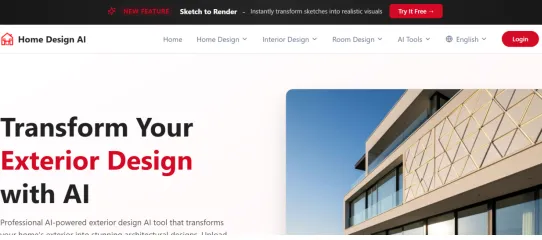
DeHome vs Home-Design.ai: AI Room Makeover in Seconds
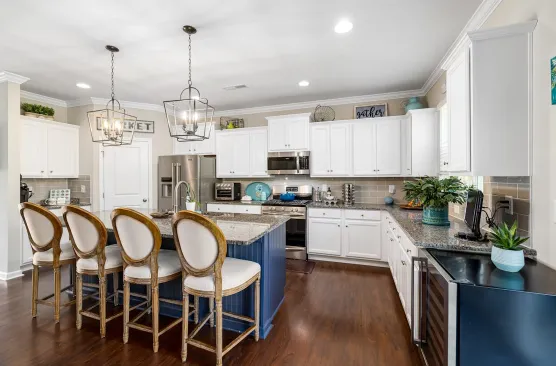
You only need to take a picture of your boring living room and see it being turned into a dream of a designer within seconds. DeHome and Home-Design.ai are transforming the aspects of creativity among homeowners, architects, as well and real-estate agents- they are transforming concepts into photorealistic spaces that run on artificial intelligence.
Also Read: Mastering a Quick and Smooth Home Selling Process
In this comparison, we are going to investigate how the two tools transform the future of home design, what their best qualities are and which one may be more advantageous to your personal or professional vision.
As opposed to conventional design software, the artificial intelligence applications like DeHome and Home-Design.ai will only require the presence of a photograph or a short textual instruction. They create layouts that match your mood, architecture and your preferred aesthetic instantly, without using creative blocks and wasting hours of trial and error.
Ease Test: Which Tool Feels Faster, Cleaner, and More Natural
The interface of any AI design platform is the key to its success. DeHome is a smooth surface; its dashboard is arranged with tools such as the AI Interior, Blueprint Generator, and Paint Visualizer. Such advanced features as architectural elevation renderings are friendly even.
Home-Design.ai, in its turn, employs a very minimalistic design. On a single screen, there are: upload, choose style, and generate. It loads quickly, even on mobile, and gives quality pictures within less than a minute.
Both sites highlight that there is no learning curve, although DeHome is slightly more professional, whereas Home-Design.ai is aimed at immediate personal creativity.
DeHome: Precision Design for Interiors, Plans, and Visuals
DeHome brands itself as the AI giant in one-stop home design, including its looks and interior as well as exterior and architecture visualisation. As soon as you post a photo, the system starts analysing angles, colours, and light and applying neural models trained on actual design photographs.
Major Characteristics that make DeHome.
- AI Interior Designer: Add a room, choose a style (Scandinavian, Minimalist, or Modern), and your room will be changed within seconds.
- AI Floor Plan Generator: Transforms raw layouts into readable blueprints that have annotated rooms and their corresponding rooms.
- Architecture Generator: It generates concept renders based on plain text, perfect when used by architects and constructors.
- Paint Visualizer: Visualise the appearance of the paint colour before purchasing a can of paint.
DeHome operates on a credit model- whereby one can have free generations per day and premium upgrades on non-limited projects. Its capability of transforming real-life images into studio-quality images has made it a favourite amongst interior designers and developers who appreciate speed as well as accuracy.
Home-Design.ai: The Instant, Free Makeover Tool.
Although DeHome is pushed to the professional utility, Home-Design.ai introduces ease and access to the masses. It is being marketed as 100 per cent free, no sign-up, and unlimited giving instant photo transformations to interior, exterior, and gardens.
The interface is less weighty and user-friendly. You can upload a photo of your living room, select your favourite theme, and the AI will make a believable makeover in a few seconds. It is ideal when someone at home tries out their renovations or agents do virtual staging of properties they are listing.
Shiny Tools on Home design.ai.
- Virtual Staging AI: The program furnishes vacant rooms with classy designs that can be listed on the MLS.
- Sketch to Render: Convert sketchy images to detailed, photorealistic images.
- AI PaintColour Visualizer: Add thousands of paint shades and detect the walls without any human intervention.
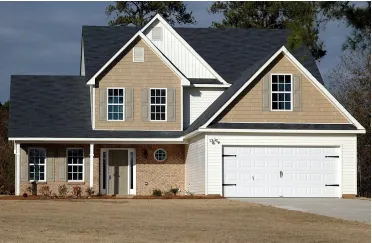
- Exterior and Garden Design: Perfect when landscaping or curb-appeal mockups are required.
Where AI Wins in Real Life: Renovations, Listings, and Visual Proof
Whether you are planning to redesign your living room or maybe a building proposal, these tools transform your wildest imaginations into actual images.
Where These Tools Excel
- Walls Makeovers: Imagine the new improvements without picking up a hammer.
- Real-Estate Marketing: Virtual staging will help attract buyers in a short time.
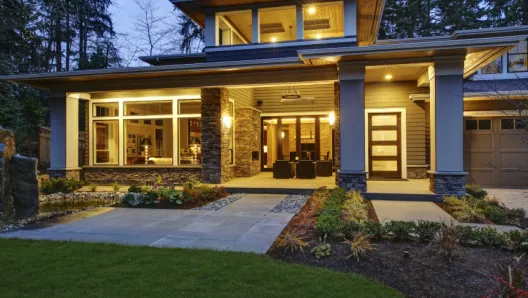
- Architecture Visualisation: Create exterior drawings for presentation to clients.
- DIY Projects: Try colours, textures and decor combinations easily.
The Human-AI Partnership
AI does not mean the end of creativity, but it increases it. Designers can now bypass the tedious processes of rendering and do little more than composition, style and emotional tone. It is that combination of human intuition and algorithmic accuracy that makes the new generation of AI home design.
Reality Check: What AI Can Miss and How to Avoid It
Even the state-of-the-art AI is limited.
Points to Remember
- AI can also misunderstand angles or lighting when the photos are too dark or messy.
- The full resolution or editing of some DeHome tools is only available in the premium access.
- Home-Design.ai, despite being free, can be inconsistent in furniture scaling at times.
Nevertheless, these are small sacrifices in the light of the time they will save and the creativity they will open their eyes to.
Final Pick: The Best Choice for Your Home Design Goal
The decision between DeHome and Home-Design.ai will be based on your intentions. In case you are a professional designer, builder, or realtor, DeHome provides detailed control based on the blueprints that are precise, architectural tools, and realistic lighting. However, when it comes to inspiration or fast room-planning, the unlimited free model of Home-Design.ai is incomparable to those who are homeowners or hobbyists.
The history of AI in home design is a long way off. Visualise the experience of using AR glasses to display the visualisation of DeHome or Home-Design.ai renderings into your actual physical surroundings, or having AI agents handle layout optimisation to maximise sunlight and energy usage.
Both platforms show that the future of AI interior design is not to dehumanise the designer but to democratize creativity, allowing the world-class aesthetic to be enjoyed by everyone, one photo at a time.