Designing Your First Home Practical Guide to Balancing Décor & Budget
The moment you turn the key in the lock of your first home is one of the most exhilarating feelings in adulthood. You walk through the front door, the smell of fresh possibilities (and maybe a little dust) in the air. You envision dinner parties in the dining room, lazy Sundays in the lounge, and a master bedroom that feels like a sanctuary.
Also Read: How Drug Crime Lawyers Defend Clients Facing Possession Charges?
Then, reality hits.
You look around, and the rooms are empty. The furniture you had in your previous rental looks tiny in this new space. You open Instagram or Pinterest for inspiration, and the “minimalist Scandi-chic” living room you love costs more than your car.
This is the classic first-time homeowner dilemma: Champagne tastes on a tap-water budget.
After the massive financial outlay of a down payment, closing costs, and moving fees, your bank account is likely recovering. Yet, the pressure to turn a house into a “home” immediately is immense.
The good news? You don’t need an unlimited budget to create a stunning, cohesive space. You just need a strategy. Designing a home is a marathon, not a sprint, and the most beautiful homes are often the ones that balance savvy budgeting with smart design choices.
Here is your practical guide to navigating the intersection of interior design and financial reality.
1. The Financial Reality Check: Budget Before You Buy
Before you buy a single throw pillow or browse a furniture sale, you need to stop and look at the numbers. It is tempting to put home decor on a credit card, thinking you will “pay it off later,” but this is a dangerous trap for new homeowners who are still adjusting to the costs of property ownership (rates, insurance, maintenance).
You need to calculate your “After-Mortgage” disposable income.
Your mortgage is likely your biggest monthly expense, and it dictates how much “fun money” you actually have. Many people underestimate the impact of interest rates and loan terms on their monthly cash flow. Smart budgeting starts with understanding your real monthly commitments — this refinance home loan guide can help you understand how different loan structures impact your bottom line, ensuring you aren’t over-committing to furniture payments when you should be building a maintenance buffer.
Once you know your safe monthly spend, allocate a specific “Home Fund.” Even $200 a month adds up to a quality piece of furniture every few months.
2. The “Slow Decorating” Movement
One of the biggest mistakes new homeowners make is the “One-Weekend Overhaul.” They rush to a big-box store and buy everything in one go—sofa, rug, lamps, coffee table—just to get it “done.”
The result? A home that looks like a catalog page: flat, impersonal, and often lacking in quality.
Embrace Slow Decorating. Live in the space for at least two months before making major purchases. Watch how the light moves across the room. Notice where you naturally put your keys, where you want to sit to read, or where the draft comes in.
Why this works for your budget:
- It spreads the cost over months or years, reducing financial stress.
- It prevents expensive mistakes (like buying a sectional sofa that blocks the flow of traffic).
- It allows you to hunt for sales, vintage finds, and specific pieces that add character.
3. The “High-Low” Mix: Where to Splurge and Where to Save
Professional designers rarely source everything from high-end showrooms. They master the art of the “High-Low” mix. This involves spending significant money on a few “hero” pieces and saving money on secondary items.
Knowing the difference is key to a budget-friendly design.
Where to Splurge (Invest Quality)
These are items you use every day or that anchor a room visually.
- The Sofa: You sit on it daily. Cheap foam collapses in a year; a good kiln-dried hardwood frame lasts 20 years.
- The Mattress: Never compromise on sleep quality.
- Statement Lighting: A cheap room looks expensive with a beautiful, sculptural light fixture. It is the “jewelry” of the room.
Where to Save (Go Budget)
These are items that are trendy, wear out, or can be found cheaper without sacrificing looks.
- Textiles: Throw pillows, blankets, and curtains. You can find linen-look curtains at budget stores that look identical to high-end versions if you hang them high and wide.
- Side Tables: These don’t bear much weight or wear. A thrifted table with a coat of spray paint works perfectly.
- Rugs: Unless it’s an heirloom Persian rug, rugs take a beating. Natural fibers like jute or sisal are incredibly cheap, durable, and add great texture.
4. Paint: The ROI King
If you have $100 to spend on a room, spend it on paint. There is no other tool in the design arsenal that transforms a space as dramatically for such a low cost.
- The “New Build” Fix: If your home feels sterile and “builder-grade,” warm whites or moody greiges can add instant depth.
- The “Fixer-Upper” Hack: If your kitchen cabinets are dated but structurally sound, don’t rip them out (which costs thousands). Paint them a deep navy or sage green and change the hardware. You have a “new” kitchen for under $500.
- The Fifth Wall: Don’t forget the ceiling. Painting a ceiling a soft color can make a room feel cozy and designed, rather than just “finished.”
5. Structural Planning and Financing
Sometimes, décor isn’t enough. You might be looking at a wall that needs to come down to create an open-plan flow, or a bathroom that is functionally obsolete.
This moves from “decorating” to “renovating,” and the budget requirements change drastically.
If you are eyeing structural changes, you need to integrate this into your financial planning before you start buying furniture. Many first-time homeowners work with mortgage advisors like The Loan Connection during the early planning stage to explore if renovation costs can be utilized effectively or if there are lending products better successfully suited to a fixer-upper strategy.
Aligning your mortgage strategy with your renovation goals prevents you from running out of cash halfway through a project—a nightmare scenario that leaves you living in a construction site.
6. The Art of texture and Layering
Budget homes often feel “flat.” They lack the coziness of the images you see on Pinterest. The secret ingredient isn’t money; it’s texture.
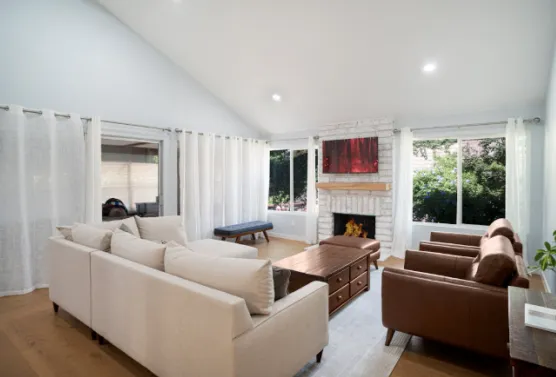
A room with a grey sofa, grey carpet, and white walls feels like a waiting room. To make it feel expensive, you need to layer different materials.
- Mix your materials: Wood, metal, glass, wool, leather, and linen.
- Add life: Plants are the cheapest sculptural element you can buy. A large Monstera or Fiddle Leaf Fig fills an empty corner for $50, whereas a piece of furniture for that spot would cost $500.
- Books and Art: Don’t buy generic “art” from big box stores. Frame personal photos in large mats (which makes them look expensive), or hunt for vintage oil paintings at flea markets. Books add warmth and acoustic dampening to a room.
7. Shop Your Own Home
Before you buy anything, shop your own inventory. That bedside table from your old apartment might look terrible next to your bed, but could it work as a plant stand in the living room if you painted it black?
Could the rug from the guest room work better in the study?
Repurposing items gives them a new life and keeps your budget intact. This is also where DIY comes in. Changing the legs on a sofa, swapping out the knobs on a dresser, or reupholstering a dining chair seat are low-skill, high-impact projects that elevate your existing furniture.
Conclusion: The “Finished” Myth
Finally, release yourself from the pressure of the “finished” home. A home is a living organism. It changes as you change. It evolves as your budget grows, as your family grows, and as your tastes shift.
The most stylish homes aren’t the ones that were bought in a single weekend with a platinum credit card. They are the ones that were curated over time, with patience, financial prudence, and a lot of personality.
Start with the basics. Budget for the boring stuff. Splurge on the sofa. And enjoy the process of building your home, one thoughtful purchase at a time.