How a Mower Conditioner Helps Farmers Speed Up Drying and Protect Forage Quality
Optimizing Harvest Timing Forage Quality
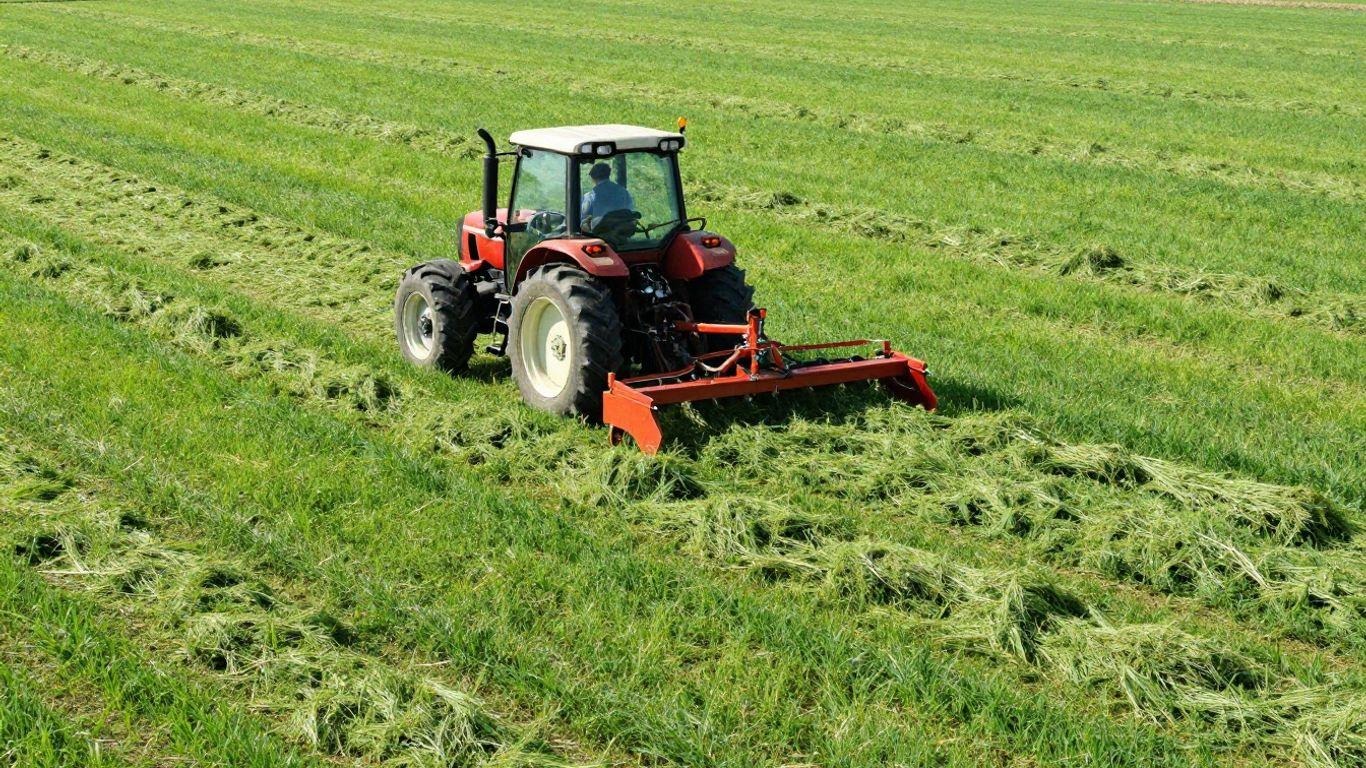
Deciding when to cut forage is a big deal for farmers. It’s not just about getting the crop down; it’s about getting it down at the right time to keep its nutritional punch. Forage quality starts dropping the second the mower conditioner hits the field. So, timing is everything. Missing the sweet spot means you might end up with feed that doesn’t quite cut it for your animals, impacting everything from milk production to weight gain. A mower conditioner helps manage this critical window.
The ideal harvest time balances yield with nutrition. As plants get older, they get heavier, sure, but they also get less digestible and have fewer nutrients. This is especially true for ruminant animals. Higher fiber means they can’t eat as much, and they can’t get as much goodness out of what they do eat. Getting the timing right with your mower conditioner means you’re aiming for that perfect mix of tonnage and nutrition.
- Early Harvest: Higher protein, better digestibility, ideal for high-demand animals (dairy cows, growing calves).
- Later Harvest: More tonnage, lower cost per acre, suitable for less demanding animals (dry cows).
- Matching Needs: The best time depends on who’s eating the forage and what you need them to do.
The Impact Of Plant Maturity On Nutritional Value
Plant maturity is the biggest player when it comes to forage quality. As a plant moves from its leafy vegetative stage to flowering, its nutritional profile changes dramatically. While the total amount of dry matter increases, the concentration of essential nutrients like protein goes down, and fiber content goes up. This shift directly affects how much an animal can eat and how well it can digest the feed.
Higher levels of fiber, specifically Neutral Detergent Fiber (NDF), can slow down digestion in the rumen, limiting how much an animal can consume. Acid Detergent Fiber (ADF) is a measure of indigestible fiber, so more ADF means less energy available to the animal. These changes mean that forage cut at a later stage, while yielding more, offers less nutritional value. This is a key reason why understanding the maturity of your crop is so important when operating a mower conditioner.
The nutritional value of forage is directly tied to its maturity. As plants mature, they gain weight but lose nutritional density, impacting animal performance and feed efficiency.
Matching Harvest To Livestock Needs
Not all livestock have the same dietary requirements. A high-producing dairy cow in peak lactation needs a very different kind of forage than a beef cow in mid-gestation. This is where matching your harvest strategy, including the operation of your mower conditioner, to your specific livestock needs becomes important. Forage cut at an earlier stage, with higher leaf content and lower fiber, is best suited for animals with high energy and protein demands.
Conversely, for animals with lower nutritional requirements, a slightly later harvest might be perfectly acceptable. This later harvest can provide more tonnage and potentially a better economic return per acre. The goal is to use the mower conditioner to harvest at a point that best supports the performance of your specific animals, whether that’s maximizing milk production, promoting growth, or maintaining body condition. It’s about making smart choices based on who’s eating the feed and what you need that feed to do.
Leveraging Mower Conditioner Features For Faster Drying
Conditioning Systems For Efficient Moisture Removal
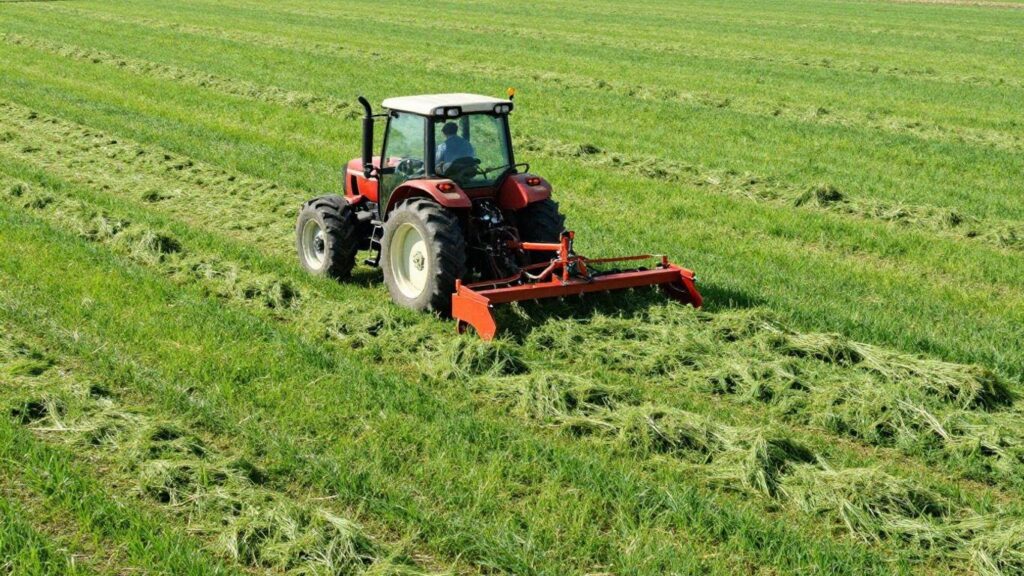
Getting forage to dry quickly after mowing is key to preserving its nutritional value. A mower conditioner is designed to speed this up. The conditioning system is what does the heavy lifting here, breaking down the plant’s waxy outer layer. This allows moisture to escape much faster than if you just mowed and left the crop in the field.
There are a couple of main types of conditioning systems. You’ve got intermeshing rolls, often made of rubber or urethane, which gently crimp the stems. Then there are flail-type conditioners with tines that vigorously condition the crop. The choice often depends on the type of forage you’re cutting. For delicate legumes like alfalfa, rolls are usually preferred to minimize leaf loss. For grasses, a flail system can be more aggressive and speed up drying even more.
The goal is to create a uniform swath that dries evenly. This means the conditioning system needs to work effectively across the entire width of the cut. A well-functioning conditioning system on your mower conditioner can significantly cut down on drying time, reducing the risk of weather damage and nutrient loss. This is a big deal when you’re trying to get hay in before a rain shower.
Adjusting Swath Width For Sun Exposure
How wide you lay down the cut forage, or the swath width, plays a big role in how fast it dries. A wider swath exposes more of the crop to the sun and air, which helps it dry out quicker. This is especially important on sunny, breezy days.
However, you can’t just make the swath as wide as possible all the time. If the swath is too wide, especially in thick stands, the bottom of the swath might not get enough air or sun. This can lead to uneven drying, where the top dries out but the bottom stays damp. This is where the mower conditioner’s adjustable swath boards come in handy.
By adjusting the swath width, you can tailor how the crop is laid down to match the conditions. On a bright, dry day, a wider swath is great. If it’s more humid or the crop is very dense, you might opt for a narrower swath or even spread the crop out more thinly. Finding that sweet spot for swath width is a simple but effective way to speed up drying.
The Benefits Of Intermeshing Rolls And Flail Systems
Both intermeshing rolls and flail systems on a mower conditioner have their own advantages for drying. Rolls, particularly the rubber chevron type, are known for being gentle. They crimp the stems without tearing them up too much, which is great for preserving leaves on crops like alfalfa. This means less leaf shatter and more of that nutrient-rich material ends up in your bale.
Flail systems, on the other hand, use a series of tines that beat and condition the crop. They are generally more aggressive and can be very effective at speeding up drying, especially in grass hay. The action of the flail can break down the tough stems of grasses more thoroughly, allowing moisture to escape faster.
The choice between rolls and flails often comes down to the type of forage and the desired outcome. Both aim to increase the surface area and break down the plant’s cuticle to accelerate drying. A good mower conditioner will offer options or be designed for specific forage types to maximize drying efficiency.
Ultimately, the benefit of having either system on your mower conditioner is the significant reduction in drying time compared to mowing alone. This faster drying means less time spent in the field exposed to potential weather damage, and it helps lock in the nutritional quality of the forage before it degrades. Using the right conditioning system is a smart move for any hay producer.
Protecting Forage Quality With Proper Mower Conditioner Operation
Setting Cutter Bar Height For Regrowth And Ash Content
Getting the cutter bar height just right is a simple adjustment that makes a big difference. For crops like alfalfa, setting the cutter bar a bit higher, around three inches, helps protect the plant’s crown. This allows for better regrowth and also keeps the harvested forage cleaner. Minimizing soil contact reduces ash content, which is a win for both quality and animal digestion. For grasses, you might go a little higher, maybe four inches, to give them a good start for the next cutting.
A slightly higher cut promotes healthier regrowth and reduces the risk of soil contamination. This simple step in operating your mower conditioner directly impacts the quality of your hay. It’s about more than just cutting the grass; it’s about setting up the field for future success and ensuring the forage you harvest is as clean as possible. Remember, a cleaner cut means less dirt in your bales.
- Higher cut protects crown buds for better regrowth.
- Reduces ash content by minimizing soil incorporation.
- Leaves more stubble to aid airflow and drying.
Optimizing Ground Speed For A Uniform Cut
How fast you drive your mower conditioner matters. Going too fast can lead to an uneven cut, leaving behind strips of uncut or ragged forage. This isn’t good for drying or for the next harvest. You want a consistent windrow that dries evenly and makes baling easier. Take the time to adjust your ground speed based on the crop density and field conditions.
Think of it like this: a smooth, even cut makes for a smooth, even dry-down. When the forage is cut uniformly, it allows for better air circulation and sun exposure across the entire swath. This uniformity is key to preventing pockets of wet forage that can spoil. Proper ground speed is a direct contributor to the overall quality of the harvested material.
A uniform cut from your mower conditioner is the first step towards consistent drying and high-quality forage.
Maintaining Sharp Blades For Clean Stems
Sharp blades on your mower conditioner are non-negotiable for top-quality forage. Dull blades don’t cut cleanly; they tear the plant stems. This tearing action can slow down regrowth for perennial forages and negatively affect their nutritional value. Cleanly cut stems heal faster and are less susceptible to disease.
Regularly checking and sharpening your blades, or replacing them when needed, is a small maintenance task that pays off big. It ensures that each pass of the mower conditioner is efficient and preserves the integrity of the plant. This attention to detail in maintaining your equipment directly translates to better forage quality in the field and in the bale.
- Sharp blades make a clean cut, not a tear.
- Reduces stress on perennial plants for faster regrowth.
- Improves overall forage nutritional value.
- Contributes to a more uniform windrow for drying.
Advanced Mower Conditioner Technologies
Disc Mower-Conditioners For Efficient Operations
Modern farming demands speed and efficiency, and disc mower-conditioners are leading the charge. These machines, often called ‘Discbines,’ use rotating discs to cut the crop. This method is known for its clean cut and ability to handle tough conditions. They can cover a lot of ground quickly, making them a great choice for larger fields or when time is tight.
The design allows for continuous swaths, which really helps when it’s time to rake and harvest. This setup can improve the overall workflow significantly. They are also quite maneuverable, which is a big plus for fields with odd shapes or smaller plots. The disc mower-conditioner is a key piece of equipment for anyone looking to speed up their hay and forage operations.
Integrated Length-Of-Cut Adjustments
Forage quality isn’t just about drying; it’s also about how the crop is processed. Integrated length-of-cut adjustments are a game-changer, especially for silage. These systems let you preset the desired chop length based on moisture levels. This means you can get the perfect particle size for packing into a bunker silo.
This precise control helps reduce spoilage and makes for higher-quality silage. It’s a smart feature that takes the guesswork out of chopping. The ability to adjust on the fly, based on real-time conditions, is what makes these advanced mower conditioner technologies so useful.
On-The-Go Forage Analysis Tools
Imagine knowing the nutritional value of your forage while you’re still harvesting. That’s the power of on-the-go forage analysis tools. These systems use near-infrared spectroscopy to measure things like protein, moisture, and fiber content right in the field.
This data is invaluable. You can map out nutrient variations across your fields, helping you make better decisions for feeding or selling. Having this real-time feedback from your mower conditioner allows for immediate adjustments to your harvest strategy. It’s like having a lab in your tractor cab, giving you instant insights into forage quality.
Mower Conditioner Integration With Other Harvest Strategies
Utilizing Hay Preservatives For Higher Moisture Bales
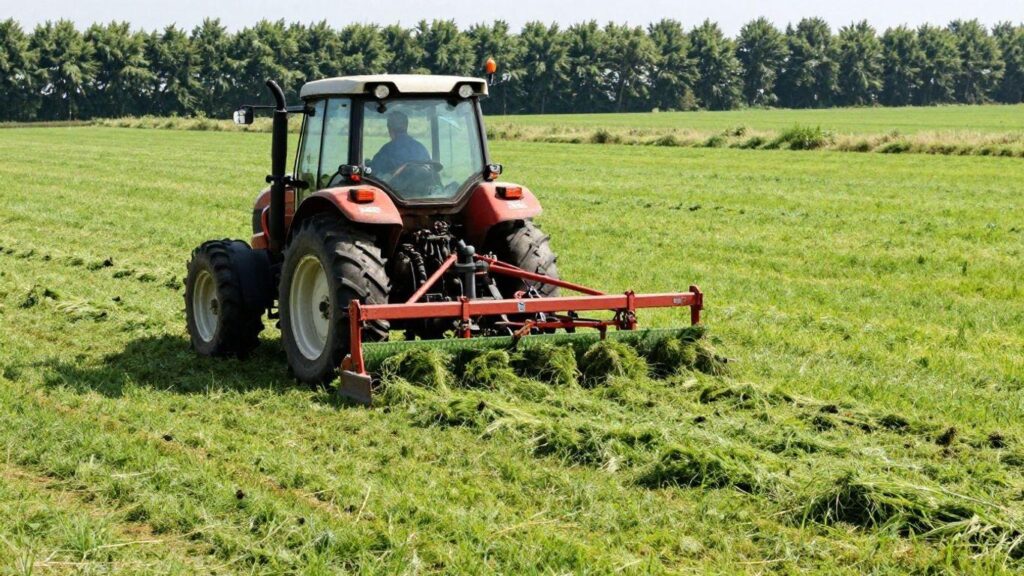
Sometimes, the weather just doesn’t cooperate. When you’re facing a tight window and the forecast looks iffy, baling hay at a slightly higher moisture content, say 16% to 24%, can be a lifesaver. This is where hay preservatives come into play. These products help keep mold and heating in check during storage. This means less dry matter loss and a more palatable feed for your animals. Using a mower conditioner effectively means you can sometimes push the harvest envelope a bit, relying on these additives to protect your investment.
The key is to have a plan for these situations before the season starts. It’s not just about cutting; it’s about having the right tools and strategies ready to go when conditions are less than ideal. A good mower conditioner is the first step, but knowing how to adapt is what really protects forage quality.
Relying on preservatives can offer a buffer against unpredictable weather, allowing for a more flexible harvest schedule.
The Advantages Of Bale Silage Systems
Bale silage offers another way to get forage harvested even when dry hay conditions aren’t perfect. This method involves baling at a higher moisture level, typically between 45% and 60%. After baling, the bales are wrapped tightly. This creates an anaerobic environment, which is perfect for fermentation. This fermentation process is great for preserving nutrients and making the forage more digestible. It also stops spoilage. A mower conditioner is still vital here, as it prepares the crop for efficient baling, but the wrapping step is what truly locks in the quality.
This approach can let you harvest earlier, reducing the risk of rain damage and the quality decline that happens with prolonged field drying. It’s a solid strategy for preserving the nutritional value of your forage, especially when dealing with mixed stands or unpredictable weather patterns.
Adapting To Weather Conditions With Flexible Harvesting
Harvesting forage isn’t always about sticking to a rigid schedule. Being able to adapt to changing weather is a big part of protecting forage quality. This means having options. Whether it’s using preservatives for slightly wetter bales or opting for bale silage, flexibility is key. A well-maintained mower conditioner is the foundation for any of these strategies. It ensures the crop is cut and conditioned properly, setting it up for whatever comes next.
Think about how you can adjust your operation. Maybe it’s spreading the cut crop wider for faster drying on sunny days, or perhaps it’s knowing when to switch to a different preservation method. The goal is always to get the best quality forage possible, no matter what the sky is doing. This adaptability, combined with the efficiency of a mower conditioner, makes a real difference.
Bringing It All Together
Ultimately, using a mower conditioner is about making smart choices for your farm. It’s not just about cutting grass; it’s about getting the most nutritional value out of it for your animals. By speeding up the drying process and protecting the leaves, these machines help farmers get better quality feed, even when the weather doesn’t cooperate. This means healthier livestock and a better bottom line for the farm. It’s a tool that helps manage the unpredictable nature of farming and turns a challenging harvest into a successful one.