Sustainable Concrete Solutions for Modern Construction
As the foundation of contemporary infrastructure, concrete is an indispensable material in building and development. Its widespread use, however, has drawn attention to the high levels of carbon emissions associated with its production. As the construction industry seeks to reduce its environmental impact, the push for sustainable concrete solutions has never been more urgent.
Also Read: Secret Life of Lunch Breaks: How Food Trucks Redefined Midday
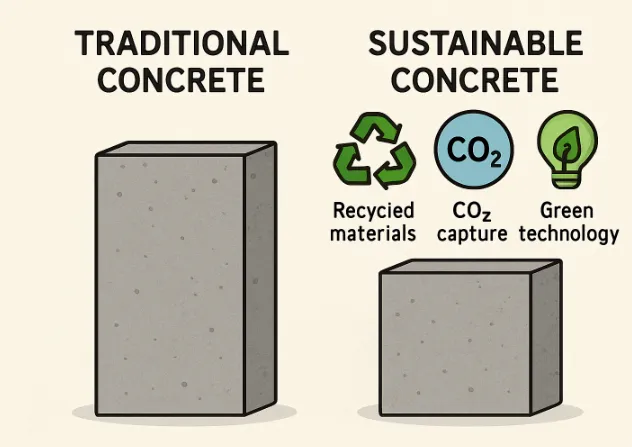
By sourcing from an experienced concrete supplier, builders and developers can help shift the industry toward greener practices while maintaining reliability and performance. Sustainable concrete doesn’t mean compromising on strength or durability. Instead, it leverages innovative materials, advanced carbon capture technologies, and recycled by-products to offer alternatives that meet today’s environmental benchmarks. From new cement formulations to smarter manufacturing processes, the industry now has myriad opportunities to reimagine what concrete can do for a low-carbon future.
The transformation of concrete production also entails greater responsibility to verify the integrity and performance of new materials and methods. As implementation of sustainable options expands, ongoing attention to quality control ensures these alternatives consistently meet exacting construction standards and end-user expectations.
As industry innovation accelerates, several emerging solutions are setting benchmarks for environmentally responsible construction. By understanding and embracing these options, builders can make informed choices that benefit both their projects and the planet.
Introduction
The environmental cost of concrete largely stems from cement, the key binding agent in concrete mixes, which alone accounts for about 8% of global CO₂ emissions, according to the BBC. As urban development accelerates, it is crucial to balance concrete’s durability and affordability with innovative approaches to minimize its carbon footprint.
Innovative Materials in Sustainable Concrete
Redesigning concrete from the ground up is at the core of the effort to make it more sustainable. Among the most promising developments is Limestone Calcined Clay Cement (LC3), a tiered blend that can cut CO₂ emissions by nearly a third compared to traditional Portland cement. LC3 uses abundant materials—limestone and calcined clay—to yield a result that is both eco-friendly and economical for large-scale use.
Another breakthrough is Ferrock, which uses recycled steel dust and silica to create a concrete substitute that is not just carbon-neutral but carbon-negative. During curing, Ferrock absorbs carbon dioxide from the atmosphere, effectively transforming waste materials into durable, green infrastructure.
Carbon Capture Technologies in Concrete Production
Cutting-edge carbon capture methods are enabling today’s concrete plants to directly address emissions at the source. CarbonCure Technology is a notable example: it works by injecting captured CO₂ into fresh concrete, where it mineralizes and becomes permanently embedded in the material. Not only does this sequester greenhouse gases, but it also increases the strength and performance of the concrete, lowering the volume of cement needed.
Incorporating Recycled Materials
Using recycled content is a direct way to slash the environmental footprint of concrete. Crushed concrete from demolished structures can be used as aggregate in new mixes, reducing the need for extracting virgin resources while diverting waste from landfills. Industrial by-products such as fly ash and slag also serve as effective cement replacements, enhancing strength and longevity while reducing embodied carbon. By diverting these materials from industrial waste streams, the sector is closing the loop on resource consumption.
The Advantages of Recycled Concrete
Integrating these recycled materials not only curtails raw resource use, but they can also contribute to better long-term performance. Many modern construction codes, as detailed by Architect Magazine, are increasingly encouraging or mandating such measures for environmental compliance, signaling a shift in industry standards.
Advanced Technologies Enhancing Sustainability
Breakthroughs in concrete technology are unlocking new functionalities that further reduce environmental impact. Self-healing concrete, for instance, uses bacteria or embedded capsules to seal cracks autonomously as they appear, greatly extending the structure’s lifespan and reducing the need for major repairs. Meanwhile, energy-storing concrete—enabled by electron-conducting carbon—has helped pave the way toward self-sustaining buildings, allowing concrete components to store and deliver energy to the grid as needed.
Conclusion
Reducing the environmental impact of construction begins with smart choices about materials and methods. Whether it’s specifying innovative, low-carbon cements, adopting carbon sequestration technologies, insisting on recycled content, or implementing advanced quality controls, every step counts. Sustainable concrete solutions offer a pathway to greener cities and resilient infrastructure while ensuring that tomorrow’s buildings are as robust as they are responsible.