
Sizing a Solar System Using Your Monthly kWh Usage
Sizing a solar system starts with one simple question: how much electricity do you actually use? Many people jump straight to panel counts or system “kW” ratings, but the more reliable approach begins with your monthly kWh usage and works backward into the array size that can realistically produce that energy in your location. Done properly, sizing protects you from two expensive mistakes—installing too small and still paying large bills, or installing too large and paying for production you can’t use or credit efficiently. A good size also accounts for seasonal changes, future appliances, and how your utility calculates credits. With a few clear steps, you can convert your bills into a practical target and choose a system that matches your home and budget.
Also Read: How Modern Roofing Solutions Are Changing Homes
From kWh to a system target
Your utility bill shows energy consumption in kilowatt-hours, usually for a 30-day billing cycle. That number is the most direct starting point because it reflects real behavior: air conditioning patterns, cooking habits, occupancy, and the efficiency of your appliances. The first step is to decide which portion of that usage you want solar to cover—some homeowners aim for close to 100%, while others size for a smaller offset due to roof limits, upfront costs, or utility rules. After you choose an offset target, you translate monthly kWh into daily kWh by dividing by the number of days in that billing period. That daily figure then becomes the energy your panels need to generate, on average, across the year. A quick conversation with AWS Solar can help you sanity-check your target against roof space and shading, but the logic remains the same: monthly kWh becomes a daily goal, and the system size is built around producing that goal under local sun conditions.
- Solar production depends on sunlight, not panel promises
A solar system’s “kW” rating describes peak output under test conditions, not what you’ll get every day on your roof. Real production depends on how many “peak sun hours” your location receives, the orientation and tilt of your panels, temperature, dust, wiring losses, and inverter efficiency. Peak sun hours are a useful planning concept because they convert sunlight into an equivalent number of hours per day at full intensity. For example, if your area averages 4.5 peak sun hours, a 1 kW system might produce about 4.5 kWh per day before losses. To make sizing more realistic, many installers apply a performance factor—often called a derate—so the estimate reflects heat, equipment efficiency, and other system losses. This is why two homes with the same monthly kWh usage can need different system sizes: a shaded roof or a west-facing layout may require more installed kW to achieve the same annual energy target. Understanding this relationship prevents disappointment when real-world production doesn’t match the number in a brochure.
- Converting monthly kWh into required solar kW
Once you know your average daily kWh usage, you can estimate the solar system size needed to cover it. Conceptually, the equation is simple: required solar kW equals daily kWh divided by peak sun hours, then adjusted by a performance factor. If you use 30 kWh per day and your area averages 5 peak sun hours, the rough math says you need about 6 kW before losses. If you apply a performance factor, you may need somewhat more capacity to produce the same delivered energy. This is not about chasing perfection on paper; it’s about building a system that behaves predictably across the year. Your goal is annual balance, not daily perfection, because some months will overproduce and others will underproduce. When utility credits allow netting across months, that annual view becomes even more important. This step is where homeowners often see the difference between “I want a 5 kW system” and “I need a system that produces roughly X kWh per month.” The second statement leads to a system that actually fits your bills.
- Roof space, panel wattage, and layout reality
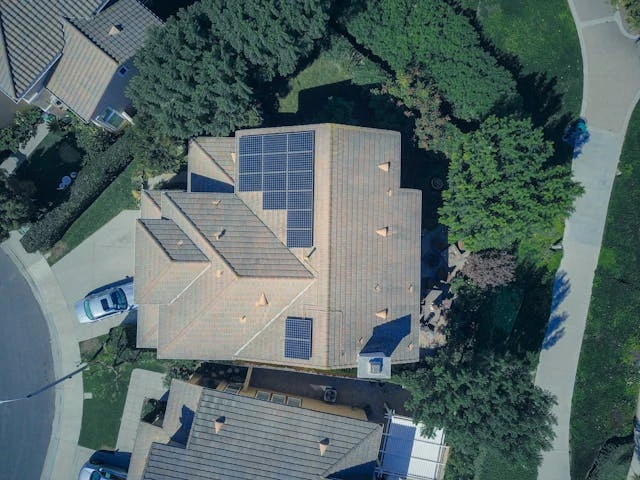
After estimating the required system kW, you translate that number into panel count and roof space. Panels are typically described by their wattage rating, such as 400 W (0.4 kW). A 6 kW system might use about 15 400 W panels, depending on your design. But panel count isn’t only math; it’s geometry. Roof planes have vents, chimneys, setbacks, skylights, and edges that reduce usable space. Orientation matters too: south-facing planes in many regions produce more per panel than east or west, which can change how many panels you need. Shading can also turn a “fits on paper” design into a poor performer if trees or nearby buildings cut production during key hours. This is why a site assessment typically includes a shade evaluation and a layout that complies with fire codes and structural considerations. When roof space is limited, homeowners sometimes choose higher-wattage panels to pack more capacity into fewer modules. The aim is not to maximize panels everywhere, but to place panels where they’ll actually perform and align with the energy target you calculated.
Sizing a solar system based on monthly kWh usage is about translating real consumption into a realistic production target. Start with your bill, decide how much of that usage you want to offset, and convert monthly kWh into a daily average. Then account for local peak sun hours and expected system losses to estimate the system’s kW size, before checking whether your roof layout can support the needed panel count. Finally, factor in your utility’s credit rules and your household’s usage timing, as these details determine whether extra production saves money or simply exports at a lower value. When you size with these steps, you avoid chasing vague system labels and instead build around the number that matters most—your actual kWh.