How Mock Interviews Build Confidence and Competence
Key Takeaways
- Mock interviews simulate real interview conditions, helping candidates practice and refine their responses.
- They provide valuable feedback, allowing individuals to identify and address areas for improvement.
- Regular practice through mock interviews can significantly boost confidence and reduce interview anxiety.
Table of Contents
- Understanding Mock Interviews
- Benefits of Mock Interviews
- How to Conduct a Mock Interview
- Common Mistakes to Avoid
- Real-Life Success Stories
- Conclusion
Securing a dream job goes far beyond perfecting your résumé. The real challenge often lies in performing well during interviews, where nerves and uncertainty can undermine even the most qualified candidates. To address these challenges, job seekers are increasingly turning to mock interview practice to gain confidence, sharpen their responses, and improve their overall performance. By replicating real interview scenarios, candidates can rehearse key skills and receive actionable feedback that helps transform anxiety into self-assurance.
Practicing for an interview does far more than just polish answers. It helps candidates get used to the structure and pacing of interviews, increasing comfort in unpredictable environments. Whether it’s your first job search or you’re looking to pivot into a new role, mock interviews provide a risk-free opportunity to grow and adapt. As a result, job seekers report feeling more competent and far less intimidated by the real thing, making the job search process much less daunting.
Professional development experts consistently recommend mock interviews as an essential part of modern job preparation. Not only do they provide insights into industry-specific expectations, but they also highlight individual strengths and areas for growth. Besides, practicing with varied question sets better equips candidates to handle curveballs or behavioral questions during their actual interviews.
Countless studies, such as those shared by the Coursera Career section, show that repeated exposure to interview situations builds poise, a critical asset for impressing hiring managers and making memorable first impressions.
Understanding Mock Interviews
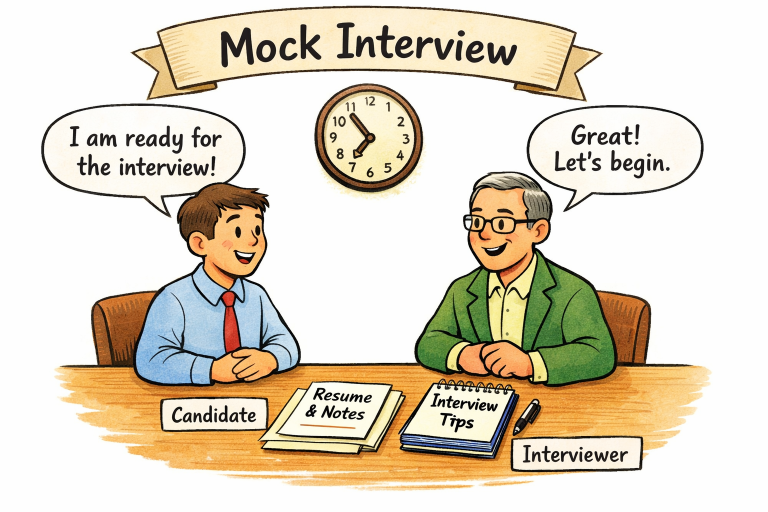
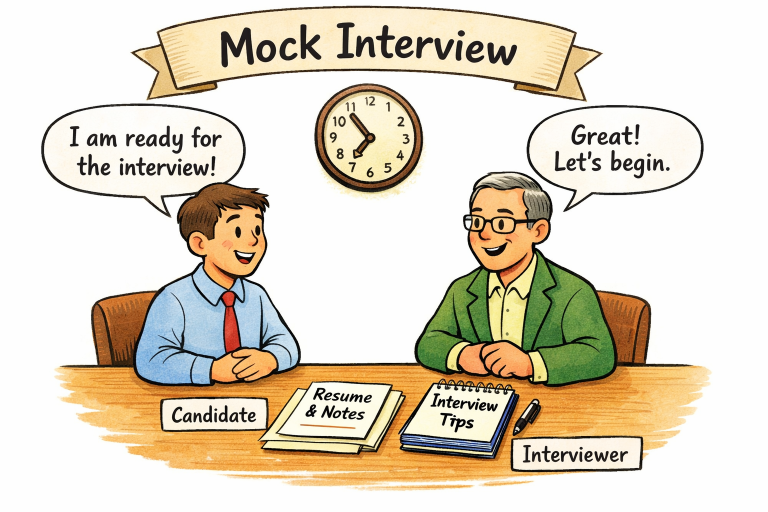
Mock interviews are simulated interview experiences designed to mirror the formality, environment, and pressure of actual job interviews. Essentially, they are practice sessions where candidates respond to typical interview questions, either with a trained interviewer or through self-guided methods. These exercises allow candidates to rehearse their answers, get familiar with the interview’s flow, and discover areas that need refinement.
The aim of a mock interview is not just repetition, but a strategic evaluation. By spotlighting both strengths and gaps, they prepare individuals for diverse roles and industries. Over time, participants develop not just better responses, but also greater adaptability and strategic thinking, two skills valued in all job markets.
Benefits of Mock Interviews
Participating in mock interviews offers several lasting advantages to job seekers:
- Enhanced Confidence: Routine practice reduces overwhelming anxiety and builds a sense of preparedness before facing an actual hiring manager.
- Improved Communication Skills: By answering questions aloud and receiving constructive notes, individuals learn to articulate thoughts with clarity and purpose.
- Constructive Feedback: Feedback from a trained facilitator or a peer highlights strengths and provides actionable improvement points.
- Familiarity with Interview Formats: Exposure to different types of questions, whether behavioral, technical, or situational, ensures candidates are not caught off guard during the real interview process.
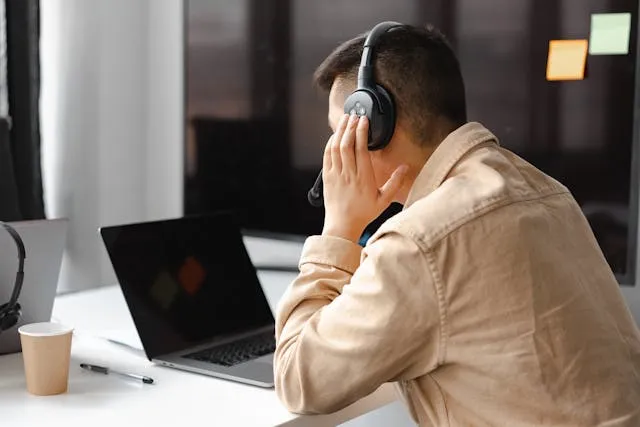
Additionally, these benefits extend to online interviews, which now play an increasingly significant role in the modern hiring landscape. Practicing for video or phone interviews through mock sessions can help job seekers refine everything from their technical setup to their body language, ensuring nothing gets in the way of a strong first impression.
How to Conduct a Mock Interview
Preparing and executing a mock interview with intention is essential for maximal benefit. Here are actionable steps to organize an effective session:
- Choose a Realistic Setting: Whether in person or virtually, simulate the actual location, dress code, and etiquette of your target interview.
- Select a Knowledgeable Interviewer: Ideally, work with someone who understands your target role or industry and can provide insightful critiques.
- Prepare Standard Questions: Incorporate a blend of role-specific, technical, and behavioral questions relevant to your desired position.
- Record the Session: Use audio or video to capture your answers. Reviewing the recording reveals tone, body language, and filler-word usage that might otherwise go unnoticed.
- Seek Feedback: After the session, encourage your interviewer to provide specific feedback. Reflect on both positive aspects and areas that need adjustment before your next mock session or real interview.
It is also worthwhile to occasionally practice with different interviewers. This approach exposes you to diverse questioning styles and helps you respond more flexibly. Resources for preparing great questions and effective strategies can be found in publications such as Coursera’s Guide to Mock Interviews.
Common Mistakes to Avoid
While the benefits of mock interviews are clear, there are several pitfalls that can diminish their effectiveness:
- Lack of Preparation: Treating the mock interview too casually results in underperformance. Prepare as you would for a real opportunity, researching the company and role thoroughly.
- Ignoring Feedback: Dismissing helpful criticism prevents progress. Engage in honest self-reflection and practice suggested improvements.
- Over-Rehearsing Answers: Memorized responses tend to sound robotic. Instead, aim for conversational and authentic answers that demonstrate both capability and likability.
Additionally, always check your technical setup for virtual interviews. Poor audio or video quality can undermine even the best responses, and failing to adapt to technical problems during practice can lead to issues on interview day.
Real-Life Success Stories
Mock interviews have played an instrumental role in the career journeys of countless professionals and students. One notable example comes from Culpeper County High School, where students routinely participate in structured mock interviews as part of their career readiness programming. These exercises have been reported to significantly boost participants’ confidence, communication skills, and readiness for future job opportunities. Hands-on experiences like these demonstrate that practice, feedback, and support are major contributors to student success. More details on such initiatives and their impact can be found on educational news portals and through local programs.
Conclusion
Mock interviews are a transformative part of job preparation that provide far-reaching benefits. They enhance skills, build workplace readiness, and instill the confidence necessary to stand out during high-stakes moments. By dedicating time to thorough practice and honest feedback, job seekers become better positioned for interviews and more likely to land rewarding career opportunities.