A Room-by-Room Electrical Safety Checklist for the Park
Key Takeaways
- Inspect visible electrical components regularly for damage or overheating.
- Keep cords, outlets, appliances, and electrical equipment away from water and heat.
- Test GFCIs and alarms according to manufacturer instructions.
- Watch for warning signs such as burning odors, buzzing, flickering, or repeated breaker trips.
- Have electrical repairs, upgrades, and new installations handled by qualified professionals.
From summer storms and outdoor entertaining to winter space-heater use, Overland Park homes face electrical demands in every season. A quick room-by-room walkthrough can help homeowners spot visible issues early, improve daily habits, and recognize when an electrical concern needs professional attention.
For homeowners who need help evaluating a suspected problem, installing new equipment, or planning an upgrade, https://www.fusionkc.com offers local electrical services in the Kansas City area. The safest approach is to inspect only what is visible, document concerns, and leave wiring, panel work, and repairs to qualified professionals.
Why Every Home Needs an Electrical Safety Checklist
Electrical problems can begin with small, visible clues, such as a loose plug, a damaged cord, or a breaker that trips repeatedly. The U.S. Fire Administration reported an estimated 24,200 residential building electrical fires in 2021, underscoring the importance of practical electrical and appliance safety habits in every household. Modern homes may also place added demand on circuits through home offices, induction cooking, electric heat pumps, workshop tools, and EV charging.
How to Start a Safe Home Walkthrough
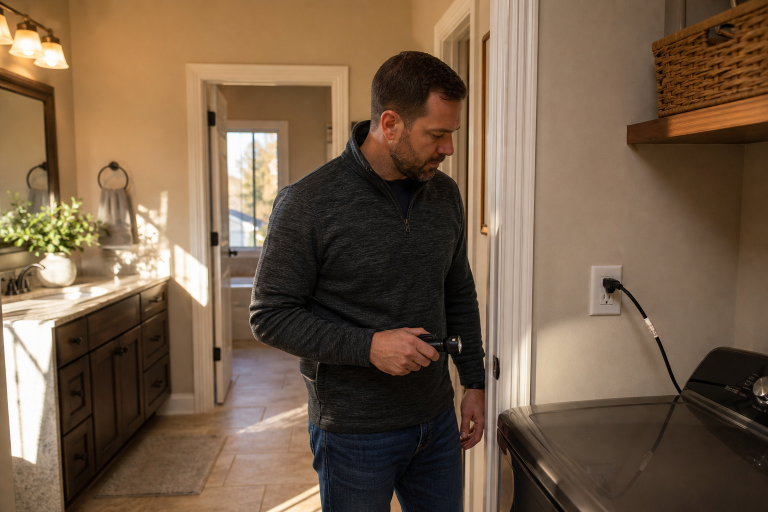
- Choose a well-lit time when you can move through the home without rushing.
- Bring a flashlight, phone, and notepad to record concerns.
- Look at visible outlets, switches, cords, plugs, fixtures, and appliance connections.
- Do not remove outlet covers, open the electrical panel, or touch exposed wiring.
- Write down heat, burning odors, buzzing, flickering, or repeated breaker trips.
Living Rooms and Bedrooms
Check power cords behind televisions, desks, beds, and entertainment centers. Replace cords that show cuts, fraying, crushed sections, damaged plugs, or loose connections. Keep cords out from under rugs and away from doorways, heaters, and furniture pinch points. Avoid overloading power strips, especially with heat-producing devices. Keep chargers, battery packs, and smart-home hubs on hard, open surfaces where heat can dissipate. Test smoke alarms and carbon monoxide alarms according to their manufacturer’s instructions, and use only the bulb wattage specified for lamps and fixtures.
Kitchen Electrical Safety
Kitchens combine water, heat, and high-use appliances, so visible warning signs deserve attention. Keep countertop appliances away from sinks and standing water. Check outlets for cracks, discoloration, looseness, or unusual warmth. Refrigerators, dishwashers, disposals, microwaves, and electric ranges should have appropriate permanent connections rather than extension cords. Do not plug several heat-producing appliances into one outlet or power strip. A breaker that repeatedly trips is a warning that should be investigated rather than continually reset.
Bathrooms and Laundry Areas
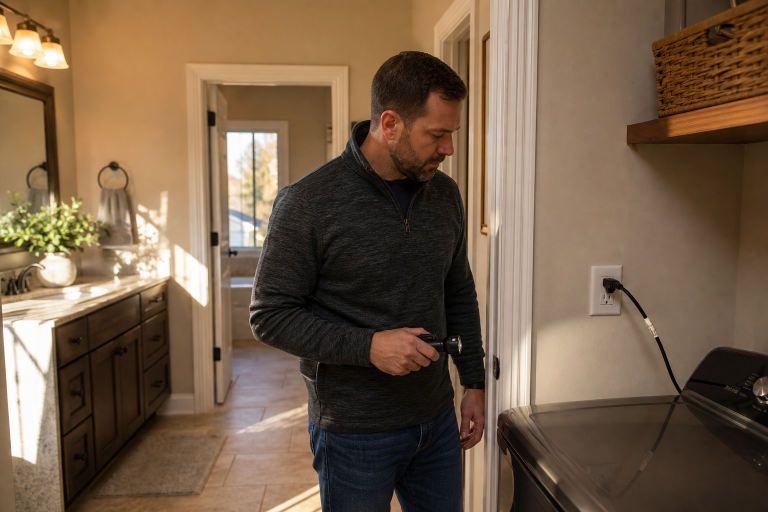
Outlets near water should have GFCI protection. Homeowners can generally test a receptacle-style GFCI using its labeled test and reset buttons, following manufacturer instructions. The Consumer Product Safety Commission advises testing GFCIs at least monthly and after a power failure; any device that does not respond properly should be checked by an electrician. Keep hair dryers, portable heaters, razors, and other plugged-in devices well away from tubs and sinks. Inspect washer and dryer cords, clear lint from the dryer area, and act promptly if an outlet, switch, or plug becomes warm, buzzes, or smells burnt.
Garage and Basement Checks
Keep the area around the electrical panel clear, dry, and easily accessible. Without opening it, look for moisture, rust, scorch marks, melted insulation, or unusual sounds near visible electrical equipment. Use undamaged, environment-rated cords when operating tools. Review whether one garage circuit now serves a freezer, heater, tools, extra refrigeration, or an EV charger. Generators must operate outdoors, away from openings, in dry conditions, and in accordance with the manufacturer’s safety instructions.
Outdoor Electrical Safety
Before patio season or severe weather, inspect outdoor outlets, covers, lighting fixtures, and visible wiring. Outdoor cords should be rated for outdoor use, and landscape-lighting wires should be protected from lawn equipment and standing water. If a project involves digging for lighting, fencing, landscaping, or a deck, contact 811 before work begins so utility owners can identify buried lines. Do not use damaged fixtures or cords in wet conditions.
Modern Electrical Loads to Review
A professional load review can be valuable before adding an EV charger, hot tub, electric water heater, heat pump, major workshop equipment, or a remodeled kitchen. A larger panel is not automatically the only solution. Service capacity, circuit condition, wiring methods, equipment instructions, and local requirements all affect the right plan. Discuss electrical needs before a remodel starts, when adding circuits and access can be simpler to coordinate.
Warning Signs That Need Prompt Attention
Stop using affected equipment and seek qualified help if you notice any of the following:
- Warm or hot outlets, switches, plugs, or cords
- Burning plastic or fish-like odors
- Buzzing, crackling, or snapping sounds
- Flickering or dimming lights
- Repeated breaker trips
- Scorch marks, yellowing covers, or loose receptacles
- Tingling sensations, shocks, exposed wires, or damaged insulation
A Simple Monthly Safety Routine
- Test GFCI devices and alarms as directed by their manufacturers.
- Inspect cords, plugs, chargers, and power strips for damage or signs of overheating.
- Check outlets and switches for discoloration, looseness, or warmth.
- Confirm that the panel area is dry and unobstructed.
- Update a list of new appliances, renovations, and high-demand equipment.
Seasonally, check holiday lights before winter use, keep space heaters on suitable wall outlets, inspect outdoor lighting before summer gatherings, and look for storm-related damage after severe weather.
When to Call a Licensed Electrician
Homeowners can observe, test labeled safety-device controls, and stop using suspicious equipment. Panel repairs, new circuits, rewiring, generator connections, EV charger installations, service upgrades, and repairs involving heat damage must be performed by a licensed electrician. Older homes, recent renovations, recurring faults, two-slot outlets, and suspected aging wiring also merit a professional assessment. Before hiring, verify licensing and insurance, ask about permits, and request a written scope and pricing.
Conclusion
A room-by-room electrical check takes little time and can reveal hazards before they become more serious. For Overland Park homeowners, a monthly routine and prompt response to warning signs can support a safer, more reliable home as electrical needs continue to grow.