
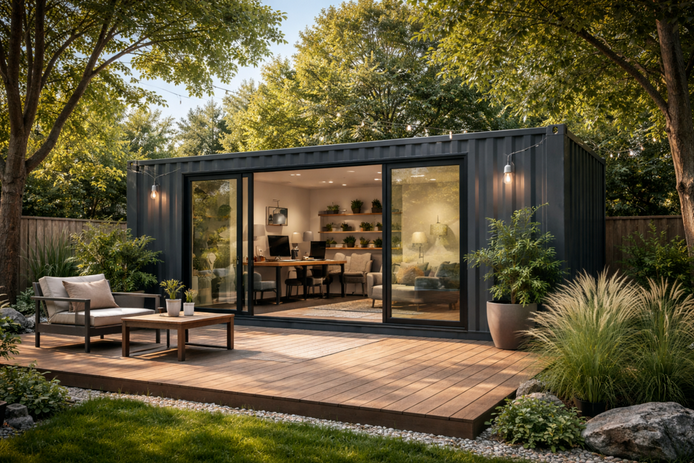
Backyard Office Ideas: Why a 40 ft Shipping Container Might Be the Perfect Work-from-Home Upgrade
Remote work has permanently reshaped how people use their homes. Kitchen tables turned into desks, spare bedrooms became conference rooms, and living rooms doubled as shared workspaces. While these adjustments were practical in the short term, many homeowners are now searching for long-term solutions that protect productivity, privacy, and property value. One increasingly popular option is converting a shipping container into a backyard office — particularly a 40 ft shipping container, which offers enough space to create a fully functional, comfortable workspace without expanding the main house.
This approach blends practicality, flexibility, and modern design. However, like any major home upgrade, it comes with trade-offs. Budget, insulation, zoning laws, sustainability considerations, and long-term usability all influence whether this solution is truly the right fit. An objective evaluation helps homeowners balance aesthetics, cost, and functionality before making a decision.
Why Backyard Offices Are Gaining Popularity
The work-from-home shift has highlighted several challenges within traditional residential layouts:
- Lack of dedicated workspace
- Noise and distractions
- Difficulty separating work and personal life
- Limited room for professional equipment
A detached backyard structure offers psychological and physical separation. Stepping outside to begin the workday reinforces boundaries that many remote professionals struggle to maintain indoors. At the same time, it eliminates commuting, saving time and reducing environmental impact.
Homeowners exploring backyard office solutions often compare three main options:
- Building a traditional extension
- Installing a prefabricated shed or studio
- Converting a repurposed cargo container
Each approach offers advantages and drawbacks. The container-based option stands out because of its structural durability, modular nature, and potential for creative design.
Why Size Matters: Evaluating the 40-Foot Option
When considering a container-based office, size plays a critical role. Smaller units may feel cramped, especially if you need space for multiple workstations, storage, or client meetings. A 40 foot shipping container typically offers about 320 square feet of interior space before insulation and finishing. This size provides flexibility to design:
- A private office with a lounge area
- A shared workspace for two people
- A studio for creative professionals
- A hybrid office-and-gym setup
However, more space also means higher costs. Insulation, electrical wiring, climate control, and interior finishes scale with square footage. Additionally, local zoning regulations may impose restrictions on larger detached structures.
Choosing the right size requires balancing current needs with long-term adaptability. While a compact unit may reduce upfront expenses, it could limit future functionality. On the other hand, investing in a 40 ft container may provide room to evolve as work demands change.
Structural Strength and Durability
One of the main advantages of using a repurposed storage container is structural integrity. Designed to withstand harsh maritime conditions, these steel units are built for durability. They resist wind, pests, and structural wear better than many lightweight prefabricated sheds.
That said, durability introduces its own trade-offs. Steel conducts heat and cold efficiently, meaning temperature regulation becomes a major consideration. Without proper insulation, the interior can become uncomfortable in extreme climates. Spray foam insulation, rigid foam panels, and interior framing are common solutions, but they add to overall costs and reduce interior space slightly.
Homeowners must weigh whether the long-term resilience offsets the initial investment required to make the unit livable year-round.
Cost Considerations and Budget Planning
At first glance, converting a container into an office may appear cheaper than constructing a traditional home extension. In many cases, it is. However, the final price depends on several variables:
- Purchase price of the unit
- Delivery and site preparation
- Foundation or leveling requirements
- Electrical and plumbing installations
- Insulation and interior finishes
- Permits and inspections
While the base structure can be relatively affordable, customization costs can quickly add up. For example, cutting openings for large windows or doors requires professional reinforcement to maintain structural integrity. Similarly, adding HVAC systems ensures comfort but increases energy consumption and installation expenses.
An objective cost comparison should include not only initial construction but also long-term operational expenses. Energy efficiency improvements may reduce monthly utility bills, partially offsetting higher upfront investments.
Design Flexibility and Aesthetic Impact
Modern container offices can look surprisingly sophisticated. Large glass panels, wood cladding, minimalist interiors, and green roofs transform an industrial box into a contemporary backyard feature.
However, design flexibility is not unlimited. The rectangular shape influences layout decisions, and ceiling height may feel restrictive compared to traditional construction. Creative interior design—such as built-in shelving, light-colored finishes, and strategic lighting—can mitigate spatial limitations.
Another important factor is neighborhood aesthetics. A well-designed office can enhance property appeal, but a poorly integrated structure may clash with surrounding homes. Considering exterior finishes and landscaping helps ensure visual harmony.
Homeowners should also evaluate resale implications. While many buyers appreciate detached workspaces, others may see them as niche features. The impact on property value depends heavily on quality and local market preferences.
Insulation, Comfort, and Climate Control
Comfort directly affects productivity. Steel walls require effective insulation to prevent temperature swings and condensation buildup. Without adequate insulation, moisture may lead to mold or corrosion over time.
Different insulation strategies involve trade-offs:
- Spray foam offers excellent thermal performance but costs more.
- Fiberglass is budget-friendly but may require additional vapor barriers.
- Rigid foam panels balance performance and cost but reduce interior dimensions.
Heating and cooling solutions also vary. Mini-split systems provide efficient temperature control, while portable units are less expensive but less effective in extreme climates.
The goal is to create a workspace that feels as comfortable as any room inside the main house. Skimping on insulation or ventilation may save money initially but reduce usability and longevity.
Natural Light and Ventilation
A productive office benefits from ample daylight and fresh air. Cutting window openings increases comfort and reduces reliance on artificial lighting. Skylights are another option, though structural modifications require professional expertise.
More windows, however, mean higher costs and potential heat gain or loss. Energy-efficient glazing helps mitigate these issues but adds expense. Balancing natural light with energy efficiency is essential.
Proper ventilation also supports indoor air quality, particularly in smaller spaces. Mechanical ventilation systems may be necessary to maintain airflow without sacrificing temperature control.
Zoning, Permits, and Legal Considerations
Local regulations significantly influence the feasibility of backyard structures. Some municipalities classify container conversions as accessory dwelling units (ADUs), while others categorize them as temporary structures or storage buildings.
Permit requirements often depend on:
- Size of the structure
- Electrical or plumbing installations
- Distance from property lines
- Intended use
Failure to obtain proper approvals can lead to fines or forced removal. Consulting local building authorities early in the planning process prevents costly setbacks.
Legal considerations also affect resale value. A fully permitted structure is more attractive to future buyers than an unapproved addition.
Environmental Impact and Sustainability
Reusing a cargo container can align with sustainability goals. Repurposing existing materials reduces demand for new construction resources and limits waste. Additionally, integrating solar panels, energy-efficient windows, and sustainable insulation enhances environmental performance.
However, environmental benefits are not automatic. Transportation emissions, steel production impacts, and energy-intensive modifications may offset some sustainability gains. A thorough life-cycle assessment provides a clearer picture.
Landscaping choices also influence ecological impact. Permeable foundations and native plantings help preserve soil health and manage stormwater runoff.
When evaluating environmental implications, homeowners should consider not only construction but also long-term energy consumption.
Productivity and Lifestyle Benefits
A backyard office supports mental well-being by creating physical separation between work and home life. Walking a short distance to begin the day establishes routine and boundaries. At the same time, proximity to home allows flexibility for family responsibilities.
The additional space may also serve multiple purposes outside work hours. It can function as a creative studio, reading room, or guest accommodation. This adaptability enhances overall lifestyle value.
Still, there are potential downsides. Isolation may increase feelings of disconnection from colleagues. Investing in reliable internet connectivity and thoughtful interior design can help maintain engagement and comfort.
Comparing Alternative Backyard Solutions
To make an informed decision, it is useful to compare container-based offices with other options.
Traditional Extension:
Offers seamless integration with the house but requires higher construction costs and longer timelines. Structural modifications to the main home can be disruptive.
Prefabricated Shed or Studio:
Often less expensive and quicker to install, but may lack durability and long-term structural strength.
Converted 40 ft container:
Provides durability and modular flexibility, though customization and insulation costs must be carefully managed.
Each solution involves trade-offs between permanence, cost, and adaptability. The right choice depends on budget, climate, and intended long-term use.
Long-Term Maintenance and Upkeep
Maintenance requirements differ from traditional wood structures. Steel exteriors require periodic inspection for rust and repainting when necessary. Proper drainage and foundation support prevent water accumulation underneath.
Interior systems—HVAC, electrical, insulation—should meet residential standards to ensure longevity. Investing in quality materials reduces maintenance frequency and preserves property value.
Homeowners should also plan for evolving needs. A well-designed space can adapt to changing work arrangements, whether transitioning back to hybrid work or repurposing the office entirely.
Balancing Costs, Comfort, and Value
The decision to convert a container into a backyard office ultimately involves balancing multiple factors:
- Initial investment versus long-term savings
- Durability versus insulation complexity
- Aesthetic appeal versus structural limitations
- Sustainability benefits versus modification impacts
Careful planning helps avoid unexpected expenses and performance issues. Conducting a realistic budget assessment, consulting professionals, and evaluating local regulations ensures a smoother process.
Wrapping Up
Transforming a backyard structure into a dedicated workspace represents a practical response to the evolving nature of work. A thoughtfully designed office built from a 40 ft container can deliver durability, flexibility, and aesthetic appeal while maintaining separation between professional and personal life.
However, success depends on understanding the trade-offs. Insulation, zoning compliance, climate control, and long-term maintenance all shape the final outcome. By considering structural integrity, environmental impact, comfort, and resale value, homeowners can determine whether this approach aligns with their needs.
When evaluated objectively and planned carefully, a container-based backyard office can become more than a trend—it can serve as a sustainable, adaptable upgrade that supports productivity and lifestyle balance for years to come.