
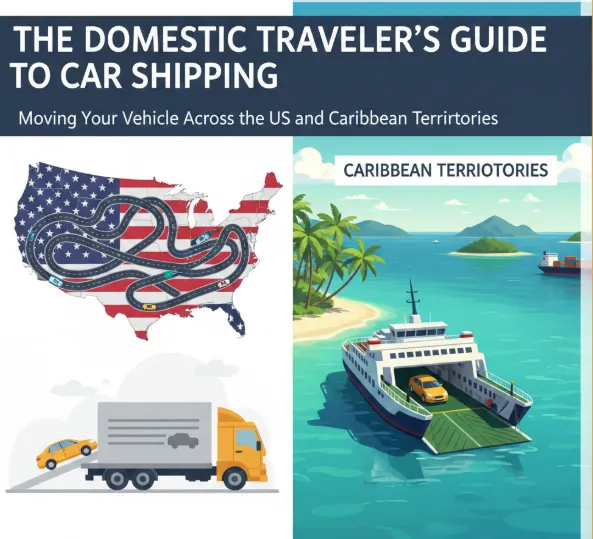
Domestic Traveler’s Guide to Car Shipping Across the US & Caribbean
For the growing community of domestic long-term travelers, digital nomads, and seasonal relocators, one question consistently creates headaches: what do I do with my car?
Whether you’re a snowbird escaping harsh winters, a remote worker exploring different US cities every few months, or a seasonal employee following work opportunities across states, the logistics of vehicle transportation can make or break your travel plans. Renting cars for extended periods drains your budget, but driving thousands of miles between destinations wastes time and puts unnecessary wear on your vehicle.
Also Read: Why Roof Maintenance is Crucial for Sarasota Homes: Florida Guide
There’s a better solution that most domestic travelers overlook: professional car shipping services that handle the logistics while you focus on the adventure.
Why Domestic Travelers Are Choosing to Ship Their Vehicles
The traditional approach to extended domestic travel meant either leaving your car behind (and dealing with rental costs and limitations) or embarking on epic cross-country drives that eat up your vacation time. But a shift is happening in how Americans approach long-term domestic travel.
Remote work has created a new class of location-independent professionals who maintain their home base while spending 3-6 months in different cities. Seasonal work opportunities in tourism, hospitality, and outdoor recreation mean workers need reliable transportation in multiple locations throughout the year. Snowbirds have long understood the value of having their own vehicle at their winter destination, but now younger travelers are adopting the same approach for extended stays anywhere in the US.
The math is compelling. A 60-day car rental in Florida during winter months can cost $2,500-$4,000. Driving your 15-year-old sedan 2,500 miles from Minnesota to Miami puts 5,000 hard miles on your odometer, costs $300-400 in gas, requires 40+ hours behind the wheel, and risks breaking down in unfamiliar territory. Meanwhile, hiring a domestic car shipping company to transport your vehicle typically costs $800-1,200 for the same route, takes 7-10 days, and delivers your car to your doorstep with zero stress.
Understanding Your Options: Open vs. Enclosed Transport
When you start researching vehicle transportation, you’ll encounter two primary methods: open and enclosed transport. Understanding the difference helps you make the right choice for your situation and budget.
Open transport is what you see on highways every day—the big car carrier trucks hauling 7-10 vehicles stacked on two levels. This method accounts for roughly 90% of all vehicle shipments in the US. Your car travels exposed to weather and road conditions, but modern carriers protect vehicles well, and insurance covers any transit damage. Open transport costs significantly less than enclosed options, making it the practical choice for most domestic travelers shipping standard vehicles.
Enclosed transport uses covered trailers that completely protect your vehicle from weather, road debris, and prying eyes. This premium service typically costs 40-60% more than open transport but makes sense for specific situations. If you’re shipping a classic car, luxury vehicle, or exotic sports car, the extra protection justifies the cost. Enclosed trailers also work well for vehicles with custom paint jobs, recently restored cars, or if you’re shipping to areas with harsh weather conditions during the transport window.
For most domestic travelers with standard vehicles, open transport provides excellent service at a reasonable price point. The key is choosing reputable car shipping to Puerto Rico and mainland services that properly insure your vehicle and provide reliable tracking throughout the journey.
Seasonal Considerations: Timing Your Car Shipment
Understanding seasonal patterns in the auto transport industry can save you money and ensure better service. The vehicle shipping market experiences dramatic demand fluctuations throughout the year, directly impacting both pricing and availability.
Winter months (November through March) see massive demand for northbound-to-southbound routes as snowbirds flock to Florida, Arizona, and other warm-weather destinations. Routes from Minnesota, Wisconsin, Michigan, and the Northeast to Florida become extremely busy, sometimes booking out weeks in advance. Prices on these popular routes can increase 20-40% during peak snowbird season.
Summer reverses this trend, with heavy demand for southbound-to-northbound routes as seasonal workers head to summer tourism destinations and snowbirds return home. Routes from southern states to northern locations, as well as shipments to Alaska for the cruise season, become premium services.
Spring and fall represent the shoulder seasons where prices moderate and availability improves. If your travel schedule allows flexibility, booking your car shipment for late October or early April (just before or after peak seasons) can yield significant savings.
Lead time matters tremendously. Booking 3-4 weeks in advance during off-peak seasons generally secures good rates and pickup dates that match your schedule. During peak seasons, that booking window should extend to 6-8 weeks to ensure availability. Last-minute bookings (less than one week out) almost always cost more and may face limited carrier availability.
The Caribbean Territory Advantage: Puerto Rico and US Virgin Islands
One of the most overlooked aspects of domestic car shipping is how easily you can transport your vehicle to US Caribbean territories. Puerto Rico and the US Virgin Islands offer American travelers the exotic appeal of Caribbean living with the convenience of remaining within US jurisdiction—and that includes vehicle transportation.
Shipping your car to Puerto Rico eliminates the hassle of international customs, foreign vehicle registration, and import duties that would apply in other Caribbean destinations. Your vehicle remains under US insurance coverage, and you avoid the restrictions and fees associated with bringing American-plated cars to foreign countries.
The logistics work similarly to mainland-to-mainland shipping but use specialized roll-on/roll-off (RoRo) vessels that depart regularly from Florida ports (primarily Jacksonville and Port Everglades). Your car gets driven onto the ship, secured for the ocean voyage, and driven off at San Juan or other Puerto Rican ports. The entire process typically takes 7-14 days from pickup at your mainland location to delivery in Puerto Rico.
For remote workers, retirees, or extended travelers spending several months in Puerto Rico or the Virgin Islands, having your own reliable vehicle makes economic and practical sense. Rental cars on the islands cost significantly more than mainland rates—often $50-100 per day even for basic vehicles. A six-month stay would mean $9,000-18,000 in rental costs, making the $1,200-1,800 cost of round-trip vehicle shipping an obvious value.
Digital Nomads and Remote Workers: Creating Your Mobile Base
The rise of remote work has created an entirely new category of domestic traveler who needs reliable transportation in multiple cities throughout the year. Unlike traditional tourists or short-term visitors, location-independent workers often spend 2-6 months in each destination, long enough that having their own vehicle becomes essential rather than optional.
Consider the typical digital nomad pattern: spend winter months in Austin, spring in Portland, summer in Denver, and fall in Asheville. Driving between each location would consume weeks of productive work time and cost thousands in gas, hotels, and vehicle wear. Renting cars for 8-12 weeks at each stop would cost $6,000-10,000 annually. Flying between cities while maintaining a car in storage back home means either paying storage fees or arranging rides every time you return.
Professional car shipping creates a third option that supports true location independence. Ship your vehicle to your next destination a week before you arrive, fly directly there, and have your own reliable transportation waiting. After 2-3 months, ship the car to your next location and repeat. The annual cost for 3-4 shipments runs $3,000-5,000—far less than extended rentals and infinitely more convenient than marathon road trips.
This approach works particularly well for remote workers who maintain a home base (where the car lives between destinations) or those who structure their travel around seasonal sweet spots in different cities. Your vehicle contains all your familiar equipment, from your favorite camping gear to your work-from-car mobile office setup. You avoid the limitations of rental cars (no pets, mileage restrictions, insurance complications) while maintaining the flexibility to explore each region thoroughly.
Seasonal Work and the Vehicle Transportation Solution
Seasonal workers face unique transportation challenges. Whether you’re working at a ski resort in Colorado for winter, a national park in Wyoming for summer, or following the harvest across agricultural regions, you need reliable transportation at each location—but only for part of the year.
The seasonal work community has traditionally dealt with this through various imperfect solutions. Some workers drive thousands of miles between seasonal jobs, arriving exhausted and with vehicles worn down by the journey. Others attempt to buy cheap local cars at each destination, dealing with unreliable vehicles and the hassle of registration and insurance in multiple states. Still others rely on employer-provided transportation or local rides, severely limiting their ability to explore the region during off-hours.
Professional vehicle shipping offers a better approach that more seasonal workers are discovering. Ship your reliable vehicle to your seasonal workplace, use it throughout your contract, then ship it to your next location or back home during your off-season. The cost gets absorbed into your seasonal employment budget and makes your work-life experience significantly better.
For ski resort workers heading from the East Coast to Colorado, having your own vehicle means accessing the best powder days, exploring different resorts on days off, and maintaining the independence that makes seasonal work appealing. National park employees benefit from having reliable transportation for both work (many park service positions require personal vehicles) and exploration of the surrounding regions.
The key to making seasonal work vehicle shipping cost-effective is planning ahead and consolidating routes. If you follow a circuit (East Coast summer work to Rocky Mountain winter work, for example), you can establish a reliable shipping pattern with the same carriers who learn your schedule. Some seasonal workers team up with colleagues following similar circuits, coordinating shipments to share carrier capacity and sometimes negotiate better rates.
Real Traveler Experiences: Learning from the Community
The online travel community offers valuable insights into vehicle shipping experiences. Reading through forums and review sites like Hope Traveler’s community recommendations and verified service experiences on A4 Auto Transport’s review platform, several consistent themes emerge from successful long-term domestic travelers.
Successful vehicle shippers emphasize the importance of booking early, particularly for snowbird routes and seasonal transitions. Multiple travelers report that their best experiences came from companies that communicated proactively throughout the process, provided accurate pickup windows, and delivered on time.
Budget-conscious travelers note that while price matters, the cheapest quote isn’t always the best value. Several reviewers share stories of low-ball quotes that came with hidden fees, unexpected delays, or carriers who damaged vehicles and then disputed insurance claims. The sweet spot appears to be mid-range pricing with companies that have established track records and transparent policies.
Remote workers who ship vehicles multiple times per year recommend building relationships with specific carriers and dispatchers. Several digital nomads report receiving preferential scheduling and pricing after becoming repeat customers who consistently prepared their vehicles properly and were ready for pickup as scheduled.
One particularly useful tip from the snowbird community: document your vehicle’s condition thoroughly before shipping. Take dated photos of all sides, the interior, and any existing damage. This documentation proves invaluable if any transit damage occurs and you need to file an insurance claim.
Preparing Your Vehicle for Transport
Proper vehicle preparation ensures smooth shipping and protects your interests. Most professional carriers provide preparation guidelines, but understanding the reasoning behind each requirement helps you prepare effectively.
First, clean your car inside and out. This isn’t about aesthetics—a clean vehicle makes it easier to document pre-existing damage and complete the condition inspection during pickup. Remove all personal items from the interior, including sunglasses, loose change, air fresheners, and anything stored in compartments. Carriers aren’t responsible for personal items, and loose objects can shift during transport, potentially causing interior damage.
Check your gas level. Most carriers request between a quarter tank and half tank of fuel—enough to drive your car on and off the carrier, but not so much that it adds unnecessary weight. Document your fuel level as part of your pre-shipping inspection photos.
Disable or disconnect car alarms and toll transponders. An alarm going off during transport causes problems for the driver, and toll transponders can trigger charges as the carrier passes through toll roads en route to destinations that aren’t yours.
Check your tire pressure and fix any fluid leaks. While carriers transport vehicles with minor mechanical issues, significant leaks can damage other vehicles on the trailer or cause your car to be rejected at pickup.
Remove or secure aftermarket accessories. Custom spoilers, roof racks, bike racks, or anything else that extends beyond the standard vehicle profile should be removed. Retractable antennas should be lowered or removed. These accessories can catch on carrier equipment or be damaged during loading.
Document everything. Take clear, dated photos of your entire vehicle from multiple angles, capturing the odometer reading, any existing damage, and the overall condition. These photos become your insurance policy if any disputes arise.
Cost Considerations and Budgeting for Regular Shipping
Understanding vehicle shipping costs helps you budget effectively for a travel lifestyle that includes regular car transportation. Prices vary based on distance, route popularity, season, vehicle type, and transport method, but some general patterns emerge.
For mainland routes, expect to pay roughly $0.50-$0.70 per mile for open transport on popular routes during normal seasons. Less common routes or peak season bookings push rates to $0.75-$1.00 per mile or higher. A 1,000-mile shipment from Chicago to Dallas typically costs $500-700, while a 2,500-mile coast-to-coast transport runs $1,200-1,800.
Enclosed transport adds 40-60% to these base rates, meaning that same cross-country shipment jumps to $1,800-2,800 in a covered trailer. For most travelers with standard vehicles, this premium doesn’t provide enough additional value to justify the cost.
Caribbean territory shipping operates differently due to the ocean transport component. Shipping from the mainland US to Puerto Rico typically costs $1,000-1,500 from Florida, or $1,200-1,800 from other East Coast states. West Coast to Puerto Rico runs significantly higher ($2,500-3,500) due to the longer distance and need for cross-country ground transport to a port plus the ocean voyage.
For travelers who ship vehicles multiple times per year, annual costs can be estimated by calculating 3-4 shipments at average distances. A digital nomad following a circuit between Austin, Portland, Denver, and Asheville might spend:
- Austin to Portland: 2,000 miles = $1,000-1,400
- Portland to Denver: 1,200 miles = $600-840
- Denver to Asheville: 1,600 miles = $800-1,120
- Asheville to Austin: 1,200 miles = $600-840
Total annual vehicle shipping: $3,000-4,200
Compare this to extended car rentals for the same periods (roughly 10 months of having a car available): $15,000-25,000 at typical rental rates.
For snowbirds doing one round trip annually (Minneapolis to Florida and back), expect $800-1,200 southbound (peak season) and $600-900 northbound (off-peak), totaling $1,400-2,100 annually—a fraction of what six months of Florida car rentals would cost.
Making Car Shipping Work for Your Travel Lifestyle
The key to successfully incorporating vehicle shipping into your domestic travel lifestyle is planning and integration with your overall travel strategy. Successful long-term travelers treat car shipping as an essential component of their logistics, not an afterthought or emergency measure.
Start by mapping your annual travel pattern. If you’re a seasonal worker or snowbird with predictable timing, book your shipments months in advance during the off-season when rates are better and availability is guaranteed. Build your apartment or housing lease dates around realistic vehicle shipping timelines—if you need your car in Denver by June 1, arrange for pickup from your previous location by May 15-20.
For remote workers with more flexible schedules, optimize your car shipping by coordinating with other major logistics. Ship your vehicle during the same week you’re flying to your next destination, arrange delivery to coincide with your new housing lease start date, and communicate clearly with your carrier about delivery locations and access information.
Consider your vehicle choice if you plan to make car shipping a regular part of your lifestyle. Standard-sized sedans and SUVs cost less to ship than oversized trucks, lifted vehicles, or anything with aftermarket modifications that increase height or width. A lower-profile vehicle also opens up more carrier options, potentially improving service quality and availability.
Build relationships with reliable carriers. Once you find a company that provides excellent service, stick with them. Repeat customers often receive better scheduling, pricing, and attention to special requests. Some carriers offer loyalty programs or reduced rates for customers who book multiple shipments annually.
Finally, maintain realistic expectations about timing. Vehicle shipping typically takes 7-14 days for most mainland routes, with Caribbean territory shipments requiring 10-14 days. Build buffer time into your schedule rather than cutting it tight. Arriving at your new destination a few days before your car gives you time to settle in, arrange housing details, and prepare for vehicle delivery.
The Future of Domestic Travel: Embracing New Logistics Solutions
The landscape of American domestic travel is shifting. What was once a niche service primarily used by military families, snowbirds, and car collectors has become an essential tool for a growing community of location-independent workers, seasonal employees, and extended domestic travelers.
The COVID-19 pandemic accelerated this trend dramatically. Remote work became mainstream, proving that many jobs could be performed from anywhere with good internet. Simultaneously, Americans rediscovered domestic travel, exploring their own country with renewed interest. These two trends converged to create a new class of traveler who maintains a home base while spending extended periods (months, not days) in multiple US locations throughout the year.
This shift is driving improvements in the vehicle shipping industry. Better technology means real-time tracking, more transparent pricing, and easier booking. Increased demand has brought more carriers into the market, improving capacity and competition. The rise of online review platforms has made it easier to identify reliable companies and avoid problematic ones.
For anyone considering a lifestyle that involves regular domestic travel across states or to US territories, professional vehicle shipping transforms what’s possible. Instead of being tied to one location year-round or accepting the limitations of rental cars and epic road trips, you gain the freedom to explore different regions with the convenience and familiarity of your own vehicle.
The cost-benefit analysis strongly favors shipping for anyone spending more than a month or two away from their home base. The time savings alone—avoiding multi-day drives that consume your vacation or work time—justifies the expense. Add in the vehicle wear and tear you avoid, the flexibility you gain, and the overall stress reduction, and professional car shipping becomes one of the best investments a long-term domestic traveler can make.
Whether you’re chasing warm weather as a snowbird, following seasonal work opportunities, exploring the country as a digital nomad, or maintaining a presence in both mainland US and Caribbean territories, professional vehicle shipping gives you the freedom to focus on the experience rather than the logistics.
The open road is calling—you just don’t have to drive every mile of it yourself.