ForeverLawn® of South Jersey: A Practical Answer to Common Lawn Problems
Key Takeaways
- Artificial grass can help solve recurring mowing, mud, shade, pet wear, and patchy grass problems across South Jersey properties.
- The right turf system depends on how an area will be used, including pets, children, entertaining, sports, or commercial traffic.
- Professional grading, drainage, base preparation, seams, and edges are essential to a dependable finished surface.
- Artificial grass reduces many routine lawn-care tasks, but it still needs basic cleaning and periodic care.
- A clear ForeverLawn® of South Jersey request should describe the site, traffic level, drainage concerns, shade, and goals.
South Jersey homeowners often want a yard that looks inviting without becoming another weekly project. ForeverLawn® of South Jersey helps property owners replace difficult lawn areas with professionally installed artificial grass systems designed to match how each space is actually used.
Whether the challenge is a muddy dog run, a shaded side yard, a worn backyard play area, or a commercial courtyard that needs a cleaner appearance, the goal is not simply to cover ground. It is to create a durable, practical outdoor surface that suits the property, the people who use it, and the owner’s maintenance priorities.
Why Do South Jersey Lawns Require So Much Work?
Many suburban properties have larger yards, mature trees, varied soil conditions, and busy household schedules. Shade can limit healthy grass growth, while repeated foot traffic from children, pets, guests, and outdoor entertaining can thin turf and expose soil. After rainfall, those areas may become muddy, uneven, or difficult to enjoy.
Natural grass also demands attention throughout the growing season. Mowing, fertilizing, watering, weed management, and reseeding can be time-consuming and lead to recurring expenses. For households balancing commutes, school activities, sports, and social events, a lawn that needs constant recovery may not match everyday life.
How ForeverLawn® of South Jersey Reduces Routine Lawn Maintenance
Artificial grass eliminates the need for routine mowing, fertilizing, and watering to keep the surface green. It can also reduce the muddy cleanup associated with heavily used lawn areas, helping backyards, side yards, and gathering spaces remain more consistent after rain and regular activity.
Lower maintenance does not mean maintenance-free. Leaves and debris should be removed, spills should be addressed, and high-use areas may need rinsing. Pet spaces need regular waste removal and cleaning. Proper installation matters because drainage, base materials, grading, seams, and edge details affect long-term appearance and performance.
Water Use and a More Intentional Landscape Plan
Replacing selected lawn areas can reduce the need for irrigation used to sustain living turf. The water-efficient turfgrass guidance from the EPA also makes an important point: natural grass can be part of a water-smart landscape when the grass type, irrigation practices, soil, and maintenance plan suit local conditions.
Artificial grass is not necessarily the best choice for every square foot of a property. Native plantings, mulch beds, trees, and efficient irrigation can be excellent options in areas that do not need a resilient turf surface. The strongest landscape plans match each part of the yard to its intended function.
Which Turf System Fits the Space?
ForeverLawn® of South Jersey offers different product categories because a family backyard does not have the same requirements as a dog area, playground, athletic surface, putting green, or equine setting.
- Landscape by ForeverLawn: A solution for backyard landscaping, shaded spaces, side yards, and outdoor living areas where appearance and everyday durability matter.
- Playground Grass: A product category for children’s play areas that require thoughtful planning around use, edges, drainage, and safety needs.
- K9Grass: A specialized option for dog-friendly yards where muddy paws, concentrated traffic, cleanup, drainage, and odor management are major concerns.
- SportsGrass: A choice for training, recreation, and athletic areas where consistent footing and repeated activity shape the design.
- GolfGreens: A system for practice greens that can be designed around putting, chipping, slopes, and the homeowner’s preferred level of challenge.
- EquineGrass: A category for horse-related applications that need careful consideration of animal safety, drainage, and durability.
Dog Yards, Playgrounds, and High-Traffic Areas
Cleaner Spaces for Dogs
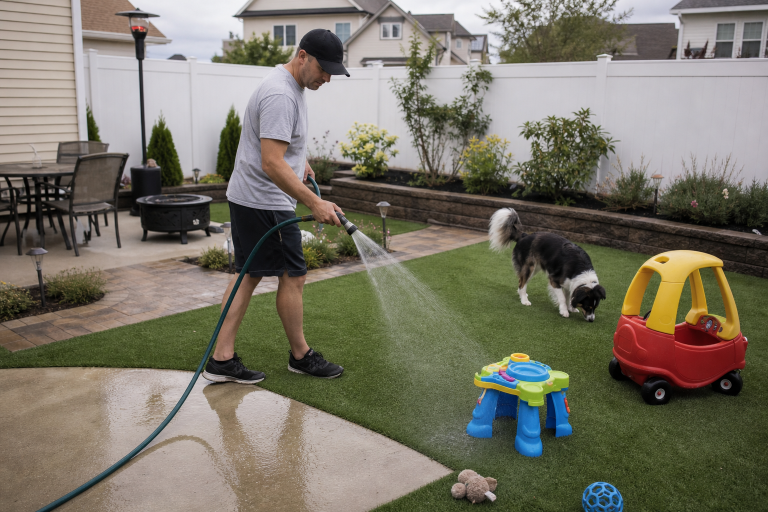
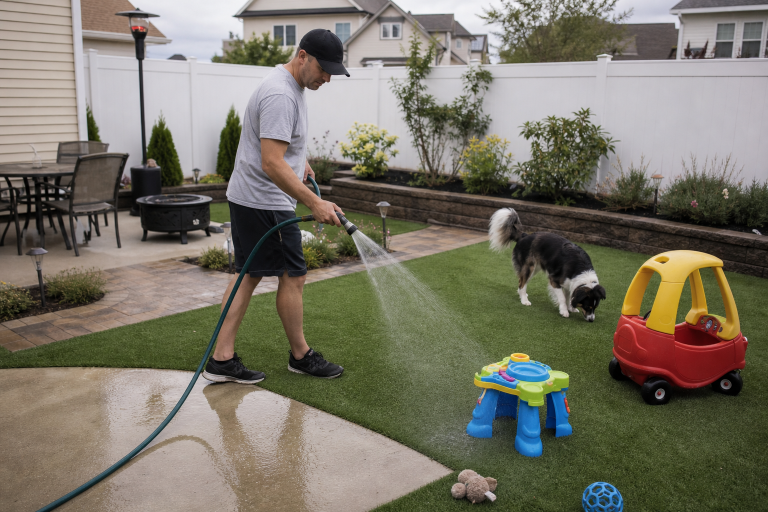
Pet owners often consider artificial grass after dealing with worn paths, holes, muddy paws, and difficult cleanup. A dog area should be evaluated as its own application, not treated as a standard lawn replacement. Base preparation and drainage are particularly important, as is a practical care routine that includes removing solid waste, rinsing the surface, and following the installer’s guidance for regular cleaning.
Thoughtful Planning for Play and Community Use
Schools, businesses, and community spaces may need a dependable surface that maintains a clean appearance under frequent use. Playground installations require more than an attractive turf product. Fall height, impact attenuation, borders, sub-base preparation, drainage, and applicable local requirements should all be considered before installation. The same careful planning helps ensure that gathering areas and commercial courtyards withstand daily foot traffic.
Why Professional Installation Matters
The turf itself is only one part of the finished system. A professional project begins with an evaluation of grading, water flow, soil conditions, tree roots, shade, access, and the property’s intended use. From there, the installation process should address a stable base, drainage planning, seams, transitions to patios or walkways, and durable edges.
This approach is especially useful in communities such as Haddonfield, Moorestown, Cherry Hill, and nearby South Jersey neighborhoods, where lot layouts, established landscaping, and architectural character vary widely. A shaded side yard needs a different conversation than a children’s play zone, backyard dog run, or business entry area.
What to Include in a ForeverLawn® of South Jersey Request
- Identify the areas that create the greatest maintenance or mud problems.
- Explain who will use the space, including pets, children, athletes, guests, or customers.
- Describe standing water, poor grading, compacted soil, or other drainage concerns.
- Note how much shade the area receives and which trees, beds, fences, patios, or walkways must remain.
- Ask which product best matches the intended use, what preparation is included, and what care is recommended.
- Discuss expected timing, budget, warranty coverage, and the desired finished appearance.
Artificial Grass Compared With Natural Grass
- Routine care: Natural grass typically requires seasonal mowing and may require fertilizer, weed control, and reseeding. Artificial grass avoids mowing but still needs debris removal and basic cleaning.
- Watering: Natural turf may need irrigation during dry periods. Artificial grass does not require watering for growth, although rinsing may be useful for cleaning.
- Mud and wear: Natural grass can become thin or muddy under heavy traffic. Properly installed artificial grass can provide a more consistent surface.
- Environmental considerations: Living lawns support soil and plant life, while artificial grass can reduce selected maintenance inputs but is a manufactured material. Both options deserve site-specific planning.
New Jersey homeowners can also use Rutgers guidance on seasonal water use to put lawn and landscape irrigation into context. The best choice is not a universal one. It is the choice that best fits the property’s water needs, daily use, maintenance expectations, and overall landscape goals.
Make the Next Step a Site-Specific Conversation
ForeverLawn® of South Jersey offers a practical path for homeowners, businesses, schools, and community spaces facing recurring lawn challenges. A successful project starts with a clear evaluation of the site and its intended use, followed by the right product selection, drainage planning, and professional installation. Contact the local team to discuss a tailored solution for a cleaner, more dependable outdoor space in South Jersey.