
How Industrial Warehouse Racking Improves Storage and Safety
Proper industrial warehouse racking transforms chaotic storage spaces into organized, efficient operations where everything has its place and workers can find what they need without wasting time. I’ve walked through warehouses that were complete disasters before racking systems were installed – products stacked directly on floors, no clear aisles, constant risk of items falling and injuring someone. The difference good racking makes goes beyond just fitting more stuff in the same space. It creates logical workflows, reduces product damage, and dramatically lowers the risk of workplace accidents. Warehouses operating without proper racking systems are basically leaving money on the table through inefficiency and unnecessary safety risks. The initial investment in quality racking pays for itself pretty quickly when you factor in increased storage density, faster picking times, and fewer workers’ compensation claims.
Maximize Vertical Space Utilization
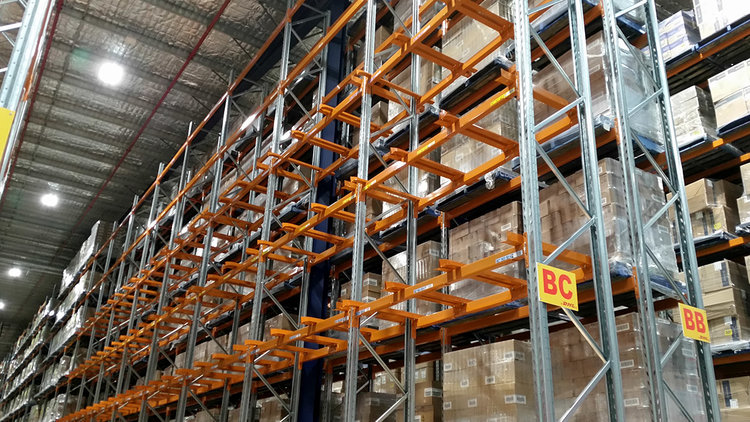
Most warehouses waste their most valuable resource, which is vertical space. Ground-level storage is limited by floor area, but going up lets you multiply capacity without expanding your building’s footprint. Industrial racking systems safely stack products to heights of 30 feet or more depending on your ceiling clearance and equipment capabilities.
Different racking configurations work for different storage needs. Selective racking provides access to every pallet but uses space less densely. Drive-in racking maximizes density for products where you’re storing multiple pallets of the same SKU and don’t need individual pallet access. I’ve seen warehouses triple their effective storage capacity just by installing proper racking and using forklifts or reach trucks capable of accessing higher levels. The key is matching your racking type to your inventory characteristics and picking patterns rather than just buying whatever’s cheapest.
Reduce Workplace Injuries Through Proper Design
Warehouse accidents often happen because of unstable stacks, items stored too high without proper equipment, or cluttered aisles where forklifts and workers compete for space. Quality racking systems eliminate these hazards through engineered load ratings, proper anchoring to floors, and designed aisle widths that accommodate equipment safely.
Each racking component has specific weight capacities that must be followed. Beam levels get labeled with maximum load ratings, and uprights are engineered to handle cumulative weight across all levels. Safety features like column guards protect racking from forklift impacts, while wire decking prevents pallets from falling through beams. I always tell warehouse managers to treat load ratings as absolutes, not suggestions. Overloading racking causes collapses that can kill people and destroy thousands of dollars in inventory instantly. Regular inspections catch damaged components before they fail catastrophically.
Improve Inventory Management and Picking Efficiency
Organized racking systems make inventory management actually possible instead of an exercise in guessing where things might be. You can implement location-based systems where every position has an identifier, making it easy to direct pickers to exact locations. This cuts picking time substantially compared to wandering around looking for products.
The layout affects efficiency too. Fast-moving items should be in easily accessible locations near packing stations, while slower movers can go higher or deeper in the racking. Some operations use zone picking where pickers stay in assigned areas and know their section intimately. Others do wave picking where multiple orders get picked simultaneously. The racking configuration needs to support whichever methodology you choose. I find that businesses often install racking without thinking through their picking workflows, then wonder why efficiency didn’t improve as much as expected. The racking is just infrastructure – you still need smart processes built around it.