How to Minimize Property Loss With Emergency Carpet Drying
Water damage doesn’t wait around. When your carpet gets soaked from a burst pipe, overflow, or flooding, every hour counts before things get worse. Emergency carpet drying isn’t just about saving your flooring, it’s about preventing mold growth, structural damage, and thousands of dollars in replacement costs. Studies show that mold can start developing within 24 to 48 hours in damp conditions, which means speed matters more than most homeowners realize. The longer water sits in carpet fibers and padding, the deeper it penetrates into subfloors and walls. What starts as a wet carpet problem quickly becomes a whole-house disaster if you don’t act fast.
Why Wet Carpets Are More Dangerous Than They Look
Carpets are like giant sponges. They absorb water fast and hold onto it even faster. The padding underneath? Even worse. It traps moisture against your subfloor, creating the perfect breeding ground for mold and bacteria. I’ve seen carpets that looked barely damp on top but were completely saturated underneath. That hidden moisture is what causes the real damage. Wood floors start warping, concrete develops moisture issues, and before you know it, you’re dealing with structural problems that cost way more than the carpet ever did.
The First Few Hours Make or Break Everything
When water hits your carpet, you’ve got a narrow window to prevent permanent damage. Within the first 4 hours, water spreads through carpet fibers and starts seeping into walls and furniture legs. By 12 hours, drywall begins absorbing moisture from the bottom up. After 24 hours, you’re looking at potential mold contamination. Professional restoration companies use moisture meters to check how deep the water has gone, they don’t just rely on what they can see or feel. Sometimes carpet that feels dry on the surface is still holding 60% moisture content in the padding.
What Actually Happens During Professional Drying
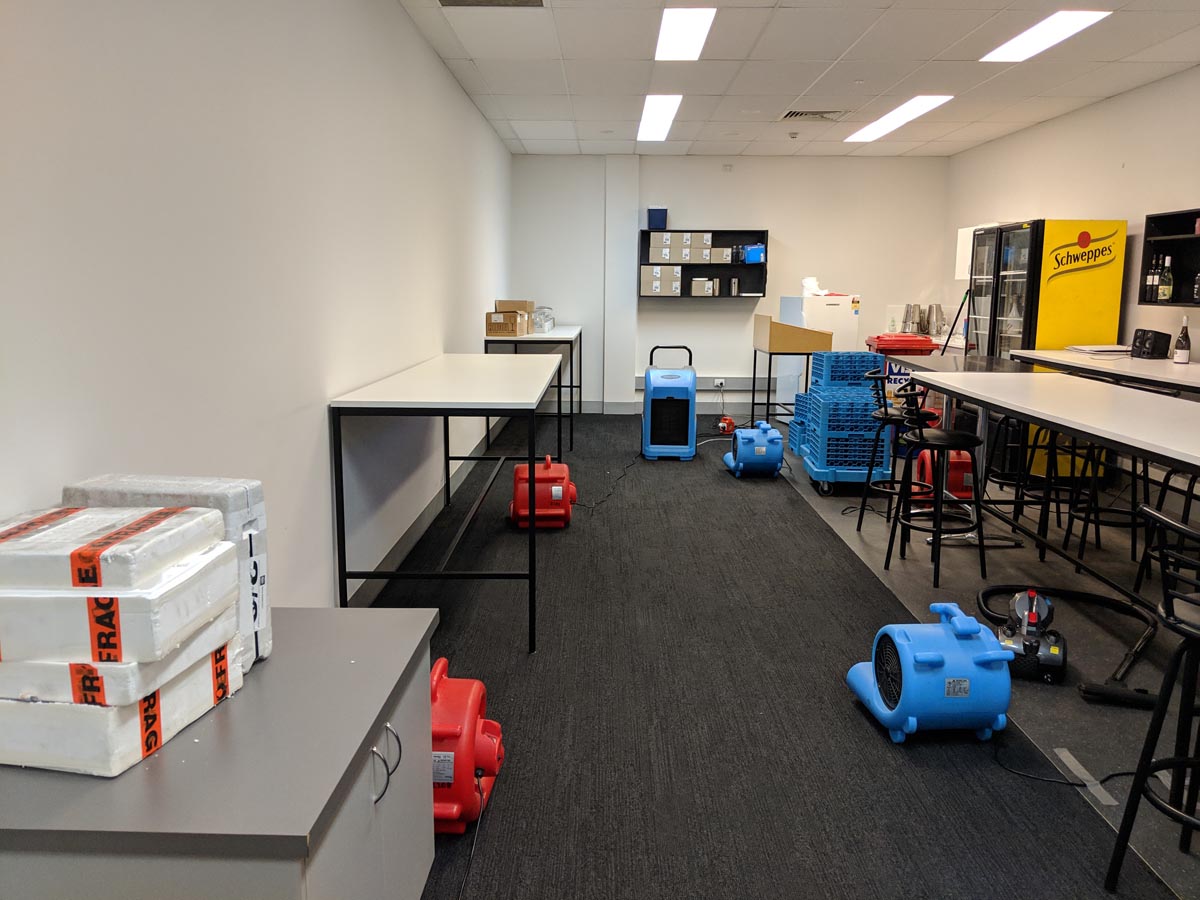
The process isn’t as simple as pointing a few fans at the floor. Professionals use industrial air movers that create rapid air circulation across the carpet surface. These aren’t your regular box fans, they move thousands of cubic feet of air per minute. Then there’s dehumidification, which pulls moisture out of the air so the water has somewhere to go when it evaporates. Without dehumidifiers, you’re just moving wet air around the room. Some situations also need specialty drying mats that create suction under the carpet, literally pulling water up from the padding and subfloor.
Temperature and Humidity Control
Here’s something most people don’t think about: warm air holds more moisture than cold air. That’s why professionals often raise the temperature in affected rooms during drying. It speeds up evaporation significantly. The ideal drying environment sits around 21-24 degrees Celsius with humidity levels kept below 50%. Too hot and you risk damaging carpet fibers or adhesives. Too cold and the drying process drags on for days longer than necessary. Restoration techs constantly monitor and adjust these conditions throughout the drying process.
Why do DIY drying often fail?
Many homeowners try to deal with water-soaked carpets themselves, but do-it-yourself methods rarely remove enough moisture to prevent long-term damage. Household fans don’t have the power to push evaporation through dense carpet fibers and upholstery, and most don’t have a dehumidifier strong enough to keep indoor humidity at a safe level. Vacuuming with a wet-dry vacuum only removes surface water, leaving deeper layers saturated. Worst of all, without proper moisture measurements, you won’t know if the subfloor or walls are still holding hidden moisture. What looks “dry enough” can still cause mold growth weeks later, which is why professional equipment and expertise make such a big difference in preventing secondary damage.