How to Move Furniture Without Damaging Your Home
Whether you’re leaving your old home or moving into a new one, it’s preferable that the move goes without accidentally taking chunks of wall with you. But it’s easy to cause unintentional damage whilst moving furniture, especially if you are an amateur mover.
However, there are ways to make a move go more smoothly, limiting the damage you cause to your poor home. From planning before the big day to seeking the assistance of local furniture movers, we have compiled a list for the more uncoordinated among you.
Resource: Pexels
Draw Up a Plan Before You Move
First things first, draw up a game plan before you start picking up pieces of furniture. Not only will this minimize the amount of lifting you do, but it will also limit the number of knocks and bumps to fixtures and fittings in your home.
Get the Measuring Tape Out
As part of your plan, you should include the dimensions of larger pieces of furniture, along with measurements of the entrances they will pass through on their way out of the building. This can help you visualize whether or not each piece can fit and what your next steps will be.
Create a Clear Moving Path
If you live in an apartment building, you will have to map out a moving path from your home to the building’s exit. Get in touch with building management to arrange for elevators to be free on moving day and to ensure that there is parking space for the moving van. Having a clear moving path from A to B will save you a headache on the big day.
Disassemble or Not?
After you have measured all the oversized pieces of furniture, you may have to decide whether or not to disassemble them. For flatpack furniture, this is easier, as the nature of its design allows it to be pulled apart for storage and reassembled. Grand, antique pieces are a different matter. These should be left intact and treated with care, ideally by experienced movers.
Gather Together Tools and Supplies
Now it’s time to put together a toolkit so that you are well-prepared on moving day. From handy gadgets that can help you move large furniture to protective packaging, these are the essential items you need before attempting a move.
Moving Equipment
Dollys, lifter movers, and moving straps should form part of your moving equipment list if you are moving home without the help of professionals. These help take the strain from moving heavy items and give you greater control when maneuvering.
Moving equipment can be easily purchased online or from DIY stores. Or alternatively, you could rent them as you may not need to move again for a long while.
Packing Properly
Gather protective padding and plastic packaging to protect the edges of furniture, not only from damage but also from causing damage to walls and doorways. Skipping this step is an error you don’t want to make, as it is unbelievably easy to misjudge a move and scrape a wall or chip woodwork.
Protecting Floors, Doors, and Walls
You have to have your eyes on swivel mode when moving furniture, as one false move and you’ve damaged the floor, a wall, or a doorway. Protecting these vulnerable spots will help you keep your home intact during the move.
Scratch-Free Floors
Wooden floors are susceptible to damage during a move. Dragging heavy furniture, in particular, can leave permanent dents and marks in floorboards. This is something that takes time, energy, and money to repair, so it’s best to avoid damaging floors in the first place.
Use sliders or runners when suitable to act as a barrier between the furniture pieces and the floor. However, ensure that you invest in commercial-grade sliders that offer better protection.
Undamaged Doors
Forcing oversized furniture through doorframes can, at best, scratch or chip the paintwork, and at worst, crack the wood itself. If at all possible, doors should be removed from their hinges to allow for larger items to pass through without causing damage. If removing the door isn’t an option, make sure that you protect the doorframe with foam padding to absorb any knocks.
Watch out for Walls
While chipped paintwork is a pain to cover up, dents in plaster are another matter. One poorly choreographed turn carrying angular furniture can knock off plaster and damage the walls. For example, cover sharp, solid oak furniture edges with corner guards to help minimize the impact of accidental bumps from this hardwood.
Lifting Without Injury
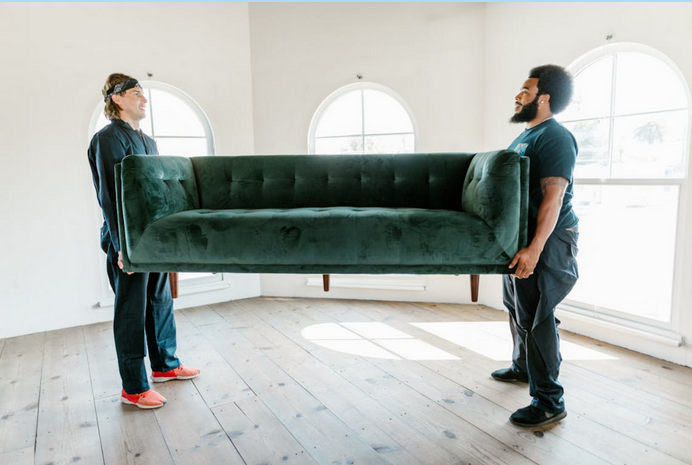
It’s not just your home that can experience damage when moving furniture. If you don’t employ proper lifting techniques, you could end up injuring yourself. Attempting to move heavy furniture without carrying out a risk assessment first is a rookie mistake. Ideally, you should leave this to the professionals or get a second person to help you.
However, if you are moving furniture solo, there are some tips and tricks to avoid injury. First of all, when lifting an item such as a bedside cabinet, keep your back straight and your knees bent, with the item close to your body to avoid strain. This is the proper form for lifting solo. Though don’t attempt to manually lift anything that requires two or more people.
When to Hire Professional Movers
When you add up the costs of moving equipment and removal trucks, and factor in the hassle of planning a move, moving solo can get overwhelming. This is when it is time to call in the professionals.
Experienced movers can strategize on your behalf and prepare your heavy furniture for moving day. This gives first-time movers or those who are less confident about tackling a move on their own a reassuring helping hand or two. The damage caused by poorly handled moving can add up, making your moving day bill higher than you’d expect.
Local movers can safely and efficiently transport your furniture without any costly damage to your home. As a bonus, this service will save your back from aches and pains the next day too!