Should You Replace Your Gas Furnace and Air Conditioning Unit at the Same Time?
Replacing major HVAC equipment is one of the most significant home improvement decisions a homeowner can make. Whether you are dealing with rising energy bills, uneven temperatures, or a system that frequently needs repairs, the question often arises: should you replace both components together or handle them separately?
For many households, the decision centers around whether to upgrade the Gas furnace and Air conditioning unit at the same time. While doing so can offer efficiency and compatibility advantages, it also involves higher upfront costs and logistical considerations. Understanding the trade-offs, long-term implications, and practical challenges associated with each approach can help you make a decision that fits your budget, climate, and home comfort goals.
Understanding How the System Works Together
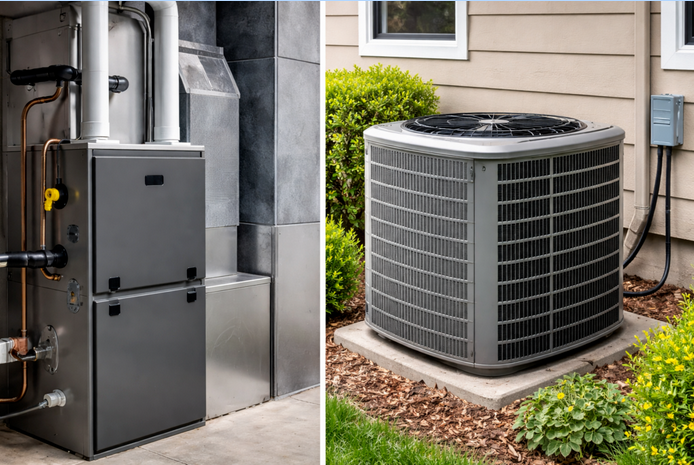
In most homes with a split HVAC setup, the residential furnace and the AC unit are closely connected. The furnace contains the blower motor that pushes air through your ductwork, whether you are heating or cooling your home. The outdoor AC unit works alongside the indoor coil to remove heat from the air during warmer months.
Because these components share key elements—particularly the blower and air handler—their performance is interdependent. When one part is outdated or less efficient than the other, it can affect the overall performance of the entire air conditioning system and gas heating system.
This interconnection is one of the primary reasons homeowners consider replacing both systems at once.
Deciding whether to replace both units at once often comes down to long-term efficiency and the age of the existing infrastructure. When a new furnace is paired with an outdated cooling system, the mismatched technology can prevent the entire setup from reaching its full SEER potential. For homeowners considering ac installation houston, this synchronization is particularly vital because of the intense seasonal demands placed on the equipment. Opting for a full system replacement typically reduces future labor costs and ensures that all components operate under a single warranty period. This holistic approach to home climate control not only simplifies maintenance schedules but also provides a more consistent level of comfort throughout the shifting seasons.
Deciding whether to replace your gas furnace and air conditioning unit simultaneously often hinges on the compatibility of the two systems. Modern advancements ensure that matched components operate at peak efficiency, preventing one old part from straining a newer counterpart. When a specific component fails, homeowners might consider a simple ac repair to extend the lifespan of their existing setup, but this can sometimes be a temporary fix. Evaluating the age of both units helps in determining if a full upgrade provides better long-term value. Integrated systems typically offer more consistent indoor climate control and reduced energy costs, making the initial investment more practical for those planning to stay in their homes for several years.
Key Factors That Influence the Decision
1. Age of the Equipment
The age of your equipment is often the most decisive factor. Most residential furnace models last between 15 and 20 years, while an AC unit typically lasts around 12 to 15 years. If both systems were installed at the same time and are approaching the end of their lifespan, replacing them together may be practical.
However, if your gas heating system is only five years old and your air conditioning system has failed, replacing both may not be financially justifiable. In such cases, the remaining useful life of the functioning system must be weighed against potential efficiency gains from a matched system.
The trade-off here is straightforward: short-term savings versus long-term optimization.
2. Energy Efficiency Improvements
Modern HVAC equipment is significantly more efficient than models manufactured 10 to 20 years ago. Efficiency ratings such as AFUE (Annual Fuel Utilization Efficiency) for heating and SEER (Seasonal Energy Efficiency Ratio) for cooling have improved steadily over time.
When you replace both systems simultaneously, you can select equipment designed to work together for optimal efficiency. A matched residential furnace and AC unit combination can improve airflow balance, reduce strain on components, and lower energy consumption.
However, if only one system is outdated, replacing both solely for efficiency may extend your return on investment timeline. The challenge is determining whether energy savings justify the added upfront cost.
3. Compatibility and Performance
HVAC components are engineered to work as matched systems. An older gas heating system paired with a high-efficiency air conditioning system may not deliver the full performance benefits of the new unit. Mismatched systems can cause:
- Reduced cooling capacity
- Uneven airflow
- Increased wear on shared components
- Lower overall efficiency
Replacing both units ensures compatibility and can eliminate these concerns. Yet compatibility issues are not always severe enough to mandate full replacement. A professional evaluation can determine whether your existing residential furnace can adequately support a new AC unit.
The key challenge lies in assessing technical compatibility without overspending unnecessarily.
4. Installation Costs and Labor Efficiency
From a practical standpoint, replacing both systems at once can reduce labor duplication. Contractors already working on duct connections, electrical systems, and refrigerant lines can complete both installations in a single visit. This often reduces total labor costs compared to separate installations years apart.
However, the total project cost is undeniably higher upfront. Even if you save on labor, purchasing two major systems simultaneously requires a larger financial commitment.
The trade-off involves balancing cash flow and potential savings. Homeowners with access to financing or renovation budgets may find simultaneous replacement more manageable, while others may prefer phased upgrades.
5. Repair Frequency and Reliability
If both systems are requiring frequent repairs, that signals declining reliability. Multiple service calls not only cost money but also create inconvenience—especially during peak summer or winter conditions.
Replacing both systems together can reset your home’s comfort infrastructure, offering predictable performance and fewer emergency breakdowns.
On the other hand, if only one system shows repeated issues, replacing the failing unit alone may make more sense. Prematurely replacing a reliable residential furnace just because the AC unit failed may not be cost-effective.
Reliability concerns should be evaluated realistically, not based on a single repair incident.
6. Long-Term Home Value
HVAC upgrades can increase resale appeal. Prospective buyers often look for recently installed systems as a sign of reduced future expenses. If both heating and cooling equipment are brand new and properly matched, that can be a strong selling point.
If you plan to sell your home within a few years, replacing both systems at once could simplify negotiations and improve perceived value. However, if you intend to stay long term, your decision may focus more on comfort and efficiency than resale impact.
The impact on home value is real but varies based on market conditions and buyer expectations.
Trade-Off Analysis: Replace Together vs. Separately
To make an informed decision, it helps to examine both approaches objectively.
Replacing Both Systems at the Same Time
Advantages:
- Guaranteed compatibility
- Higher overall efficiency
- Reduced long-term maintenance risk
- Single installation disruption
- Potential labor savings
Challenges:
- High upfront cost
- Larger financial commitment
- May replace a unit that still has usable life
This approach is often ideal when both systems are aging, inefficient, or nearing failure.
Replacing One System at a Time
Advantages:
- Lower immediate expense
- Maximizes lifespan of functioning equipment
- Easier budget management
Challenges:
- Potential compatibility limitations
- Reduced efficiency compared to matched systems
- Possible higher long-term labor costs
This strategy works best when one system is relatively new and functioning reliably.
Climate and Usage Considerations
Your geographic location significantly influences the decision. In colder climates, the gas heating system experiences heavier use, while in warmer regions the air conditioning system bears more strain.
If you live in an area with long summers, an aging AC unit may deteriorate faster than the residential furnace. Conversely, harsh winters may shorten the lifespan of heating equipment.
Evaluating which system works harder in your climate helps determine whether simultaneous replacement is justified.
The Importance of Timing
Timing plays a crucial role. Replacing systems proactively—before total failure—gives you more control over pricing, scheduling, and product selection. Emergency replacements often limit options and increase costs.
If one system fails unexpectedly during extreme weather, you may be forced to make a quick decision. In such cases, replacing both may be convenient, but not always financially optimal.
Planning ahead allows for strategic decision-making rather than reactive spending.
Financial Planning and Budget Strategy
HVAC replacements are capital expenses. Whether replacing one or both systems, budgeting is essential. Consider:
- Total installation cost
- Energy savings over time
- Repair history
- Financing options
- Potential rebates or incentives
Sometimes utility rebates are higher for complete system upgrades, which can partially offset costs. Carefully reviewing available incentives can influence your decision.
Balancing immediate affordability with long-term savings is often the most difficult part of the process.
Environmental Impact
Energy efficiency improvements also carry environmental implications. Upgrading to a high-efficiency residential furnace and AC unit combination reduces fuel consumption and greenhouse gas emissions.
Older systems may use outdated refrigerants or operate at lower efficiency standards. Replacing both units together may reduce your home’s carbon footprint more effectively than upgrading one component at a time.
However, premature replacement of functioning equipment also has environmental costs associated with manufacturing and disposal. Sustainable decision-making requires weighing operational efficiency gains against resource use.
Comfort and Indoor Air Quality
Modern HVAC systems often include enhanced humidity control, improved airflow technology, and better filtration options. Replacing both systems can significantly improve indoor comfort consistency.
Mismatched systems sometimes create uneven heating and cooling, especially if airflow capacity differs between units. Balanced systems generally provide better temperature control and quieter operation.
Comfort improvements may not always be quantifiable financially, but they directly affect daily living experience.
When Replacing Both Makes the Most Sense
Simultaneous replacement is typically recommended when:
- Both systems are over 12–15 years old
- Repair costs are accumulating
- Efficiency is significantly below current standards
- Major home renovations are underway
- You plan to stay in the home long term
In these cases, long-term performance and efficiency gains often outweigh the higher initial cost.
When Replacing Separately Is Practical
Phased replacement is often appropriate when:
- One system is relatively new
- Budget constraints are significant
- The remaining system has minimal repair history
- Compatibility concerns are manageable
This approach maximizes the usable life of your equipment without unnecessary spending.
Professional Assessment Is Essential
Ultimately, determining whether to replace both systems at once requires a professional load calculation and system evaluation. An HVAC contractor can assess:
- Ductwork condition
- Blower capacity
- Energy usage patterns
- Compatibility between components
- Cost-benefit projections
Relying solely on age or anecdotal advice can lead to suboptimal decisions.
Final Thoughts
Deciding whether to replace your heating and cooling systems at the same time involves balancing cost, efficiency, reliability, and long-term value. There is no universal answer. The right choice depends on the age and condition of your equipment, financial flexibility, climate demands, and homeownership plans.
Replacing both systems together offers the advantages of compatibility, improved efficiency, and streamlined installation—but requires a larger upfront investment. Replacing them separately allows for phased spending but may limit efficiency gains and long-term optimization.
Careful evaluation of these trade-offs ensures you make a well-informed decision that supports comfort, sustainability, and financial stability for years to come.