Modern Planters vs Antique Planters
Most commercial planter failures are not caused by poor materials. They are caused by poor specification.
By the time many landscape architects and developers begin discussing planters, the building is designed, the hardscape is complete and the landscape budget is under pressure. At that point, planter selection often becomes a purchasing decision rather than an architectural one.
The result is predictable. Planters that are undersized, visually disconnected from the architecture, structurally unsuitable for the site or expensive to maintain over time.
The modern planter versus antique planter debate is often presented as a question of personal preference. In reality, it is a design and specification decision that influences how people experience a space.
Whether specifying commercial planters for a hospitality project, a multifamily development, a rooftop terrace or a luxury residential property, the right planter should reinforce the architectural language of the building while meeting practical performance requirements.
For landscape architects, architects and developers, style is only one part of the equation.
The Five Variables That Should Drive Planter Specification
Before choosing between a modern planter and an antique planter, successful design teams typically evaluate five key factors:
1. Architecture
The planter should feel like a natural extension of the building rather than a separate decorative object.
2. Scale
A perfectly designed planter that is too small for the architecture will always feel temporary.
Scale is one of the most overlooked considerations in commercial planter specification.
3. Material
The visual appearance of a planter matters, but long-term performance matters more.
4. Climate
Freeze-thaw cycles, UV exposure, rainfall and temperature fluctuations all influence material performance.
5. Maintenance
The best planter is not simply the one that looks good on installation day. It is the one that continues performing five or ten years later.
When these five variables are considered early in the design process, both modern and antique planter styles can be highly effective.
What Defines a Modern Planter
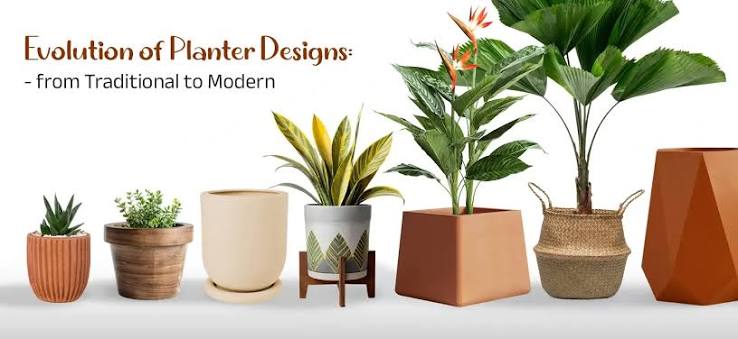
A modern planter is defined by clean geometric forms, minimal ornamentation and architectural simplicity.
Whether rectangular, square or cylindrical, modern planters are designed to complement the surrounding architecture rather than compete with it.
In contemporary developments, commercial planters often function as architectural elements that help organize space, frame entrances and create visual structure.
This is particularly common in:
- Hospitality projects
- Mixed-use developments
- Corporate campuses
- Luxury multifamily communities
- Rooftop terraces
Large-format modern planters work especially well alongside glass, steel, exposed concrete and minimalist architectural forms.
Rather than becoming focal points themselves, modern outdoor planters provide a framework that allows planting schemes and architecture to take center stage.
Today’s most successful modern planter designs have also evolved beyond the stark grey finishes that once dominated the category. Warmer neutrals, textured surfaces and architectural matte finishes have become increasingly popular across commercial and hospitality projects.
What Defines an Antique Planter
An antique planter draws inspiration from classical garden vessels, urns and traditional architectural detailing.
Unlike a modern planter, which typically recedes into the background, an antique planter often serves as a focal point within the landscape.
The defining characteristic of an antique planter is not ornamentation alone. It is the sense of permanence it creates.
A well-designed antique planter appears rooted in its environment, as though it has been part of the landscape for decades.
This makes antique planters particularly effective for:
- Mediterranean architecture
- Spanish Colonial developments
- Historic properties
- Luxury estates
- Resort environments
- Courtyard designs
In many hospitality projects, a large antique planter can perform the same visual role as a sculpture or water feature, creating a strong sense of arrival while reinforcing the character of the space.
When Modern Planters Make Sense
Modern planters generally perform best when the architecture itself embraces simplicity.
They are often the preferred choice for:
- Contemporary homes
- Urban developments
- Corporate environments
- Luxury apartment communities
- Modern hospitality projects
A large architectural planter positioned at a building entrance can create structure, symmetry and visual balance without introducing unnecessary complexity.
For landscape architects working on contemporary developments, modern planters often provide the flexibility needed to support both minimalist and highly planted landscape schemes.
When Antique Planters Make Sense
Antique planters work best when they reinforce an existing architectural narrative.
They are commonly specified for:
- Mediterranean-style properties
- Traditional estates
- Historic renovations
- Luxury hospitality environments
- Classical garden designs
When used appropriately, antique planters create a sense of maturity and permanence that newer developments often struggle to achieve.
However, placing antique-style planters against highly contemporary glass-and-steel architecture can create visual conflict unless the contrast is intentional.
What Landscape Architects Prioritise Today
Increasingly, planter selection is being influenced by practical performance considerations rather than aesthetics alone.
Today’s landscape architects and developers are evaluating:
- Rooftop weight restrictions
- Installation efficiency
- Climate resilience
- Long-term maintenance costs
- Durability
- Sustainability
- Customisation options
This shift explains why GFRC planters have become increasingly popular across commercial landscaping and hospitality projects.
While style remains important, performance is often what determines whether a specification succeeds.
The Material Conversation Most Style Discussions Skip
Style gets most of the attention, but material is what determines how a planter performs over the life of a project.
Natural stone and traditional concrete planters offer visual weight and presence. However, they also introduce structural challenges, transportation costs and installation limitations.
For many architects and developers, the conversation has shifted toward GFRC planters.
GFRC, or Glass Fiber Reinforced Concrete, combines the appearance of traditional concrete with significantly improved performance characteristics.
Compared with traditional concrete or stone, GFRC planters are substantially lighter while maintaining exceptional durability and design flexibility.
This makes them particularly valuable for:
- Rooftop terraces
- Podium decks
- Hospitality projects
- Commercial developments
- Urban public spaces
Large commercial planters manufactured from GFRC can often achieve the same architectural appearance as traditional concrete at a fraction of the weight.
For projects where structural loading is a concern, that difference can be critical.
Why GFRC Has Become the Preferred Material for Architectural Planters
For many landscape architects, the question is no longer whether to use GFRC but where it provides the greatest advantage.
GFRC planters offer:
- Reduced weight
- Excellent weather resistance
- Freeze-thaw durability
- UV stability
- Design flexibility
- Long-term dimensional consistency
River Art Stone has been manufacturing GFRC since 2008, originally producing architectural facade cladding and building panel systems before expanding into planters and bathtubs in 2019.
That experience matters because the performance expectations for architectural facades are significantly higher than those for decorative landscape products.
The same manufacturing principles that support façade performance also contribute to the durability, consistency and longevity of the company’s architectural planters.
For developers, property owners and landscape architects specifying commercial planters at scale, this distinction can have a meaningful impact on maintenance costs and replacement cycles over time.
Planters Should Follow Architecture, Not Trends
The modern planter versus antique planter discussion is often framed as a stylistic choice, but for architects and developers it is ultimately a specification decision.
The right planter should reinforce the architecture, support the landscape design and perform reliably in its environment for years to come.
Modern planters excel in contemporary settings where simplicity and architectural clarity are priorities.
Antique planters bring character, permanence and historical context to traditionally detailed environments.
The most successful projects select planter style based on architectural intent and material based on performance requirements.
When those decisions are made in the correct order, commercial planters become more than decorative accessories. They become an integral part of the built environment, enhancing both the appearance and long-term success of the project.
Read more: