Commercial Sewer Maintenance: A Practical Guide to Preventing Backups and Downtime
Key Takeaways
- Commercial sewer restrictions often develop gradually before a backup becomes visible.
- Grease, grit, roots, scale, sludge, and improperly discarded materials can reduce pipe capacity.
- Camera inspections and cleaning records make recurring problems easier to diagnose.
- The right maintenance interval depends on actual use, waste type, pipe condition, and past backup history.
- Cleaning can remove deposits, but a damaged or collapsed pipe may require repair or rehabilitation.
Commercial sewer trouble rarely begins with a dramatic overflow. More often, grease, sediment, roots, or process debris slowly reduce flow until a busy period, heavy rain, or equipment discharge pushes the line past its limit. Planned sewer cleaning services help facility managers address buildup before it interrupts operations, damages property, or creates an unsafe cleanup situation.
A reliable program combines routine observation, targeted inspection, appropriate cleaning, and useful recordkeeping. The goal is not simply to respond to clogs. It is to understand which lines are most likely to restrict, what is entering them, and when service should be scheduled to reduce avoidable emergencies.
Why Commercial Sewer Backups Happen
Every deposit inside a pipe reduces the open space available for wastewater to move. In commercial settings, lines may receive heavier and more varied loads from kitchens, restrooms, floor drains, loading areas, manufacturing processes, or tenant spaces. A partial restriction can appear manageable until demand rises, then wastewater may surface through floor drains, cleanouts, toilets, or other low points.
Understanding the difference between building drains, sanitary lines, and stormwater systems also matters. A sewerage system relies on separate components that must carry the material they are designed to handle. When debris enters the wrong drain or a line is overloaded, the result can be slower flow, backups, and more difficult maintenance.
Early Warning Signs to Watch For
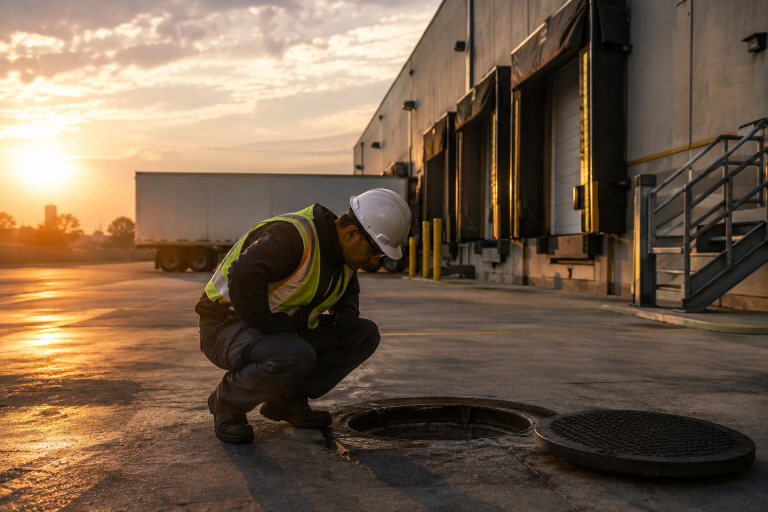
Waiting for a complete blockage usually increases disruption. An inspection is worth scheduling when staff reports slow drainage at several fixtures, repeated clogs in the same area, gurgling near floor drains, sewer-like odors, or water rising from drains during peak use. Outside, standing water around catch basins, visible sediment, grease near access points, and overflows after rain also deserve prompt attention.
These symptoms do not always identify the exact cause, but they help maintenance teams narrow the search area. Recording the location, time, weather, and operating conditions can make the next inspection more efficient.
Common Causes of Sewer Restrictions
Grease, Grit, and Process Debris
Fats, oils, and grease can cool and adhere to pipe walls, where they catch food particles and other debris. Sand, road grit, landscaping material, and sediment can settle in low-flow areas, manholes, and catch basins. Facilities with production or washdown activities may also introduce solids that require closer monitoring. Industrial and commercial discharges may be subject to local requirements, so managers should understand how industrial wastewater controls apply to their operation.
Roots, Scale, and Improperly Disposed Materials
Roots can enter through cracks or failed joints, creating repeated restrictions. Mineral scale and residue may gradually narrow older piping. Wipes, paper towels, hygiene products, plastic, and other non-dispersible items can catch on roots, offsets, or existing buildup. Clear disposal rules and accessible waste containers reduce the chance that staff or visitors send unsuitable materials into drains.
What a Proper Inspection Includes
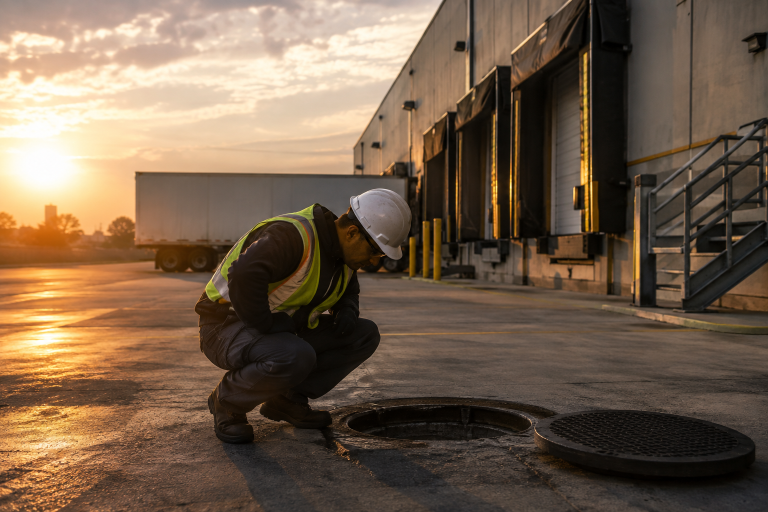
A useful inspection starts with site history. Review prior backups, cleaning reports, repair invoices, tenant complaints, and known problem areas. Then identify available cleanouts, manholes, catch basins, and difficult-to-reach line segments.
- Check for standing water, poor flow, odors, visible deposits, and damaged access structures.
- Use a sewer camera when the cause or condition cannot be confirmed from the surface.
- Look for roots, cracks, offset joints, sags, heavy deposits, or collapsed sections.
- Document findings with video, photos, line locations, and recommended follow-up work.
Choosing the Right Cleaning Method
High-pressure water jetting is often used to break apart grease, sludge, scale, and loose debris while cleaning pipe walls. Nozzle selection, water pressure, and operating technique should suit the pipe’s material, diameter, and condition. Vacuum equipment is valuable when debris must be removed from catch basins, manholes, or collection areas rather than pushed farther through the system.
Mechanical cutting may be needed for roots or hardened obstructions that do not respond to jetting. However, cleaning does not restore a pipe with severe structural damage. If inspection reveals a collapsed section, major cracking, or recurring joint failure, the next step may be spot repair, lining, replacement, or drainage redesign.
Building a Practical Maintenance Schedule
There is no single interval that fits every commercial property. Set a starting schedule based on how each line is used, then revise it as inspection results and cleaning records reveal patterns.
- Low-risk lines: Review annually and clean when inspections show meaningful buildup.
- Moderate-use lines: Inspect on a regular seasonal cycle, especially before periods of higher occupancy or rainfall.
- High-load lines: Use shorter cleaning intervals for lines carrying grease, grit, sludge, or process solids.
- Recurring problem lines: Track the time between restrictions and schedule service before the next likely failure.
Managing Stormwater Risks
Stormwater maintenance deserves its own plan. Leaves, trash, sediment, and road grit can block inlets and catch basins, allowing water to pond near doors, loading areas, and parking lots. Check these areas before storm seasons, after long dry periods, and after major weather events. Review grading, sump equipment, inlet condition, and backflow protection where applicable.
Responding to a Sewer Emergency
- Keep staff and visitors away from contaminated water and slippery surfaces.
- Stop affected operations if continued water use could worsen the overflow.
- Secure and mark the area, then notify the appropriate manager or property contact.
- Document the location, time, visible materials, weather, and site conditions.
- Arrange for cleanup, waste handling, and a follow-up inspection to identify the cause.
Using Records for Repairs and Budgets
Maintenance records turn individual service calls into a practical planning tool. Track cleaning dates, line locations, removed material, inspection footage, weather conditions, repair recommendations, and whether the work was planned or emergency service. Comparing these records over time helps identify lines that need more frequent cleaning or a capital repair.
Conclusion
Commercial sewer maintenance works best when it is planned before a backup occurs. By monitoring early warning signs, matching cleaning methods to the problem at hand, maintaining stormwater assets, and documenting service results, facility teams can reduce disruption and make more informed decisions about ongoing maintenance and future repairs.