How to Stop Grass Wear Around Garden Play Equipment
A garden with play equipment is one of the best things you can have at home, especially for families with children. It gives kids a safe place to play, stay active, and enjoy fresh air without leaving the house. But over time, many homeowners in the UK face a common problem. The grass around swings, slides, climbing frames, and other play areas starts to wear out.
At first, it may just look like a few thin patches. But with regular use, those patches quickly turn into bare soil and muddy areas. In wet UK weather, this becomes even worse. The ground gets soft, children run over it again and again, and soon the lawn loses its healthy green look.
The good news is that this problem is not permanent. With the right approach, you can reduce grass wear, protect your garden, and keep the play area looking clean and safe for a long time.
Why Grass Gets Damaged Around Play Equipment
Before fixing the issue, it helps to understand what causes it. Grass damage is not random—it happens due to repeated pressure in the same spots.
In most UK gardens, the main reasons are:
- Constant running and jumping in the same areas
- Wet soil due to frequent rain
- Heavy foot traffic around swings and slides
- Poor drainage in certain parts of the garden
- Lack of ground protection under fixed equipment
When all of these combine, grass struggles to grow back properly. Over time, the soil becomes compacted, meaning air and water cannot reach the roots easily. This is when bare patches start to appear.
The Importance of Planning Your Play Area
One of the easiest ways to reduce grass wear is to think carefully about where you place play equipment. Many people install swings or climbing frames without considering long-term impact on the lawn.
If you plan properly from the beginning, you can avoid a lot of future damage.
Good planning includes:
- Choosing a slightly firm and well-drained area
- Avoiding low spots where water collects
- Keeping equipment away from fragile lawn edges
- Thinking about natural movement paths of children
Even small changes in placement can make a big difference over time.
Create Safe and Defined Play Zones
Children naturally create their own play patterns. Instead of letting this damage random areas of your garden, it’s better to guide it in a controlled way.
A defined play zone helps protect the rest of the lawn while keeping the space organised.
You can achieve this by using:
- Gravel borders or edging stones
- Bark or wood chip zones
- Stepping stone pathways
- Clearly marked play sections
This helps children stay within a safe area and reduces scattered wear across the garden.
Protect the Ground Under Equipment
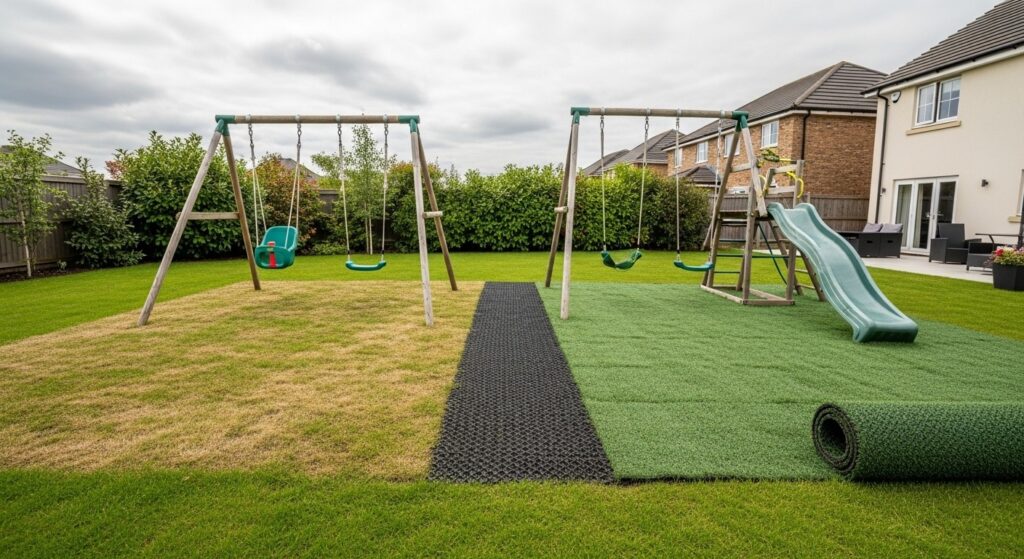
The most damaged area in any garden play space is directly under the equipment. Swings cause repeated impact, slides create friction, and climbing frames concentrate weight in one spot.
This is where ground protection becomes very important.
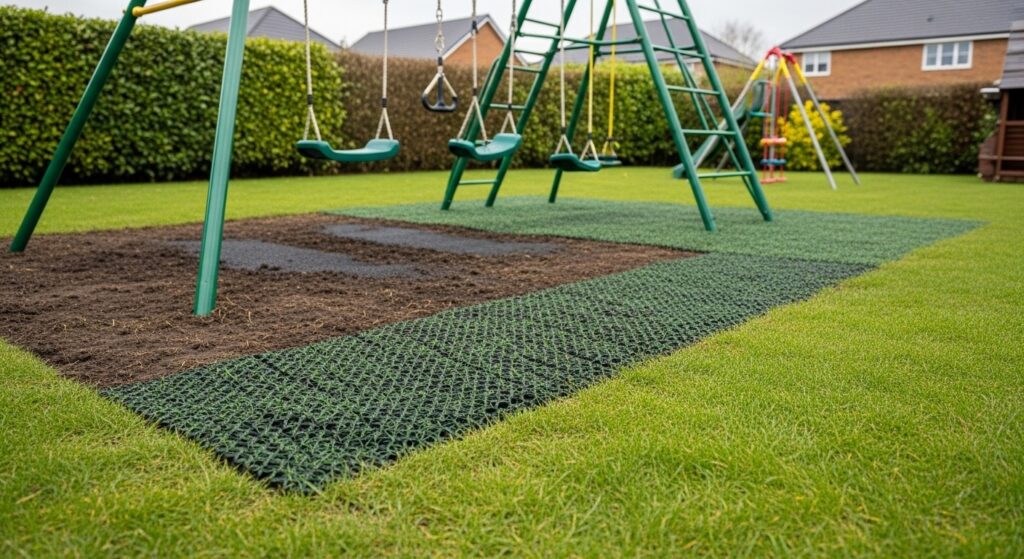
One effective solution used in many UK homes is a rubber grass matting roll. It is designed to sit over natural grass and protect it from constant pressure. It spreads weight evenly, allows drainage, and reduces direct impact on the soil. This helps prevent mud formation and keeps the area usable even with heavy daily use.
Unlike hard concrete, it still feels natural and safe for children, which is why many homeowners prefer it for family gardens.
Maintain Healthy Grass Around the Play Area
Strong grass is more resistant to wear and damage. If your lawn is healthy, it will recover faster even after heavy use.
Simple maintenance makes a big difference over time.
- Mow the lawn regularly, but avoid cutting it too short
- Water during dry periods to prevent dryness
- Add fertiliser during growing seasons
- Aerate the soil to improve airflow and drainage
Healthy grass acts like a natural cushion and reduces long-term damage.
Reduce Mud Formation in High Traffic Areas
Once grass is gone, mud becomes the next issue. It spreads quickly, especially during rainy months in the UK, and makes the garden messy and unsafe.
To control this, it helps to manage water and soil properly.
You can:
- Improve drainage in problem areas
- Fill bare patches with new turf or grass seed
- Avoid heavy use during very wet conditions
- Add protective ground layers where needed
Mud is much easier to prevent than to fix later, so early action is important.
Use Smart Garden Layout Ideas
Sometimes, small design changes can protect your lawn without major work. For example, placing paths or soft borders around play equipment can control movement and reduce damage.
A well-planned garden layout helps balance play space and lawn protection.
- Place equipment in one central area
- Keep open lawn space separate from play zones
- Add soft ground covering where children gather most
- Avoid random placement of toys and structures
This creates a more organised space that is easier to maintain.
Encourage Better Use of the Garden Space
Children will always play freely, but a little guidance can help reduce unnecessary wear on the lawn.
- Encourage kids to use the same play area instead of spreading out
- Keep bikes and toys in a fixed spot
- Avoid dragging heavy objects across grass
- Teach them to use paths instead of cutting across lawns
These habits help protect the garden without limiting fun.
Combine Natural Grass with Reinforced Areas
A common mistake is trying to keep the entire garden as natural grass, even in high-use areas. In reality, combining grass with reinforced surfaces works much better.
For example:
- Natural grass for open areas
- Reinforced ground under play equipment
- Paths for movement and walking
- Protected zones for heavy use
This combination keeps the garden green while reducing long-term damage.
Practical Long-Term Solutions
If you want a more permanent solution, investing in proper ground protection is a smart choice. Many UK homeowners are now upgrading their gardens with durable surface systems that support both safety and natural appearance.
One popular option is using a rubber grass matting roll under and around play equipment. It helps reduce maintenance, improves safety, and protects the lawn from constant pressure.
Over time, this reduces repair costs and keeps the garden looking fresh.
Final Thoughts
Grass wear around garden play equipment is a normal issue, especially in the UK where weather and foot traffic both affect lawn health. But it does not have to ruin your garden.
With smart planning, proper maintenance, and the right protection methods, you can keep your outdoor space looking clean and usable all year round.
Simple steps like improving drainage, defining play zones, and using protective surfaces make a big difference. In high-use areas, solutions such as a rubber grass matting roll can help protect the lawn while still keeping the garden natural and child-friendly.
A well-managed garden is not just about appearance—it’s about creating a safe, long-lasting space where children can play freely without damaging the ground beneath them.