How Regular Maintenance Improves Pool Water Quality
A swimming pool is not only a relaxing place, but also a well-coordinated system in which water, equipment, and the environment interact. Water quality is hardly one of the least significant aspects that affect the look of a pool and its utility. Routine maintenance contributes to the preservation of clarity, balance, and consistency in pool water and, therefore, continuing care is a critical component of responsible pool ownership.
Also Read: How Routine Plumbing Maintenance Can Prevent Emergencies
Rather than viewing maintenance as an occasional task, many pool owners now understand it as a routine process that supports long-term performance and usability.
Pool Water Quality
The quality of pool water is a term that can be defined as a number of interdependent factors such as cleanliness, chemical balance, circulation, and filtration. Once these elements are controlled on a regular basis, the water is clean to the eye and safe to swim in. When not properly taken care of, they may cause problems in the form of cloudiness, accumulation of debris, or unequal amounts of chemicals.
Frequent maintenance gives the pool owners the opportunity to track the shifts over time rather than reacting to the issues that manifest themselves. This proactive initiative helps with more foreseeable water environments during the swimming season.
The Role of Routine Cleaning
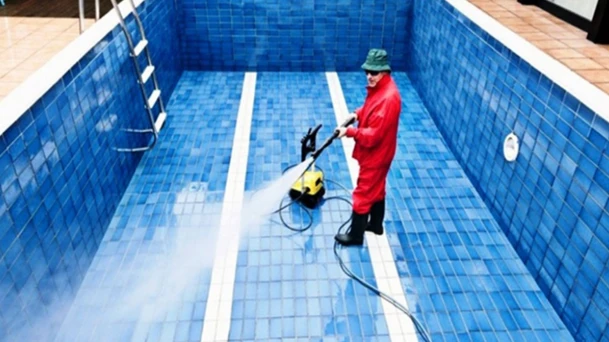
Physical cleaning is one of the most visible aspects of pool maintenance. Removal of leaves, insects, and debris off the surface prevents the organic material from sinking in the water and decomposing. Washing the walls and floors of the pools prevents the accumulation of difficult to reach concrete spaces, and vacuuming the pool eliminates the settled materials.
By cleaning up regularly, there is less time for debris to influence water balance or exert an additional burden on filtration systems. This renders regular cleaning as a crucial preliminary measure in water quality maintenance.
Filtration and Circulation Management
The filtration system of a pool operates round the clock to circulate water through the filters that trap tiny particles. Conventional maintenance guarantees pumps, filters, and skimmers work as they should. Poorly maintained or clogged filters can cause a decrease in the efficiency of the circulation and hence irregular water conditions.
Filtration systems are also closely related to the pool repair because before they realize an indication of the wear or poor performance, they can be corrected before it interferes with the clarity of the water. Evenly circulating water enables the diffusion of chemicals and maintains a uniform state of water throughout the pool.
Chemical Balance through Ongoing Monitoring
Water chemistry is at the center of ensuring that the pools are in balance. Periodic testing enables the pool owners to monitor the variations in pH and sanitizer levels and alkalinity over a period of time. Changes may then be made progressively as opposed to being reactive.
Regular testing is the main component of pool maintenance in Buckeye, AZ, that allows owners to know the relationship between the weather, usage, and environmental conditions on the water balance. This strategy promotes constant conditions without the use of big or abrupt chemical fluctuations.
Preventing Equipment-Related Water Issues
Water quality is directly influenced by pool equipment such as pumps, heaters, and filters. Regular checks can be used to detect the presence of leaks, pressure variations, or abnormal sounds that might be a sign of the necessity to repair the pool. The early treatment of these issues promotes stable circulation and avoids the development of small mechanical issues.
Energy efficiency and easier functioning through equipment maintenance are also indirectly helping the maintenance of water quality to ensure that it is always running at the right speed and cycle.
Seasonal and Environmental Considerations
The season and weather condition also determine the frequency of the maintenance activities. Warmer temperatures, increased pool usage, and storms can introduce debris or alter chemical balance. Routine maintenance would enable pool owners to adapt to these changes over a period of time.
Closer supervision in the lead up to and down to the swimming season in the areas where seasonal closures occur helps to have cleaner water when the pool is re-opened. Such practices decrease the chances of water quality to arise at times of low usage.
Long-Term Benefits of Consistent Care
Frequent servicing helps to be predictable. Water conditions can be managed easily when cleaning, testing, and equipment checks are carried out on a regular basis. Such consistency minimizes the necessity of the corrective actions and contributes to the visual clarity in the long term.
Practically, the professional services are also easier to schedule because of the routine pool maintenance. With problems detected early, pool repair activity can be scheduled as opposed to being carried out in an emergency setting with minimal effect on the usage of the pool.
Maintenance as a Preventive Strategy
Instead of responding to water quality issues when the problems become evident, frequent maintenance is a form of preventive approach. Minor changes, carried out on a regular basis, contribute to the balance and longevity of usability. Such a mindset transforms pool care into a proactive problem-solving activity and not prevention activity.
The owners of the pools ensure that the water quality is more stable throughout the year by keeping the filters clean, overseeing water chemistry, and correcting the operation of equipment at an earlier stage.
Final thoughts
Frequent maintenance is the key to enhancing and maintaining the quality of pool water. By cleaning, regular chemical tests, and timely maintenance of equipment, the owners of the pool will help to maintain cleaner and more stable conditions in the water. The consideration of pool repair in Buckeye, AZ, and continuous maintenance of the pool will enable detection of the problems at their initial stage, which will lead to the easier functioning and the increased predictability of the outcomes.
By treating pool care as a continuous process rather than an occasional task, owners can maintain water quality in a way that aligns with long-term usability and responsible pool management.