
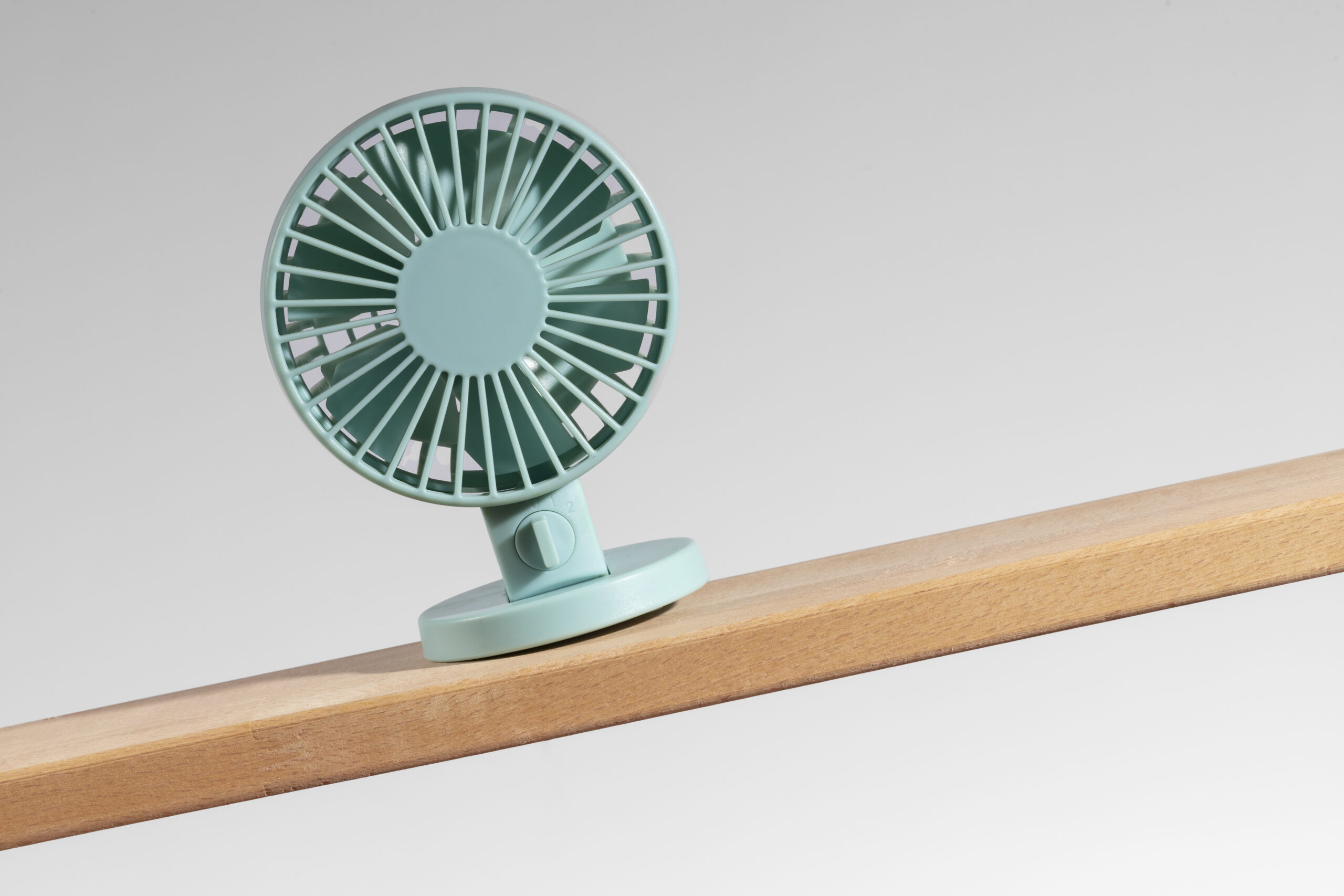
Are Tower Fans Better Than Pedestal Fans?
You crank up your favorite playlist and grab a cold drink. Then you flop down on your sofa…only to realize that your bedroom is warmer than an Ethiopian lava lamp. So, what’s the solution? Fans, silly!
Tower fans and pedestal fans do plenty of the same things. They cool you down, circulate air through your living space, and they’re far more energy-efficient than air conditioning.
But their designs are entirely different. They’re built for different spaces and handle airflow in different ways. So how do you know which fan you should buy?
We have tower fans vs pedestal fans battle royal for you!
Tower Fan vs Pedestal Fan Showdown
Like we said above, there’s no simple answer to which type of fan is better. They each have advantages and disadvantages. Let’s take a closer look so you can decide which fan is right for you.
What Is a Tower Fan?
If you had to guess which way a tower fan moves air, you’d probably say sideways, right? Think again. Tower fans are tall, slender machines that push air through vertical slats at the ends of their tall frame.
You can think of them as skinny standing refrigerators with wings. Most tower fans also rotate from left to right, allowing them to evenly distribute air across your room.
Tower fans are often equipped with bonus features like built-in air filters, ionizers, sleep settings, and remote controls. Some can even sync to smart home devices. If you’re after a fan that quietly fits under furniture or blends into your decor and doubles as a technological marvel, check out tower fans.
What Is a Pedestal Fan?
Pedestal fans, on the other hand, are what most of us imagine when we think of fans. They’re exactly what they sound like: a large, round blade head mounted at the end of a long, adjustable pedestal.
You can tilt the head up or down, and most fans will oscillate from side to side as well. Thanks to their height, you can adjust the angle to direct air exactly where you want it.
Pedestal fans are workhorses. These bad boys can push a serious amount of air, and they do it quickly. That’s why you’ll usually find them in garages, workshops, gyms, or outdoor spaces. Pedestal fans excel at filling a wide area with lots of moving air.
They’re also typically less expensive than tower fans when comparing brands with similar features.
Airflow and Cooling Power
Pedestal fans win this round hands down. By virtue of their wide blades, pedestal fans simply move more air per minute than tower fans. If you’re trying to cool off after a hard workout or your garage feels like the Sahara, chances are a tower fan isn’t going to cut it.
Tower fans excel at producing a gentle stream of air that circulates throughout the room. NHS noted that they don’t blast you with tons of cool air from one angle like pedestal fans do. Instead, they provide more even airflow that some people actually prefer for sleeping or keeping their whole living space cool while working at a desk or entertaining guests.
Imagine the difference between a fire hose and your sprinkler system at home. One blasts large volumes of water, while the other disperses smaller amounts over a wide area.
Noise Levels
Tower fans also win when it comes to noise. Since their blades are smaller and tightly enclosed by the body of the unit, they create less noise on medium-to-high speed settings.
This is why many people leave tower fans running overnight. They don’t bother you as you catch those precious Zzz’s. If you’re particularly sensitive to noise or planning to use your fan in a bedroom or home office, tower fans have a leg up.
Pedestal fans can get pretty loud, especially at higher speeds. The larger blade spinning quickly creates more air turbulence, which results in more noise. That said, there are some high-quality pedestal fans out there designed to run more quietly. But in general, tower fans will run quieter than their taller cousins.
Space and Design
Compact and sleek, tower fans take up almost no space at all. They’re perfect for apartments or smaller rooms because their footprint is minimal.
Pedestal fans have larger bases and heads, so they require more space to operate. Not only do you need to leave space around the blades, but these types of fans have a boxier, utilitarian look that won’t fit every space or decor.
That being said, pedestal fans offer greater versatility in terms of positioning. You can direct airflow exactly where you want with the pedal tilt and vertical mobility.
Energy Efficiency
Both tower and pedestal fans get stellar marks for energy efficiency. Since tower fans use smaller motors and fan blades, they tend to use marginally less electricity than pedestal fans. However, this won’t make a huge difference in your energy bills.
If you plan to run your fan for multiple hours per day, however, you may notice your tower fan saving you a few bucks this summer. Again, not a huge decision factor.
Bonus Features
Ah, the cherry on top! Tower fans usually offer the most bang for your buck in terms of extra features. Many have built-in timers, multiple settings for airflow, air purification filters, and smart compatibility with your phone.
If you want a fan you can control from the comfort of your bed or set to automatically turn off after a set time period, you’ll want to invest in a tower fan.
Pedestal fans take a back seat to towers when it comes to additional features. Most only have a dial for setting speed and maybe an oscillation switch. But that’s not necessarily a bad thing!
So…Which Fan Wins?
If you want a quiet, stylish fan that offers tons of features and will fit perfectly in your bedroom, living room, or home office, buy a tower fan. These guys do best in indoor environments where you want quiet, steady airflow without drawing too much attention to yourself.
Buy a pedestal fan if you need serious airflow in your garage, workspace, or patio. You’ll also want one of these if you’re on a budget or desire a simple fan that does one thing: keep you cool.
Which Fan Should You Buy? (Real example from the UK)
I lived in a small flat in London once as a young adult. Cooling down my room at night during the summer months was difficult. During hotter seasons, my room would become overheated and it would be uncomfortable to sleep.
Here are the details:
Challenge
- Weak airflow in small bedroom
- Noise from an old pedestal fan
- Little floor space available
Solution: After comparing and trying both types of fans, we swapped out our pedestal fan for a tower fan and tweaked our usage:
- Mounted tower fan next to bed to allow for constant flow of air
- Enabled oscillation setting to spread airflow throughout room
- Utilized timer / sleep mode feature for overnight use
Results (Measured after 2 weeks of use):
- Considerably less noise while sleeping
- More airflow throughout room vs. just one powerful column of air
- Floor space was freed up
- Increased comfortability without AC
Moral of the story: Tower fans are usually the superior choice for many UK households. They’re quieter, take up less space, and are more convenient for bedrooms/living rooms.
Link: https://www.mylek.co.uk/blog/fan-101-the-different-types-and-choose-the-right-one-for-you
Tower Fan vs Pedestal Fan FAQs
1. What fan cools a room faster?
Pedestal fans excel at quickly cooling a room. This is thanks to their tall design and larger blades. The higher the fan and larger the blades, the more air it can push at once.
2. Which fan is quieter, tower or pedestal?
Tower fans win when it comes to noise. Tower fans have less moving parts that can rattle. Plus, since tower fans have a closed-base structure with slimmer blades, there’s less air disturbance.
3. Do tower fans use less electricity?
Tower fans use marginally less power than pedestal fans. The cost difference is barely noticeable for the average home.
4. Which fan is best for small rooms?
Tower fans by far. Tower fans take up less floor area and have a small footprint. Their upright design is great for apartments, bedrooms, and home offices.
5. Can pedestal fans cool down bigger rooms?
Yes. Pedestal fans can move a lot of air and are better suited for larger spaces. Garages, outdoor spaces, or open-plan rooms benefit from pedestal fans.
6. Are tower fans worth the extra money?
If quiet noise levels, aesthetics, and extra features such as sleep timers or remote controls are important to you, then tower fans are worth the splurge.
7. Which fan is better?
In general, tower fans are better for quiet daily use at home. Pedestal fans are better if you need strong airflow and powerful air circulation.