
What is sintered bronze used for?
Sintered bronze is a special material made from bronze powder. Manufacturers press the powder into shape and heat it to a high temperature without fully melting it. This process, called sintering, joins the tiny bronze particles together while leaving small pores or holes throughout the piece. These pores give sintered bronze its useful properties, like the ability to hold oil or let fluids pass through in a controlled way. It is strong enough for many jobs but costs less to make than solid bronze parts in large quantities.
People use sintered bronze in many everyday items and heavy industrial machines. It works well where parts need to run smoothly with little maintenance or where clean fluids and gases are important. This article explains the main uses in simple terms, why it performs so well, and how it helps different industries. By the end, you will see why sintered bronze is a popular choice for engineers and factory owners.
How sintered bronze is made
The process starts with fine bronze powder, usually a mix of copper and tin. Workers mix the powder, sometimes adding a bit of graphite or lubricant. They pour it into a mold and press it hard to form the basic shape, like a bushing or a filter element. Then the part goes into a furnace for sintering. The heat bonds the particles at the points where they touch, creating a solid piece with connected pores.
After sintering, the parts may get sized or machined to exact dimensions. For bearings, they often soak the finished piece in oil so the pores fill up with lubricant. This simple method allows factories to produce thousands of identical parts quickly and cheaply. The final product keeps some porosity, which is the key to many of its uses.
Self-lubricating bearings and bushings
One of the most common uses for sintered bronze is in self-lubricating bearings and bushings. The pores act like tiny sponges that hold oil. When the shaft inside the bearing starts to turn, heat and movement pull the oil out to the surface. This creates a thin film of lubricant that reduces friction and wear. When the machine stops, the oil gets pulled back into the pores by capillary action.
These bearings need very little extra grease or oil during their life. You find them in small electric motors, fans, blenders, washing machines, and vacuum cleaners. They also appear in office equipment, medical devices, and car parts like shock absorbers. In heavier machines, they handle low to medium speeds and loads where constant relubrication would be difficult or messy.
Sintered bronze bearings run quietly and last a long time in the right conditions. They resist corrosion better than many other materials, which makes them good for marine equipment or outdoor tools. Shops like them because they are inexpensive and available in many standard sizes.
Filters and filtration systems
Sintered bronze works great as a filter because the pores let fluids or gases pass while catching dirt and particles. Manufacturers can control the pore size during production, so the filter can stop very fine particles or allow higher flow rates.
You see these filters in hydraulic systems, fuel lines, and pneumatic controls. They clean oil, gasoline, compressed air, and even some chemicals. In factories, they protect sensitive valves and pumps from contaminants. Sintered bronze filters handle high pressure and temperature without breaking down easily. They are also reusable — you can clean them and put them back in service.
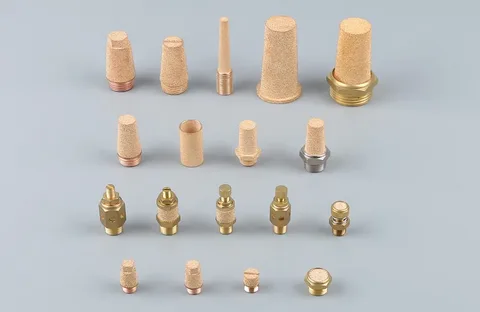
Other filtration jobs include breathers on gearboxes to let air in while keeping dust out, and mufflers or silencers on air exhaust ports to reduce noise. In food and drink production, they help filter beer, wine, or juices in some processes. Their durability and ability to work in tough conditions make them a reliable choice over paper or mesh filters that wear out faster.
If you need high-quality options for your filtration needs, a China sintered bronze filter can provide dependable performance at a good value.
Wear plates and structural parts
Sintered bronze also serves as wear plates and other machine components that rub against each other. The material stands up to sliding contact and can embed small dirt particles so they do not scratch the mating surface. This self-adjusting quality helps in pumps, turbines, and heavy equipment.
In heavy industry, you find sintered bronze parts in construction machines, farm equipment, and conveyor systems. They appear as thrust washers, guide plates, and simple gears in low-speed applications. The porosity can hold lubricant here too, cutting down on maintenance in hard-to-reach spots.
Because the material is easy to form into complex shapes, designers use it for custom parts that need good wear resistance without the high cost of solid bronze castings.
Other practical uses
Sintered bronze shows up in many smaller or specialized roles. In automobiles, it helps in fuel pumps and windshield wiper motors. Home appliances use it in blender blades, fan motors, and power tools. The military and aerospace sectors rely on it for reliable bearings in weapons, aircraft accessories, and even some space vehicle components because it performs consistently.
Pneumatic systems use sintered bronze mufflers to quiet air exhaust without restricting flow too much. Some electrical contacts and heat sinks take advantage of its good conductivity. In medical equipment, the material’s cleanliness and stability make it suitable for certain moving parts.
Its corrosion resistance helps in marine environments, such as boat engines or underwater pumps. The ability to run dry for short periods also makes it useful in situations where lubricant might wash away.
Advantages of using sintered bronze
Sintered bronze offers several clear benefits that explain its wide use:
- Self-lubrication reduces maintenance and downtime.
- Good wear resistance and long service life.
- Corrosion resistance, especially in moist or chemical environments.
- Low cost for high-volume production.
- Ability to control porosity for specific needs like filtration or oil storage.
- Quiet operation and smooth performance.
- Can handle a range of temperatures and moderate pressures.
Compared to solid bronze, it uses less material and energy to produce. Compared to plastic bearings, it handles higher loads and temperatures. While it may not suit extremely high-speed or very heavy shock loads without proper design, it covers a huge middle ground of everyday industrial and consumer applications.
Things to consider when choosing sintered bronze parts
Not every job is right for sintered bronze. It works best at low to medium speeds and loads. For very high speeds, you may need full fluid lubrication or different materials. The pores make it slightly weaker than solid metal, so engineers calculate the right size and wall thickness for the expected force.
Always match the pore size and oil content to the application. Filters need specific micron ratings, while bearings need enough oil reserve for the duty cycle. Proper shaft hardness and alignment also help the parts last longer.
In dirty environments, sintered bronze filters can clog if not cleaned regularly, but their reusability still saves money over time.
Final thoughts on sintered bronze
Sintered bronze is a versatile material that solves many common engineering problems. Its porous structure gives it self-lubricating and filtering abilities that solid metals cannot match easily. From quiet kitchen appliances to tough factory machines, it helps parts move smoothly, fluids stay clean, and equipment run longer with less care.
Factories choose it because they can make precise parts in large numbers without spending a lot. Engineers like the combination of strength, corrosion resistance, and low maintenance. Whether you need a simple bushing for a fan motor or a durable filter for hydraulic oil, sintered bronze often turns out to be a smart, practical solution.
If you are looking for more information or reliable products in this field, visit https://nesiafilter.com/ for helpful resources and options.
Sintered bronze may not be the flashiest material, but it quietly keeps countless machines running every day. Understanding its uses helps you pick the right part for your next project and avoid unnecessary repairs down the road.