
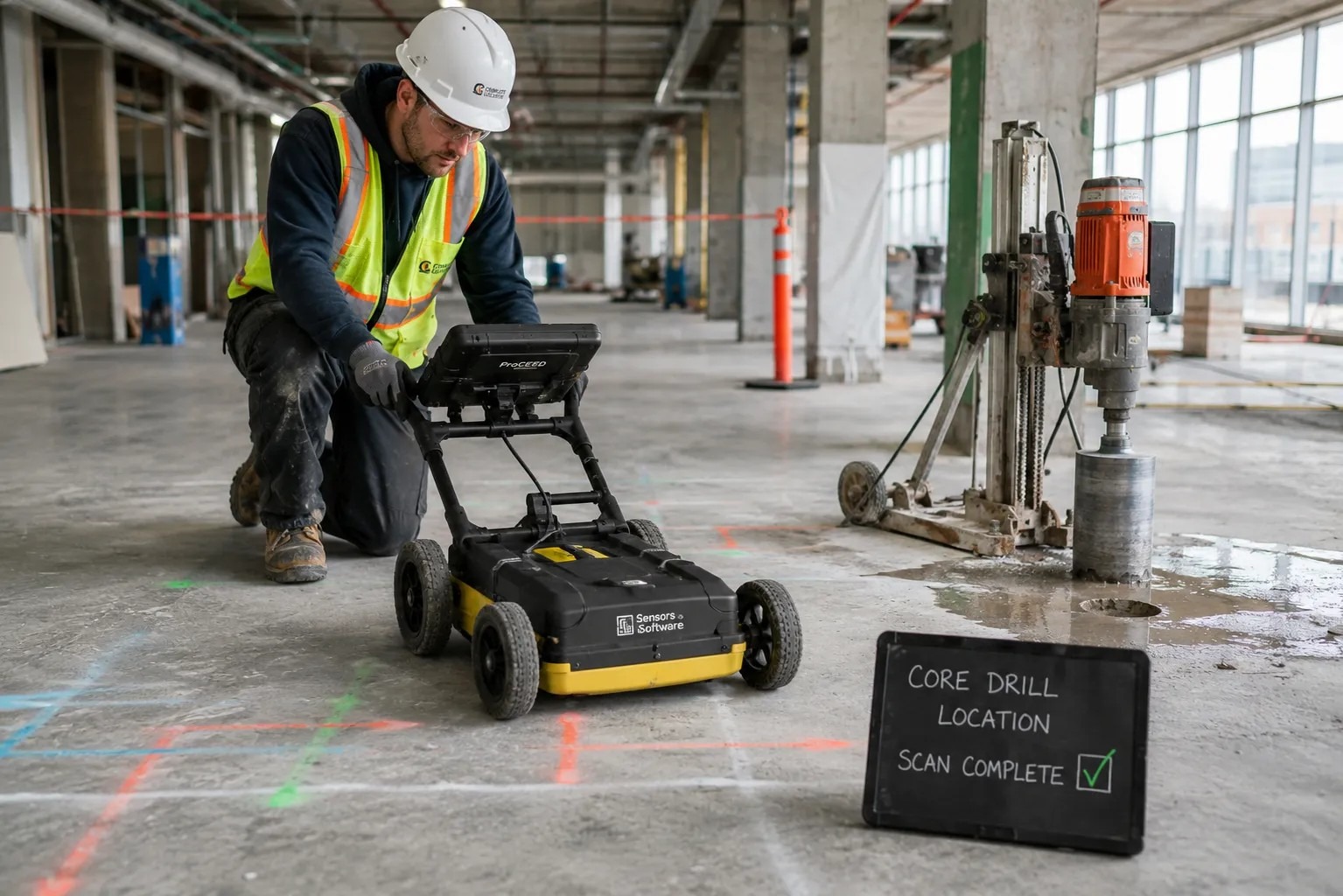
Why Concrete Scanning is Essential Before Cutting or Coring in Kitchener
Commercial renovation and infrastructure work often requires contractors to cut, core, or drill into existing concrete slabs and walls. While these tasks may appear straightforward, the structure beneath the surface can contain hidden hazards that create serious safety risks and expensive project delays.
Electrical conduit, rebar, plumbing lines, and post-tension cables are commonly embedded inside concrete. Damaging any of these systems during coring or saw cutting can stop work immediately, create dangerous conditions on site, and lead to major repair costs. For contractors working in Kitchener’s growing commercial and industrial sectors, concrete scanning has become an important step before any intrusive work begins.
Hidden Conditions Inside Concrete Create Real Job Site Risks
Concrete structures often contain far more than many crews expect. In older commercial buildings, renovation teams may encounter undocumented utilities or structural reinforcements that were added during previous upgrades. Even when drawings are available, field conditions may not fully match original plans.
Cutting concrete safely depends on understanding what exists below the surface before equipment is used. Accidentally striking energized conduit can expose workers to electrical hazards and force immediate shutdowns. Hitting water lines or data infrastructure may interrupt building operations and create costly emergency repairs.
Post-tension cable scanning is especially important in commercial structures built with tensioned slab systems. These high-strength cables are placed under significant pressure inside the concrete. If one is cut during coring, the release of force can create severe safety hazards and compromise the structural integrity of the slab.
For property managers and contractors, these risks affect more than safety alone. Unexpected utility damage can delay schedules, increase labor costs, and require additional inspections or engineering reviews before work resumes.
How GPR Concrete Scanning Improves Project Planning
Ground Penetrating Radar technology allows contractors to identify hidden materials inside concrete before cutting begins. GPR concrete scanning works by sending radar signals through the slab or wall and interpreting the reflected data to locate embedded objects.
Modern concrete imaging services can detect:
- Rebar layouts
- Electrical conduit
- Plumbing lines
- Voids within concrete
- Post-tension cables
- Embedded structural elements
This information gives contractors a clearer understanding of safe drilling and cutting locations. Instead of relying on assumptions or incomplete plans, crews can make decisions using real-time subsurface data.
Scanning also supports better coordination between trades. Electrical contractors, mechanical installers, and renovation teams often work within limited access areas where mistakes can affect multiple systems at once. By verifying slab conditions beforehand, project managers can reduce uncertainty and avoid unnecessary rework.
In commercial renovation environments, many contractors now include concrete scanning Kitchener services as part of their standard pre-construction process before core drilling or slab penetration work begins.
Concrete Coring Safety Depends on Accurate Utility Detection
Concrete coring safety is closely tied to utility detection before coring begins. Even a small penetration through a slab can damage hidden infrastructure if the location has not been properly assessed.
Core drilling is commonly used for:
- Mechanical piping installations
- HVAC upgrades
- Electrical routing
- Fire suppression systems
- Elevator modernization projects
These penetrations are often completed in occupied commercial buildings where uninterrupted building operations are critical. A single mistake can affect tenants, building systems, or active business operations.
Subsurface scanning technology helps crews identify safe drilling zones before equipment is mobilized. This reduces the likelihood of emergency stoppages and supports a more controlled work environment.
Scanning can also improve communication between contractors and clients. When hidden conditions are identified early, project teams can adjust layouts or drilling locations before damage occurs. This creates more accurate scheduling and fewer unexpected change orders during construction.
Renovation Projects Often Carry the Highest Risk
Renovation and retrofit projects present unique challenges because contractors are working within existing structures rather than new construction environments. Many buildings in Kitchener contain decades of layered modifications that may not appear in current documentation.
In older facilities, hidden utilities in concrete can include abandoned conduit, outdated piping systems, or structural reinforcement added during previous renovations. Without scanning, crews may not know what lies beneath the surface until damage has already occurred.
Commercial construction safety standards increasingly emphasize prevention rather than reaction. Scanning concrete before cutting supports that approach by identifying risks before demolition or drilling starts.
This process is particularly valuable in:
- Hospitals
- Office towers
- Warehouses
- Manufacturing facilities
- Institutional buildings
- Multi-unit commercial properties
These environments often remain partially operational during renovation work, making risk prevention even more important. Avoiding accidental service interruptions helps protect both workers and building occupants.
Scanning Technology Supports More Efficient Construction Workflows
Beyond safety, concrete scanning contributes to better overall project efficiency. Contractors who incorporate scanning into early planning stages can reduce uncertainty and minimize disruptions once field work begins.
Knowing where utilities and reinforcement are located allows crews to:
- Plan drilling locations more accurately
- Reduce unnecessary exploratory cutting
- Avoid structural conflicts
- Improve equipment placement decisions
- Complete work with fewer delays
For commercial property owners, this can translate into reduced downtime and lower repair costs. For contractors, it supports more predictable scheduling and improved coordination across trades.
As renovation activity continues across Kitchener and surrounding Ontario markets, scanning has become an increasingly common part of responsible construction planning. Rather than treating it as an optional precaution, many project teams now view concrete imaging services as a practical safeguard that supports both safety and operational efficiency.
When cutting or coring work is planned properly, contractors can move forward with greater confidence while reducing the likelihood of avoidable damage beneath the concrete surface.




One Comment