Solar vs Traditional Streetlights: Energy Use and Costs Now
Solar street lights are no longer a solution exclusive to remote areas. Today, municipalities, real estate developers, and infrastructure planners are increasingly viewing solar lighting as a strategic investment rather than a replacement technology. Engineering data from PowerDream shows that factors driving the adoption of Solar street light systems include rising energy prices, increasingly stringent carbon emission regulations, and long-term budget optimization goals.
Also Read: Rigid Flex PCB Prototypes How FastTurnPCB Cuts Risk
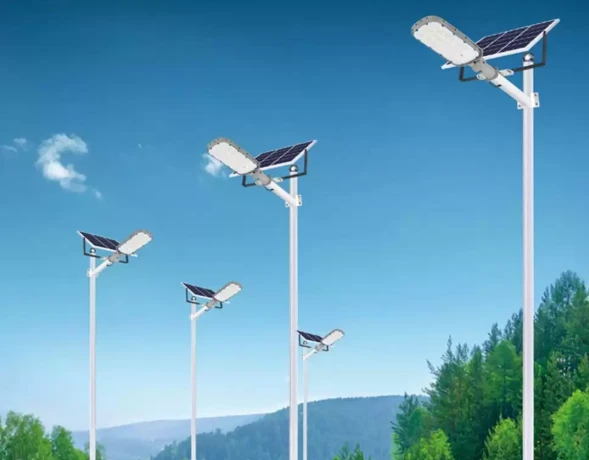
Unlike traditional streetlights that rely on grid power and complex cabling, solar street lights integrate photovoltaic panels, lithium-ion batteries, LED lights, and smart controllers into a single, self-contained unit. This independent architecture fundamentally changes how energy is consumed and costs are incurred in outdoor lighting. Solar systems do not need to draw power from the grid continuously; instead, they collect and efficiently store solar energy for nighttime illumination.
Energy Savings of Solar Street light Compared to Traditional Street lights
The most direct and easily measurable difference between solar and traditional streetlights is energy consumption. Traditional streetlights rely entirely on grid power, meaning their operating costs increase year by year as electricity prices fluctuate. In contrast, solar streetlight systems can operate using free, renewable solar energy after installation.
Engineering simulations and actual deployment results consistently demonstrate that solar street light can reduce energy-related operating costs by up to 100% compared to grid-connected lighting. High-efficiency LED technology further enhances this advantage, achieving higher lumen output per watt while reducing heat loss. Smart controllers can automatically adjust brightness based on schedules or motion detection, optimizing energy use without compromising safety. Traditional streetlights lack this flexibility. They typically operate at a fixed brightness throughout the night, resulting in unnecessary energy waste during off-peak hours. Over time, this inefficiency accumulates into high economic and environmental costs.
Solar Street light Installation Costs vs. Traditional Infrastructure Investments
At first glance, the upfront cost of solar street lights may seem higher than that of traditional streetlights. However, this comparison is misleading considering the complexity of installation. Traditional streetlights require trenching, underground cable installation, transformer installation, and obtaining grid connection permits, all of which significantly increase project costs and timelines.
Solar street lights eliminate most of these requirements. Because each unit operates independently, installation is faster, less disruptive, and more flexible. Projects in urban redevelopment zones or remote areas particularly benefit from this simplicity, as there is no need to expand the power infrastructure. Labor costs, approval process complexity, and project delays are all significantly reduced. From a long-term investment perspective, once all infrastructure costs are factored in, the total installation cost of solar lighting is typically on par with, or even lower than, that of conventional lighting solutions.
Maintenance and Operating Cost Advantages
Maintenance is a critical factor in assessing the 10-20-year lifespan of a lighting system. Solar street lights utilize sealed components, corrosion-resistant materials, and long-life lithium batteries, designed to minimize human intervention. Routine maintenance primarily consists of occasional panel cleaning and visual inspections.
In contrast, conventional streetlights incur ongoing costs for bulb replacements, ballast failures, wiring issues, and grid outages. These systems rely on multiple external components, each of which may have points of failure. Labor-intensive repairs and traffic disruptions further increase indirect costs. Solar streetlights are designed with remote monitoring systems, enabling operators to monitor faults, battery status, and performance data in real time. This predictive maintenance capability significantly reduces downtime and repair costs.
Reliability and Performance in Real-World Environments
Buyers are generally concerned about the stability of solar street lights under different weather conditions. Advances in photovoltaic efficiency, battery storage capacity, and innovative energy management technologies have eliminated this concern. Today’s systems are designed to operate autonomously for several days, ensuring uninterrupted lighting even during prolonged periods of insufficient sunlight.
Traditional street lights rely entirely on the stable operation of the power grid, which is susceptible to storms, aging infrastructure, or power outages. In contrast, solar streetlights can operate independently, enhancing public safety in emergencies. This reliability is vital for critical infrastructure, including roads, campuses, industrial parks, and residential areas. PowerDream’s engineering team designs system sizes based on different climatic conditions to ensure optimal performance across various geographic regions.
Environmental Impact and Regulatory Compliance
Environmental responsibility is no longer optional for infrastructure projects. Solar street lights deliver measurable ecological benefits by reducing carbon emissions, decreasing reliance on fossil fuels, and supporting renewable energy targets. Each solar streetlight installation contributes to long-term emissions reductions without sacrificing lighting quality. Traditional streetlights indirectly exacerbate greenhouse gas emissions by drawing power from the grid, especially in regions reliant on coal or natural gas. As governments tighten environmental regulations and introduce sustainability indicators, these systems face increasing compliance costs.
Long-Term Cost and Value Analysis
Considering all factors—energy efficiency, installation costs, maintenance, reliability, and environmental impact—the long-term value of solar street lights becomes clear. While traditional streetlights may seem more economical in the short term, their long-term cumulative costs are far higher than those of solar streetlights. A well-designed solar street light can typically recoup its entire investment within a few years, after which operating costs are incredibly low for the remainder of its lifespan. Traditional systems, on the other hand, accumulate costs and never truly achieve cost neutrality.systems: fewer replacements, lower maintenance costs, and a stable year-round power supply.